x

Giclée- of canvasafdruk van museumkwaliteit met een snelle productie en flexibele afwerkingsmogelijkheden. ( Bestel handgeschilderde reproductie Koop afbeelding)





























Kies uit onze vooraf ingestelde maten die overeenkomen met de originele verhoudingen van het kunstwerk.

U kunt uw eigen afmetingen opgeven om in een specifieke lijst of ruimte te passen. Als de door u gekozen maat niet overeenkomt met de proporties van het originele kunstwerk, zullen wij de afbeelding bijsnijden of uitbreiden met een gespiegelde of effen rand. Een digitaal mockup wordt ter goedkeuring naar u verzonden voordat de productie begint.
Houd er rekening mee dat de preview op het scherm de werkelijke bijsneding of uitbreiding niet weergeeft. Alleen de mockup toont de uiteindelijke compositie nauwkeurig.
Hoewel aangepaste maten beschikbaar zijn, raden wij aan een afmeting uit de vooraf bepaalde lijst te kiezen om de originele proporties te behouden.
Wereldwijde levering () binnen 2 weken in plaats van de standaard 4/5 weken. (19 augustus)


I Love Antitheses
Afmetingen reproductie
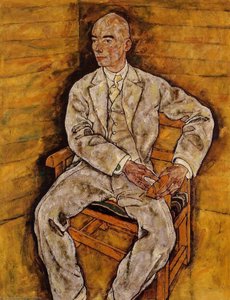
Egon Schiele’s “I Love Antitheses,” painted in 1912, is more than just a depiction of a man; it's an embodiment of the anxieties simmering beneath the surface of early 20th-century Vienna – a city grappling with rapid industrialization and intellectual ferment while simultaneously confronting the looming shadow of mortality. The painting immediately arrests the eye with its stark palette dominated by muted reds and blacks, colors deliberately chosen to convey unease and repression.
The artist’s meticulous attention to detail—particularly the two buttons on the man’s jacket—adds a layer of significance beyond mere visual representation. These seemingly insignificant objects serve as anchors within the unsettling space, highlighting the fragility of human existence and emphasizing the contrast between outward appearance and inner turmoil. Schiele deliberately disrupts conventional artistic conventions, prioritizing emotional impact over idealized beauty.
“I Love Antitheses” isn’t merely a portrait; it's a psychological landscape rendered in pigment. It invites viewers to contemplate the complexities of human consciousness and confronts them with uncomfortable truths about vulnerability and mortality—a timeless exploration that continues to resonate powerfully today. Its dramatic use of color and expressive lines solidify Schiele’s place as one of the most influential figures in Expressionist art.

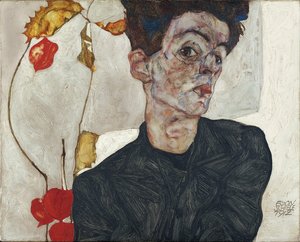
1890 - 1918 , Oostenrijk

Explore the profound history of Expressionism. From Edvard Munch to Jackson Pollock, discover how artists used distortion and color to convey raw emotion. A definitive guide for art lovers seeking deep historical context and mastery in fine art reproductions.


Blijf op de hoogte van het laatste kunstnieuws, exclusieve aanbiedingen en decoratie-ideeën.
Vertel ons over uw project en onze kunstexperts geven u 3 gepersonaliseerde kunstsuggesties.
Wij stellen drie opties speciaal voor u samen – gratis!


 Voorvertoning
 Verstuur
 Delen
Delen
 Details bekijken

 Download
 Vergelijkbare items
 Röntgenonderzoek
 Diavoorstelling

 Lees meer







 De optie voor glas is alleen beschikbaar bij een formaat kleiner dan 110 cm.