Verkoop uw kunst
Verlanglijstje Winkelwagen Cart
VoorvertoningVoorvertoning Bekijk in ARBekijk in AR Bestel handgeschilderde reproductie Bestel handgeschilderde reproductieKoop afbeelding Koop afbeelding VerstuurVerstuur
Details bekijkenDetails bekijken Toevoegen aan favorieten Toevoegen aan favorieten DownloadDownload Vergelijkbare itemsVergelijkbare items RöntgenonderzoekRöntgenonderzoek DiavoorstellingDiavoorstelling

Peasants Jug

Explore Egon Schiele’s ‘Peasants Jug’ (1918), a striking watercolor still life showcasing expressive lines & earthy tones. A key piece of early Modernism.

Verken de intense emoties van Egon Schiele: rauwe portretten, psychologische thema's & unieke lijnen. Ontdek iconische reproducties van deze expressionistische meester.

Giclée / Kunstafdrukken

Giclée- of canvasafdruk van museumkwaliteit met een snelle productie en flexibele afwerkingsmogelijkheden. (Bestel handgeschilderde reproductie Bestel handgeschilderde reproductieKoop afbeelding Koop afbeelding)

P118B $10
P118H $10
P118W $10
P438Z $10
P508JH $12
P508YH $12
P805H $10
P805Z $10
P919BZ $10
P919G $10
P919XJ $10
P959ZH $10
P968JZ $12
W106C $8
W218G $10
W218JH $8
W218Y $10
W307PJ $10
W316G $10
W316PJ $8
W316Y $10
W398PJ $8
W4111J $10
W500HY $15
W500JH $15
W692G $12
W849H $8
W940BG $15
W953PJ $8

Standard
custom
CM
INCH

Kies uit onze vooraf ingestelde maten die overeenkomen met de originele verhoudingen van het kunstwerk.

breedte
hoogte

U kunt uw eigen afmetingen opgeven om in een specifieke lijst of ruimte te passen. Als de door u gekozen maat niet overeenkomt met de proporties van het originele kunstwerk, zullen wij de afbeelding bijsnijden of uitbreiden met een gespiegelde of effen rand. Een digitaal mockup wordt ter goedkeuring naar u verzonden voordat de productie begint.
Houd er rekening mee dat de preview op het scherm de werkelijke bijsneding of uitbreiding niet weergeeft. Alleen de mockup toont de uiteindelijke compositie nauwkeurig.
Hoewel aangepaste maten beschikbaar zijn, raden wij aan een afmeting uit de vooraf bepaalde lijst te kiezen om de originele proporties te behouden.

Wereldwijde levering () binnen 2 weken in plaats van de standaard 4/5 weken. (17 augustus)

why_choose_icon
Gratis wereldwijde expressverzending
why_choose_icon
Hoogwaardig linnen canvas
why_choose_icon
Volledige verzendverzekering
why_choose_icon
Garantie op terugbetaling van invoerrechten
why_choose_icon
Garantie op exacte kleurweergave
why_choose_icon
Retourbeleid van 60 dagen (alleen bij defecten)
why_choose_icon
100% Geld-terug-garantie
why_choose_icon
Korting bij meerdere afnames

Totaalprijs

$ 69

reproduction

Peasants Jug

Giclée / Kunstafdrukken

Afmetingen reproductie

-

Eindtotaal

$ 69

Snelle feiten

  • artist: Egon Schiele
  • year: 1918
  • medium: Watercolor on paper
  • movement: Post-Impressionism / Early Modernism, Art Nouveau (Modern)
  • subject: Still life – arrangement of ceramic vessels

Kunstquiz

Er is slechts één goed antwoord op elke vraag.

Vraag 1:
In what year was Egon Schiele's 'Peasants Jug' created?
Vraag 2:
Which artistic movement is most closely associated with 'Peasants Jug'?
Vraag 3:
What is the primary subject matter of 'Peasants Jug'?
Vraag 4:
What medium did Egon Schiele primarily use to create 'Peasants Jug'?
Vraag 5:
How would you describe the perspective used in 'Peasants Jug'?

Beschrijving verzamelobject

A Quiet Moment: Exploring Egon Schiele’s ‘Peasants Jug’ (1918)

‘Peasants Jug’, created in 1918, offers a compelling glimpse into the evolving style of Austrian artist Egon Schiele during the final year of his tragically short life. This watercolor on paper is more than just a still life; it's an intimate study of form, texture, and the expressive potential of everyday objects.

Subject & Composition: The Beauty in the Mundane

The artwork centers around an arrangement of ceramic vessels – jugs, bowls, and cups – stacked against a pale beige background. Schiele eschews traditional still life formality, presenting the pottery in a seemingly haphazard yet carefully considered composition. This asymmetrical arrangement creates a dynamic energy, preventing the scene from feeling static. The focus isn’t on opulent display but rather on the inherent beauty of these humble, functional objects.

Style & Technique: A Bridge Between Worlds

‘Peasants Jug’ exemplifies Schiele's transition towards a style that blends elements of Post-Impressionism and early Modernism. While retaining expressive lines reminiscent of his earlier, more emotionally charged portraits, the work demonstrates a growing interest in formal experimentation. The flattened perspective and simplified forms move away from strict realism, prioritizing visual impact over precise representation. Watercolor is employed with masterful looseness; washes create subtle gradations of tone while dry brush techniques build texture and suggest form. Visible brushstrokes contribute to the artwork’s immediacy and sense of spontaneity.

Historical Context: A Final Flourish

1918 was a pivotal year for Schiele, marked by both personal joy – his impending marriage – and widespread societal upheaval due to the end of World War I and the Spanish Flu pandemic (which ultimately claimed his life). While not overtly reflecting these events, ‘Peasants Jug’ can be seen as a moment of quiet contemplation amidst chaos. It represents a shift in focus for Schiele, away from the intensely psychological portraits that defined much of his earlier work, towards a more observational and formally driven approach.

Color & Texture: Earthy Tones and Tactile Appeal

The color palette is rich yet grounded, dominated by earthy tones – browns, yellows, greens, and blues – punctuated by brighter accents. These colors evoke the natural materials of the pottery itself, enhancing its tactile quality. The textured surface, achieved through Schiele’s watercolor techniques, invites viewers to imagine running their hands over the rough ceramic forms.

Emotional Impact & Interpretation

While seemingly devoid of overt symbolism, ‘Peasants Jug’ possesses a quiet emotional resonance. It's not a painting *about* anything specific; rather, it’s an exploration of visual harmony and the inherent beauty found in simplicity. The work evokes a sense of peacefulness and contemplation, inviting viewers to appreciate the subtle elegance of everyday life. For collectors and interior designers, this piece offers versatility – its muted palette and organic forms complement a range of décor styles, from minimalist modern to rustic farmhouse. A high-quality reproduction captures not only Schiele’s artistic skill but also the artwork's calming and contemplative atmosphere.

Key Features at a Glance:

  • Artist: Egon Schiele
  • Year: 1918
  • Medium: Watercolor on paper
  • Style: Post-Impressionism / Early Modernism
  • Genre: Still Life

Biografie van de kunstenaar

A Life Forged in Expression

Egon Schiele’s life, a turbulent and intensely personal journey, unfolded from 1890 to 1918 within the vibrant yet often unsettling landscape of Vienna. Born in Tulln an der Donau, Austria, his early years were shadowed by profound loss – the death of his father due to syphilis at just fourteen, followed tragically by the demise of his sister Elvira. Raised initially by his mother and later under the watchful eye of his uncle Leopold Czihaczek, Schiele’s childhood lacked the stability common to many, fostering within him a remarkable independence and an acute sensitivity. From a young age, he displayed a deep fascination with trains – a motif that would subtly reappear throughout his work, symbolizing both movement and perhaps, the relentless passage of time. Though initially discouraged by his father for pursuing drawing as a distraction from more “practical” endeavors, Schiele’s innate talent blossomed, laying the foundation for his future artistic expression. These formative experiences—illness, loss, and an unconventional upbringing—instilled within him a profound awareness of mortality and the fragility of human existence, themes that would become central to his art.

The Crucible of Vienna: Artistic Development

Schiele’s formal artistic training began at the Kunstgewerbeschule in Vienna, but he quickly found himself stifled by its conservative approach. Seeking a more expressive outlet, he transferred to the Akademie der bildenden Künste, only to discover that even this institution's academic traditions felt restrictive. Dissatisfied with the rigid constraints of traditional art education, Schiele deliberately chose to forge his own path, rejecting formal training altogether – a bold decision reflecting his unwavering artistic conviction. Crucially, he found inspiration in the work of Gustav Klimt, deeply admiring Klimt’s decorative style and exploration of symbolism. Klimt's influence was significant, yet Schiele ultimately diverged from his mentor’s aesthetic, developing a distinctly individual voice characterized by stark honesty and psychological intensity. He became a founding member of the Neues Wiener Kunstgruppe (New Viennese Art Group) in 1909, alongside other progressive artists who challenged the prevailing artistic norms of the time. His early works—often unsettling portraits and self-portraits—began to emerge as powerful statements of emotional turmoil, featuring distorted figures and a palpable sense of vulnerability. These paintings weren’t merely representations of physical form; they were explorations of the inner landscape – the anxieties, desires, and fears that haunted the human psyche. He sought to depict not what he *saw*, but what he *felt*.

Raw Emotion and Unflinching Truth

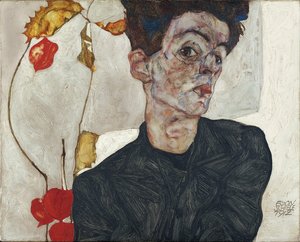
Egon Schiele's art is immediately recognizable for its raw honesty and psychological depth. He fearlessly confronted themes often considered taboo – sexuality, death, anxiety, isolation – with an unflinching gaze. His distinctive style features elongated figures, contorted poses, and expressive lines that convey a sense of unease and emotional intensity. The human form, particularly the nude, became his primary subject, not as an object of idealized beauty but as a vessel for exploring the complexities of human experience. Self-portraits constitute a significant portion of his oeuvre, offering intimate glimpses into his inner world—a world often marked by loneliness and self-doubt. He didn’t shy away from depicting himself in unflattering or vulnerable poses, revealing a profound level of self-awareness and introspection. Beyond self-portraiture, Schiele created numerous portraits of others, capturing their likenesses with an unsettling realism that seemed to penetrate beneath the surface. Recurring motifs like the *Physalis* plant – symbolizing death and transience with its delicate, papery husk – further underscore this preoccupation with mortality. His use of line is particularly striking; it’s not merely a tool for defining shape but an expressive force that conveys emotion and psychological tension.

A Legacy Cut Short: Achievements & Significance

Despite facing censorship and legal challenges—including a brief imprisonment for allegedly corrupting minors with his art—Schiele gained recognition within Vienna’s avant-garde circles. His work challenged the conventions of the time, provoking both admiration and outrage. By the time of his untimely death during the Spanish flu pandemic in 1918 at the age of twenty-eight, he had established himself as a leading figure in Austrian Expressionism. Significant works such as *Self-Portrait with Physalis*, *Couple Embracing*, and *Field Landscape (Kreuzberg near Krumau)* stand as testaments to his artistic genius. His influence on subsequent generations of artists is undeniable, particularly those interested in exploring psychological themes and challenging conventional artistic norms. Schiele’s bold approach to form and subject matter continues to resonate with audiences today, making him one of the most important and influential figures in early 20th-century art. His paintings are now held in major museum collections worldwide, including the Leopold Museum in Vienna and the Egon Schiele Art Centrum in Český Krumlov, ensuring his artistic legacy endures. He left behind a body of work that is not merely aesthetically compelling but profoundly human—a testament to the power of art to confront the complexities of existence with honesty, courage, and unwavering vision.
  • Key Themes: Mortality, sexuality, isolation, psychological turmoil.
  • Influences: Gustav Klimt, Viennese Secession, personal trauma.
  • Style Characteristics: Elongated figures, contorted poses, expressive lines, raw emotion.
Egon Schiele

Egon Schiele

1890 - 1918 , Oostenrijk

Belangrijkste feiten

  • Artistic Movement Or Style: Expressionisme
  • Artists Or Movements Influenced By This Artist: ['Expressionisme']
  • Artists Who Influenced This Artist: ['Gustav Klimt']
  • Date Of Birth: 12 juni 1890
  • Date Of Death: 31 oktober 1918
  • Full Name: Egon Schiele
  • Nationality: Oostenrijks
  • Notable Artworks:
    • Self-Portrait
    • Kouppel omhelzing
    • Veldschilderij
  • Place Of Birth: Tulln an der Donau, Oostenrijk
Ontdek kunstwerken georganiseerd op thema, stijl en kenmerk.