


x

 Oil On CanvasWallArtArt Nouveau
 1913
1913 80.0 x 89.0 cm
Koop een digitale afbeelding in hoge resolutie met verbeterde kwaliteit, die veel superieur is aan de online voorvertoning.
Elk bestand wordt met uiterste precisie voorbereid door onze interne specialisten, met behulp van geavanceerde tools en deskundige handmatige retouche. Wij garanderen dat elke afbeelding een uitzonderlijke helderheid, nauwkeurige kleurweergave en verfijnde details bezit.
Het uiteindelijke bestand wordt binnen 72 uur per e-mail geleverd, geoptimaliseerd voor direct gebruik in professionele, redactionele en printomgevingen. Dit is dezelfde kwaliteit waarop vooraanstaande designstudio's, uitgevers en galerieën vertrouwen.
Download een bestand met hoge resolutie voor persoonlijke weergave, afdrukken en creatieve projecten. ( Bestel print Bestel handgeschilderde reproductie)
Wanneer u kiest voor Most-Famous-Paintings.com, ontvangt u niet alleen een afbeelding – u krijgt een professioneel verbeterd digitaal kunstwerk, met precisie vervaardigd en voorzien van een tevredenheidsgarantie. Dit is alles wat automatisch bij uw bestelling is inbegrepen:

Uw hoogwaardige digitale afbeeldingsbestand wordt binnen 72 uur na bestelling naar u gemaild – klaar voor direct gebruik.

Uw kunstwerk wordt professioneel geoptimaliseerd met behulp van geavanceerde AI-tools en handmatige bewerkingen, waardoor maximale details, helderheid en kleurnauwkeurigheid worden gegarandeerd.

Je bestand per ongeluk verwijderd of kwijtgeraakt? Geen zorgen – we sturen het u op elk gewenst moment gratis opnieuw toe.

Geniet direct van uw kunstwerk zonder invoerrechten, belastingen of verzendkosten – digitale downloads zijn altijd belastingvrij.

Met behulp van professionele hulpmiddelen en kleurbeheer zorgen wij ervoor dat uw digitale afbeelding de originele kleuren zo nauwkeurig mogelijk weergeeft.

Als u niet tevreden bent met uw digitale afbeelding, passen wij deze aan of storten wij 100% terug binnen 60 dagen – zonder vragen gesteld.

Niet tevreden? Ontvang binnen 60 dagen na ontvangst van uw digitale bestand uw volledige aankoopbedrag terug – zonder vragen te stellen.

Koop 3 afbeeldingen, bespaar 10% - Koop 5, bespaar 15% - Koop 10+, bespaar 20%. Ideaal voor creatieve projecten, galerieën en bureaus.
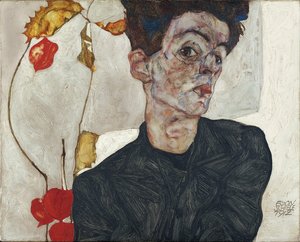
Egon Schiele's "Sawmill," painted in 1913, isn’t merely a depiction of a rustic building; it’s a raw, intensely personal glimpse into the anxieties and beauty of early 20th-century Austria. Created during a period of profound upheaval – both personally for Schiele and politically across Europe – the painting vibrates with an unsettling energy that belies its seemingly simple subject matter. The scene unfolds within a landscape dominated by muted browns and greens, punctuated by the stark geometry of the sawmill itself. This structure, rendered in warm, earthy tones, becomes a focal point, simultaneously representing industry and a brutal confrontation with mortality. Schiele’s masterful use of texture, achieved through thick, impasto brushstrokes, imbues the canvas with a palpable sense of movement – you can almost hear the rhythmic groan of the machinery and feel the dampness of the surrounding hillside.
“Sawmill” firmly resides within the realm of Art Nouveau, though it transcends mere stylistic adherence. While embracing the movement’s emphasis on sinuous lines and organic forms – evident in the undulating curves of the hillside and the suggestion of human figures within the building – Schiele injects a distinctly unsettling quality. Unlike the often-idealized representations of nature found in some Art Nouveau works, Schiele's landscape is imbued with a sense of vulnerability and decay. The muted palette and the stark contrast between light and shadow contribute to this feeling, hinting at an underlying melancholy. The painting’s composition feels deliberately unbalanced, mirroring perhaps the artist’s own internal struggles.
Beyond its formal elements, “Sawmill” is rich with symbolic weight. The sawmill itself has become a potent symbol of labor, industry, and ultimately, mortality. It represents the relentless cycle of production and destruction, mirroring Schiele’s preoccupation with death – a theme that permeated much of his oeuvre following the loss of his father. The small building adjacent to the main structure could be interpreted as a refuge, a place of rest or perhaps even a tomb, further reinforcing the painting's somber mood. The placement of these structures within the vast landscape emphasizes humanity’s smallness and vulnerability in the face of nature’s power.
Understanding Egon Schiele requires acknowledging the profound impact of his personal life. Born in Vienna in 1890, Schiele's early years were marked by illness and loss – a tragedy that profoundly shaped his artistic vision. His father’s death from syphilis at the age of fourteen cast a long shadow over his psyche, fueling an obsession with themes of mortality, fragility, and the human condition. This emotional intensity is powerfully conveyed in “Sawmill,” where every brushstroke seems to carry the weight of unspoken grief. His unique style, characterized by elongated figures, distorted perspectives, and a raw, expressive quality, continues to captivate viewers today. The painting stands as a testament to his ability to transform personal pain into enduring artistic expression.
For those seeking to experience the power of Schiele’s vision firsthand, Most-Famous-Paintings.com offers meticulously crafted oil painting reproductions of “Sawmill.” These handmade reproductions capture not only the visual details but also the emotional depth and textural richness of the original, allowing you to bring this poignant work into your own space.

1890 - 1918 , Oostenrijk


Blijf op de hoogte van het laatste kunstnieuws, exclusieve aanbiedingen en decoratie-ideeën.
Vertel ons over uw project en onze kunstexperts geven u 3 gepersonaliseerde kunstsuggesties.
Wij stellen drie opties speciaal voor u samen – gratis!


 Voorvertoning
 Verstuur
 Delen
Delen
 Details bekijken

 Download
 Vergelijkbare items
 Röntgenonderzoek
 Diavoorstelling
 Lees meer


