


x

 Acrylic On CanvasWallArtExpressionism
 1916
1916 34.0 x 27.0 cm
Koop een digitale afbeelding in hoge resolutie met verbeterde kwaliteit, die veel superieur is aan de online voorvertoning.
Elk bestand wordt met uiterste precisie voorbereid door onze interne specialisten, met behulp van geavanceerde tools en deskundige handmatige retouche. Wij garanderen dat elke afbeelding een uitzonderlijke helderheid, nauwkeurige kleurweergave en verfijnde details bezit.
Het uiteindelijke bestand wordt binnen 72 uur per e-mail geleverd, geoptimaliseerd voor direct gebruik in professionele, redactionele en printomgevingen. Dit is dezelfde kwaliteit waarop vooraanstaande designstudio's, uitgevers en galerieën vertrouwen.
Download een bestand met hoge resolutie voor persoonlijke weergave, afdrukken en creatieve projecten. ( Bestel print Bestel handgeschilderde reproductie)
Wanneer u kiest voor Most-Famous-Paintings.com, ontvangt u niet alleen een afbeelding – u krijgt een professioneel verbeterd digitaal kunstwerk, met precisie vervaardigd en voorzien van een tevredenheidsgarantie. Dit is alles wat automatisch bij uw bestelling is inbegrepen:

Uw hoogwaardige digitale afbeeldingsbestand wordt binnen 72 uur na bestelling naar u gemaild – klaar voor direct gebruik.

Uw kunstwerk wordt professioneel geoptimaliseerd met behulp van geavanceerde AI-tools en handmatige bewerkingen, waardoor maximale details, helderheid en kleurnauwkeurigheid worden gegarandeerd.

Je bestand per ongeluk verwijderd of kwijtgeraakt? Geen zorgen – we sturen het u op elk gewenst moment gratis opnieuw toe.

Geniet direct van uw kunstwerk zonder invoerrechten, belastingen of verzendkosten – digitale downloads zijn altijd belastingvrij.

Met behulp van professionele hulpmiddelen en kleurbeheer zorgen wij ervoor dat uw digitale afbeelding de originele kleuren zo nauwkeurig mogelijk weergeeft.

Als u niet tevreden bent met uw digitale afbeelding, passen wij deze aan of storten wij 100% terug binnen 60 dagen – zonder vragen gesteld.

Niet tevreden? Ontvang binnen 60 dagen na ontvangst van uw digitale bestand uw volledige aankoopbedrag terug – zonder vragen te stellen.

Koop 3 afbeeldingen, bespaar 10% - Koop 5, bespaar 15% - Koop 10+, bespaar 20%. Ideaal voor creatieve projecten, galerieën en bureaus.
Egon Schiele’s “Sitting Child,” created in 1916, isn't merely a depiction of a young boy playing with a toy; it’s a profoundly unsettling and intensely personal portrait. Rendered in stark black and white pencil on paper, the drawing immediately draws the viewer into a world of quiet observation and subtle unease. Measuring just 34 x 27 cm, its intimate scale amplifies the feeling of being privy to a private moment, as if we’ve stumbled upon an artist's fleeting study. The simplicity of the composition – a child seated on the ground, absorbed in their play – belies the complex emotions simmering beneath the surface. This isn’t a sentimental portrayal of childhood; instead, it’s a glimpse into Schiele’s uniquely perceptive and often melancholic vision of humanity.
The drawing's style is undeniably rooted in Expressionism, a movement characterized by its focus on subjective emotion and distorted forms. Schiele’s lines are not clean or precise; they writhe and twist with an almost palpable energy, conveying a sense of restlessness and vulnerability. Notice how the child’s body isn’t rendered with anatomical accuracy – rather, it's suggested through fragmented lines, creating a feeling of instability and fragility. This deliberate distortion mirrors Schiele’s broader exploration of mortality and psychological distress, themes that frequently permeate his work. The use of monochrome further intensifies this effect, stripping away any potential distractions and forcing the viewer to confront the raw emotion at the heart of the image.
To understand “Sitting Child,” it’s crucial to consider the historical context in which it was created. 1916 was a turbulent year, marked by the escalating horrors of World War I and a pervasive sense of anxiety within Europe. Schiele himself was grappling with personal tragedy – his father's death from syphilis just four years prior had left an indelible mark on his psyche. This experience fueled a lifelong preoccupation with themes of illness, decay, and the fleeting nature of life. The drawing can be interpreted as a meditation on these anxieties, subtly projected onto the innocent figure of the child.
Schiele’s artistic influences are equally important to consider. He was deeply impacted by the work of Vincent van Gogh, particularly his expressive use of line and color. However, Schiele pushed beyond mere imitation, developing a highly individual style characterized by its angularity, distortion, and psychological depth. The drawing also reveals echoes of earlier Renaissance depictions of the Madonna and Child, but Schiele subverts this traditional iconography by imbuing the scene with an unsettling ambiguity. The child’s gaze is averted, suggesting introspection or perhaps even a hint of sadness – a stark contrast to the idealized serenity often associated with images of motherhood.
The teddy bear clutched in the child's hand is more than just a simple toy; it’s a potent symbol. In Schiele’s work, objects frequently carry layered meanings, representing desires, fears, or unresolved traumas. The teddy bear, often associated with comfort and security, here seems to offer little solace. Its presence alongside the child’s somewhat melancholic expression suggests a yearning for something lost or unattainable. The very act of sitting alone on the ground could symbolize isolation or vulnerability – a poignant reflection of the artist's own feelings of alienation.
Ultimately, “Sitting Child” is a deeply ambiguous and emotionally resonant work. It’s not a cheerful depiction of childhood innocence; rather, it’s a haunting meditation on mortality, anxiety, and the complexities of human experience. Schiele masterfully captures a fleeting moment in time, inviting us to contemplate the hidden depths beneath the surface of seemingly ordinary subjects. The drawing's power lies in its ability to evoke a sense of unease and introspection, leaving the viewer with more questions than answers – a testament to Schiele’s genius as an artist and his profound understanding of the human psyche.

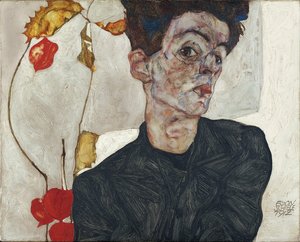
1890 - 1918 , Oostenrijk


Blijf op de hoogte van het laatste kunstnieuws, exclusieve aanbiedingen en decoratie-ideeën.
Vertel ons over uw project en onze kunstexperts geven u 3 gepersonaliseerde kunstsuggesties.
Wij stellen drie opties speciaal voor u samen – gratis!


 Voorvertoning
 Verstuur
 Delen
Delen
 Details bekijken

 Download
 Vergelijkbare items
 Röntgenonderzoek
 Diavoorstelling
 Lees meer


