x

Giclée- of canvasafdruk van museumkwaliteit met een snelle productie en flexibele afwerkingsmogelijkheden. ( Bestel handgeschilderde reproductie Koop afbeelding)





























Kies uit onze vooraf ingestelde maten die overeenkomen met de originele verhoudingen van het kunstwerk.

U kunt uw eigen afmetingen opgeven om in een specifieke lijst of ruimte te passen. Als de door u gekozen maat niet overeenkomt met de proporties van het originele kunstwerk, zullen wij de afbeelding bijsnijden of uitbreiden met een gespiegelde of effen rand. Een digitaal mockup wordt ter goedkeuring naar u verzonden voordat de productie begint.
Houd er rekening mee dat de preview op het scherm de werkelijke bijsneding of uitbreiding niet weergeeft. Alleen de mockup toont de uiteindelijke compositie nauwkeurig.
Hoewel aangepaste maten beschikbaar zijn, raden wij aan een afmeting uit de vooraf bepaalde lijst te kiezen om de originele proporties te behouden.
Wereldwijde levering () binnen 2 weken in plaats van de standaard 4/5 weken. (17 augustus)


Three Girls
Afmetingen reproductie
Egon Schiele's "Three Girls," painted in 1911, is not merely a depiction of three young women; it’s a profoundly unsettling exploration of intimacy, vulnerability, and the precariousness of existence – hallmarks of the artist’s intensely personal and emotionally charged style. The painting immediately confronts the viewer with its raw honesty, eschewing idealized beauty for a stark realism that borders on the disturbing. Schiele, working in Vienna during a period of immense social and artistic upheaval, was deeply influenced by the burgeoning Expressionist movement, which sought to convey subjective emotions rather than objective reality. This work exemplifies his signature approach: elongated figures, distorted perspectives, and an almost palpable sense of unease permeate every brushstroke.
The composition itself is deliberately unsettling. The women are clustered closely together, their limbs intertwined in a way that suggests both connection and potential conflict. Their gazes, averted or directed inward, hint at unspoken anxieties and hidden desires. Schiele’s masterful use of line – particularly the sharp, angular contours defining their bodies – creates a sense of dynamism and instability. The figures aren't posed formally; they seem caught in a moment of intense feeling, frozen in a private drama that unfolds entirely within the confines of the room. Notice how he uses shading to create an almost sculptural effect, emphasizing the physicality of each woman while simultaneously hinting at their fragility.
To fully appreciate “Three Girls,” it’s crucial to understand Schiele's personal life during this period. He was grappling with profound grief – his father had succumbed to syphilis just a few years prior, leaving him emotionally scarred and acutely aware of the fragility of human life. The early death of his sister Elvira further deepened this sense of loss and fueled an obsession with mortality that would become a recurring theme in his work. This painting can be interpreted as a meditation on these themes, a visual representation of the anxieties surrounding death, sexuality, and the search for connection in the face of inevitable decay.
The room itself – a sparsely furnished bedroom with a bed in the background – contributes to the overall atmosphere of claustrophobia and unease. It’s not a welcoming space; rather, it feels like a refuge, or perhaps a prison. The muted color palette—dominated by browns, greys, and ochres—reinforces this sense of melancholy and isolation. Schiele's use of light is equally deliberate, casting long shadows that obscure the figures and heighten their vulnerability.
Beyond its immediate emotional impact, “Three Girls” is rich in symbolic meaning. The intertwined limbs can be seen as a representation of both physical intimacy and psychological dependence. The averted gazes suggest a reluctance to confront one another, perhaps reflecting a deeper sense of insecurity or unresolved conflict. Some art historians have linked the painting to Schiele’s fascination with the human body, particularly its capacity for both pleasure and pain. The figures' elongated forms and distorted features are characteristic of Expressionist aesthetics, designed to convey intense emotions rather than realistic appearances.
Furthermore, the presence of the standing figure in the background adds another layer of complexity to the scene. This enigmatic presence could represent a silent observer, a potential threat, or perhaps even a reflection of the women’s own internal struggles. It's a detail that invites speculation and encourages viewers to engage with the painting on a deeper level.
Most-Famous-Paintings offers meticulously crafted hand-painted reproductions of Egon Schiele’s “Three Girls,” capturing the artist’s unique style and emotional intensity. Our skilled artisans use archival-quality materials and techniques to faithfully recreate every nuance of this powerful work, ensuring that it will be a treasured addition to any art collection or interior space. Whether you're an admirer of Expressionism, a collector of Schiele’s oeuvre, or simply seeking a piece of art that evokes profound emotion, our reproduction provides an authentic and captivating representation of this iconic painting. Explore the full artwork details and order your high-quality reproduction today at Most-Famous-Paintings.

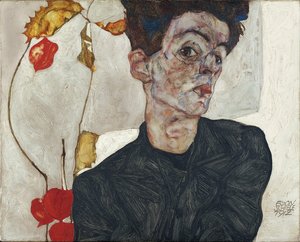
1890 - 1918 , Oostenrijk

Explore the profound history of Expressionism. From Edvard Munch to Jackson Pollock, discover how artists used distortion and color to convey raw emotion. A definitive guide for art lovers seeking deep historical context and mastery in fine art reproductions.

Explore the profound emotional depth of Expressionist portraiture. From Edvard Munch to Francis Bacon, discover how masters used distortion and color to reveal inner truths. Learn about this pivotal movement and find museum-quality oil reproductions for your collection.


Blijf op de hoogte van het laatste kunstnieuws, exclusieve aanbiedingen en decoratie-ideeën.
Vertel ons over uw project en onze kunstexperts geven u 3 gepersonaliseerde kunstsuggesties.
Wij stellen drie opties speciaal voor u samen – gratis!


 Voorvertoning
 Verstuur
 Delen
Delen
 Details bekijken

 Download
 Vergelijkbare items
 Röntgenonderzoek
 Diavoorstelling

 Lees meer







 De optie voor glas is alleen beschikbaar bij een formaat kleiner dan 110 cm.