
Verkoop uw kunst
Verlanglijstje Winkelwagen Cart
VoorvertoningVoorvertoning Bekijk in ARBekijk in AR Bestel print Bestel printBestel handgeschilderde reproductie Bestel handgeschilderde reproductie VerstuurVerstuur
Details bekijkenDetails bekijken Toevoegen aan favorieten Toevoegen aan favorieten DownloadDownload Vergelijkbare itemsVergelijkbare items RöntgenonderzoekRöntgenonderzoek DiavoorstellingDiavoorstelling

untitled (6821)

Experience the haunting beauty of Egon Schiele’s ‘untitled (6821)’ – a mesmerizing sunset seascape rendered in expressive lines and capturing the essence of Austrian Expressionism. Explore a stunning reproduction today!

Verken de intense emoties van Egon Schiele: rauwe portretten, psychologische thema's & unieke lijnen. Ontdek iconische reproducties van deze expressionistische meester.

Koop een digitale afbeelding in hoge resolutie met verbeterde kwaliteit, die veel superieur is aan de online voorvertoning.

Elk bestand wordt met uiterste precisie voorbereid door onze interne specialisten, met behulp van geavanceerde tools en deskundige handmatige retouche. Wij garanderen dat elke afbeelding een uitzonderlijke helderheid, nauwkeurige kleurweergave en verfijnde details bezit.

Het uiteindelijke bestand wordt binnen 72 uur per e-mail geleverd, geoptimaliseerd voor direct gebruik in professionele, redactionele en printomgevingen. Dit is dezelfde kwaliteit waarop vooraanstaande designstudio's, uitgevers en galerieën vertrouwen.

Digitale afbeeldingen

Download een bestand met hoge resolutie voor persoonlijke weergave, afdrukken en creatieve projecten. (Bestel print Bestel printBestel handgeschilderde reproductie Bestel handgeschilderde reproductie)

Totaalprijs

$ 24,90

Inbegrepen bij elke bestelling van een digitale afbeelding

Professionele digitale levering, gegarandeerd

Wanneer u kiest voor Most-Famous-Paintings.com, ontvangt u niet alleen een afbeelding – u krijgt een professioneel verbeterd digitaal kunstwerk, met precisie vervaardigd en voorzien van een tevredenheidsgarantie. Dit is alles wat automatisch bij uw bestelling is inbegrepen:

shipping_icon
Snelle levering per e-mail

Uw hoogwaardige digitale afbeeldingsbestand wordt binnen 72 uur na bestelling naar u gemaild – klaar voor direct gebruik.

canvas_icon
AI-verbeterd digitaal bestand

Uw kunstwerk wordt professioneel geoptimaliseerd met behulp van geavanceerde AI-tools en handmatige bewerkingen, waardoor maximale details, helderheid en kleurnauwkeurigheid worden gegarandeerd.

insurance_icon
Gratis levenslange herlevering van digitale afbeeldingen

Je bestand per ongeluk verwijderd of kwijtgeraakt? Geen zorgen – we sturen het u op elk gewenst moment gratis opnieuw toe.

tax_icon
Geen invoerkosten – nooit

Geniet direct van uw kunstwerk zonder invoerrechten, belastingen of verzendkosten – digitale downloads zijn altijd belastingvrij.

color_icon
Garantie op kleurgetrouwheid

Met behulp van professionele hulpmiddelen en kleurbeheer zorgen wij ervoor dat uw digitale afbeelding de originele kleuren zo nauwkeurig mogelijk weergeeft.

return_icon
60 dagen tevredenheidsgarantie

Als u niet tevreden bent met uw digitale afbeelding, passen wij deze aan of storten wij 100% terug binnen 60 dagen – zonder vragen gesteld.

guarantee_icon
100% Geld-terug-garantie

Niet tevreden? Ontvang binnen 60 dagen na ontvangst van uw digitale bestand uw volledige aankoopbedrag terug – zonder vragen te stellen.

discount_icon
Korting bij grote bestellingen

Koop 3 afbeeldingen, bespaar 10% - Koop 5, bespaar 15% - Koop 10+, bespaar 20%. Ideaal voor creatieve projecten, galerieën en bureaus.

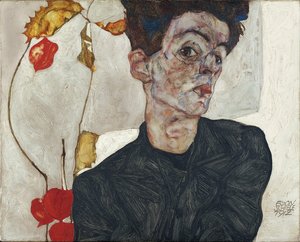
Snelle feiten

  • Title: untitled (6821)
  • Medium: Oil on Canvas
  • Artist: Egon Schiele
  • Influences: Gustav Klimt
  • Subject or theme: Landscape, Sunset
  • Notable elements or techniques: Twisted body shapes, expressive line

Beschrijving verzamelobject

A Study in Twilight: Egon Schiele’s Untitled (6821)

Egon Schiele's "Untitled (6821)" is more than just a depiction of boats on the water at sunset; it’s a profound meditation on vulnerability, mortality, and the unsettling beauty found within decay. Painted in 1917 during the tumultuous period of World War I – a time when Schiele wrestled with personal grief and existential anxieties – this artwork embodies the core tenets of Expressionism, prioritizing emotional intensity over objective representation. The photograph captures a serene seascape bathed in the fading hues of twilight, yet beneath the surface lies a palpable tension that speaks volumes about Schiele’s artistic vision.

Composition and Technique

The painting's composition is strikingly simple yet meticulously crafted. Two prominent boats dominate the foreground, positioned close to the left edge of the canvas, their hulls angled slightly towards the viewer. A third boat sits further along the right side, creating a dynamic interplay between stillness and movement. Scattered smaller vessels punctuate the scene, adding depth and subtly disrupting the overall harmony. Schiele’s masterful technique—characterized by thick impasto brushstrokes—captures the texture of the water surface with remarkable accuracy. The artist employs a palette dominated by muted browns, ochres, and reds, mirroring the melancholic tones of dusk. These colors aren't merely descriptive; they actively convey emotion, reflecting Schiele’s preoccupation with darkness and decay – themes prevalent throughout his oeuvre.

Symbolism and Emotional Resonance

Schiele’s artistic choices resonate deeply with the psychological landscape of his time. The boats themselves can be interpreted as symbols of fragility and impermanence, mirroring the anxieties surrounding the war effort and the looming threat of death. Their positioning suggests a confrontation with these fears, yet simultaneously hints at acceptance—a quiet acknowledgement of life's inevitable cycle. Furthermore, Schiele’s signature style – marked by distorted figures and unsettling perspectives – reflects his exploration of psychological trauma and the human condition. The painting isn’t intended to offer comfort or reassurance; rather, it compels the viewer to confront uncomfortable truths about existence.

Historical Context: Expressionism's Embrace of Emotion

Expressionism emerged in Austria during the early 20th century as a reaction against Impressionism’s focus on optical perception. Artists like Schiele sought to express inner feelings and subjective experiences rather than faithfully reproducing external reality. Influenced by Nietzschean philosophy and Freud’s psychoanalytic theories, Expressionists aimed to depict the darker side of human nature—fear, anxiety, despair—with uncompromising honesty. “Untitled (6821)” stands as a testament to this artistic movement's commitment to conveying emotion above all else, cementing Schiele’s place as one of the most influential figures in modern art.

A Legacy of Intensity

Today, reproductions of "Untitled (6821)" continue to captivate audiences with their arresting visual impact and profound emotional depth. Its enduring appeal lies in Schiele's ability to distill complex psychological states into a deceptively serene image—a masterful demonstration of how beauty can coexist with sorrow and vulnerability. This artwork serves as an invitation to contemplate the mysteries of life, death, and the human spirit, ensuring Schiele’s legacy persists as a beacon of artistic innovation and emotional truth.

Kunstenaarsbiografie

A Life Forged in Expression

Egon Schiele’s life, a turbulent and intensely personal journey, unfolded from 1890 to 1918 within the vibrant yet often unsettling landscape of Vienna. Born in Tulln an der Donau, Austria, his early years were shadowed by profound loss – the death of his father due to syphilis at just fourteen, followed tragically by the demise of his sister Elvira. Raised initially by his mother and later under the watchful eye of his uncle Leopold Czihaczek, Schiele’s childhood lacked the stability common to many, fostering within him a remarkable independence and an acute sensitivity. From a young age, he displayed a deep fascination with trains – a motif that would subtly reappear throughout his work, symbolizing both movement and perhaps, the relentless passage of time. Though initially discouraged by his father for pursuing drawing as a distraction from more “practical” endeavors, Schiele’s innate talent blossomed, laying the foundation for his future artistic expression. These formative experiences—illness, loss, and an unconventional upbringing—instilled within him a profound awareness of mortality and the fragility of human existence, themes that would become central to his art.

The Crucible of Vienna: Artistic Development

Schiele’s formal artistic training began at the Kunstgewerbeschule in Vienna, but he quickly found himself stifled by its conservative approach. Seeking a more expressive outlet, he transferred to the Akademie der bildenden Künste, only to discover that even this institution's academic traditions felt restrictive. Dissatisfied with the rigid constraints of traditional art education, Schiele deliberately chose to forge his own path, rejecting formal training altogether – a bold decision reflecting his unwavering artistic conviction. Crucially, he found inspiration in the work of Gustav Klimt, deeply admiring Klimt’s decorative style and exploration of symbolism. Klimt's influence was significant, yet Schiele ultimately diverged from his mentor’s aesthetic, developing a distinctly individual voice characterized by stark honesty and psychological intensity. He became a founding member of the Neues Wiener Kunstgruppe (New Viennese Art Group) in 1909, alongside other progressive artists who challenged the prevailing artistic norms of the time. His early works—often unsettling portraits and self-portraits—began to emerge as powerful statements of emotional turmoil, featuring distorted figures and a palpable sense of vulnerability. These paintings weren’t merely representations of physical form; they were explorations of the inner landscape – the anxieties, desires, and fears that haunted the human psyche. He sought to depict not what he *saw*, but what he *felt*.

Raw Emotion and Unflinching Truth

Egon Schiele's art is immediately recognizable for its raw honesty and psychological depth. He fearlessly confronted themes often considered taboo – sexuality, death, anxiety, isolation – with an unflinching gaze. His distinctive style features elongated figures, contorted poses, and expressive lines that convey a sense of unease and emotional intensity. The human form, particularly the nude, became his primary subject, not as an object of idealized beauty but as a vessel for exploring the complexities of human experience. Self-portraits constitute a significant portion of his oeuvre, offering intimate glimpses into his inner world—a world often marked by loneliness and self-doubt. He didn’t shy away from depicting himself in unflattering or vulnerable poses, revealing a profound level of self-awareness and introspection. Beyond self-portraiture, Schiele created numerous portraits of others, capturing their likenesses with an unsettling realism that seemed to penetrate beneath the surface. Recurring motifs like the *Physalis* plant – symbolizing death and transience with its delicate, papery husk – further underscore this preoccupation with mortality. His use of line is particularly striking; it’s not merely a tool for defining shape but an expressive force that conveys emotion and psychological tension.

A Legacy Cut Short: Achievements & Significance

Despite facing censorship and legal challenges—including a brief imprisonment for allegedly corrupting minors with his art—Schiele gained recognition within Vienna’s avant-garde circles. His work challenged the conventions of the time, provoking both admiration and outrage. By the time of his untimely death during the Spanish flu pandemic in 1918 at the age of twenty-eight, he had established himself as a leading figure in Austrian Expressionism. Significant works such as *Self-Portrait with Physalis*, *Couple Embracing*, and *Field Landscape (Kreuzberg near Krumau)* stand as testaments to his artistic genius. His influence on subsequent generations of artists is undeniable, particularly those interested in exploring psychological themes and challenging conventional artistic norms. Schiele’s bold approach to form and subject matter continues to resonate with audiences today, making him one of the most important and influential figures in early 20th-century art. His paintings are now held in major museum collections worldwide, including the Leopold Museum in Vienna and the Egon Schiele Art Centrum in Český Krumlov, ensuring his artistic legacy endures. He left behind a body of work that is not merely aesthetically compelling but profoundly human—a testament to the power of art to confront the complexities of existence with honesty, courage, and unwavering vision.
  • Key Themes: Mortality, sexuality, isolation, psychological turmoil.
  • Influences: Gustav Klimt, Viennese Secession, personal trauma.
  • Style Characteristics: Elongated figures, contorted poses, expressive lines, raw emotion.
Egon Schiele

Egon Schiele

1890 - 1918 , Oostenrijk

Belangrijkste feiten

  • Artistic Movement Or Style: Expressionisme
  • Artists Or Movements Influenced By This Artist: ['Expressionisme']
  • Artists Who Influenced This Artist: ['Gustav Klimt']
  • Date Of Birth: 12 juni 1890
  • Date Of Death: 31 oktober 1918
  • Full Name: Egon Schiele
  • Nationality: Oostenrijks
  • Notable Artworks:
    • Self-Portrait
    • Kouppel omhelzing
    • Veldschilderij
  • Place Of Birth: Tulln an der Donau, Oostenrijk

