x

Met de hand geschilderd in olieverf op canvas in uw gewenste maat en lijst, op bestelling gemaakt door onze kunstenaars. ( Bestel print Koop afbeelding)
Kies uit onze vooraf ingestelde maten die overeenkomen met de originele verhoudingen van het kunstwerk.

U kunt uw eigen afmetingen invoeren om in een specifieke lijst of ruimte te passen. Als de door u gekozen maat niet overeenkomt met de verhoudingen van het originele beeld, zullen we het kunstwerk bijsnijden of het schilderij uitbreiden met extra handgeschilderde elementen. Een digitale mockup wordt ter goedkeuring naar u verzonden voordat de productie begint.
Houd er rekening mee dat de preview op het scherm niet de werkelijke uitsnede of uitbreiding weergeeft. Alleen de mockup toont de uiteindelijke compositie nauwkeurig.
Hoewel aangepaste afmetingen mogelijk zijn, raden we aan een maat uit de vooraf gedefinieerde lijst te selecteren om de originele verhoudingen te behouden.
Wereldwijde levering () binnen 3 tot 4 weken in plaats van de standaard 5 weken. (18 augustus). Zonder concessies aan de kwaliteit.


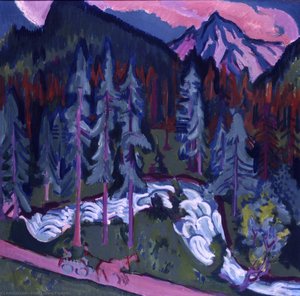
Evening Patrol
Afmetingen reproductie
Ernst Ludwig Kirchner’s “Evening Patrol” is not merely a depiction of two riders on horseback; it's a visceral plunge into the anxieties and uncertainties that defined the early 20th century. Executed in the style of German Expressionism, this work, likely a lithograph or etching, captures a moment suspended between urgency and unease, reflecting Kirchner’s profound engagement with the psychological landscape of his time. The composition immediately commands attention – two figures, rendered with stark, angular forms and bold black lines, dominate the central space, their diagonal movement suggesting a relentless pursuit, a patrol perhaps, yet one imbued with an unsettling lack of purpose. The simplified background, comprised of loosely defined shapes hinting at trees or foliage, serves not as a backdrop but as a visual echo of the figures’ internal turmoil.
“Evening Patrol” transcends a simple narrative; it’s a potent symbol of the anxieties simmering beneath the surface of early 20th-century Europe. The distorted forms, flattened perspective, and lack of realistic detail are hallmarks of Expressionism's core philosophy – to depict not what is seen but what is felt. The riders themselves become embodiments of this unease, their angular bodies and forceful lines suggesting a loss of control, a struggle against an unseen force. The ambiguity of their mission—a patrol or pursuit—further contributes to the artwork’s unsettling atmosphere, mirroring the broader sense of disorientation and uncertainty that characterized the era. Kirchner's work resonates with the concerns of his time – the rapid industrialization, social upheaval, and growing sense of alienation that fueled the Expressionist movement.
Kirchner’s “Evening Patrol” firmly places him within the heart of the German Expressionist movement, a reaction against the perceived superficiality and academic constraints of traditional art. Influenced by artists like Albrecht Dürer and deeply affected by the social and political climate of his time – particularly the rise of industrialization and urban life – Kirchner sought to express raw emotion through distorted forms and bold lines. His work aligns closely with the style of other key Expressionist figures, such as Emil Nolde and Max Pechstein, sharing a commitment to conveying subjective experience rather than objective reality. The piece’s dynamic composition and emotional intensity are hallmarks of Kirchner's distinctive approach, solidifying his place as one of the most important artists of the 20th century.

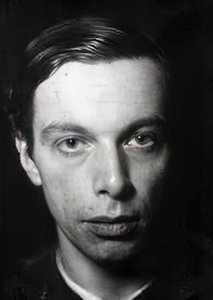
1880 - 1938 , Duitsland

Explore the profound history and technical mastery of woodcut relief printing. From ancient origins to German Expressionism, discover how artists use the subtractive process to create iconic works. A definitive guide for art students, collectors, and historians.

Explore the visceral power of German Expressionism. From Ernst Ludwig Kirchner to Die Brücke, discover how bold colors and distorted forms unmask raw human emotion in this expert art history guide for collectors and enthusiasts.


Blijf op de hoogte van het laatste kunstnieuws, exclusieve aanbiedingen en decoratie-ideeën.
Vertel ons over uw project en onze kunstexperts geven u 3 gepersonaliseerde kunstsuggesties.
Wij stellen drie opties speciaal voor u samen – gratis!


 Verstuur
 Delen
Delen
 Details bekijken

 Download
 Vergelijkbare items
 Diavoorstelling

 Lees meer




































 De optie voor glas is alleen beschikbaar bij een formaat kleiner dan 110 cm.