x


 Bestel schilderij Koop afbeelding in hoge resolutie
 Verstuur
 Details bekijken
 Toevoegen aan favorieten
 Download
 Vergelijkbare werken
 Röntgenonderzoek
 Diavoorstelling
Giclée- of canvasafdruk van museumkwaliteit met snelle productie en flexibele afwerkingsopties.
Kies uit onze vooraf ingestelde maten die overeenkomen met de originele verhoudingen van het kunstwerk.

U kunt uw eigen afmetingen opgeven om in een specifieke lijst of ruimte te passen. Als de door u gekozen maat niet overeenkomt met de proporties van het originele kunstwerk, zullen wij de afbeelding bijsnijden of uitbreiden met een gespiegelde of effen rand. Een digitaal mockup wordt ter goedkeuring naar u verzonden voordat de productie begint.
Houd er rekening mee dat de preview op het scherm de werkelijke bijsneding of uitbreiding niet weergeeft. Alleen de mockup toont de uiteindelijke compositie nauwkeurig.
Hoewel aangepaste maten beschikbaar zijn, raden wij aan een afmeting uit de vooraf bepaalde lijst te kiezen om de originele proporties te behouden.
Wereldwijde levering () binnen 2 weken in plaats van de standaard 4/5 weken. (22 juli)


Five cocottes
Afmetingen reproductie
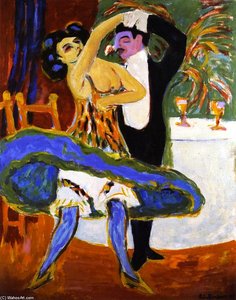
Ernst Ludwig Kirchner’s “Five Cocottes” is not merely a depiction of five figures; it's a visceral plunge into the turbulent heart of German Expressionism. Executed around 1908, this woodcut print, born from Kirchner’s profound engagement with the anxieties of his era, immediately confronts the viewer with an unsettling dynamism. The composition, deliberately chaotic and crowded, eschews traditional notions of perspective and spatial harmony, opting instead for a flattened, almost claustrophobic space where the figures – likely women – are locked in a silent, palpable struggle. Kirchner’s masterful manipulation of line is central to this effect; thick, jagged lines dominate, not to delineate form with precision, but to convey raw emotion and an underlying sense of unease. The stark contrast between black and white amplifies the drama, creating areas of intense shadow that seem to press in on the figures, mirroring perhaps a psychological state of confinement or distress.
Kirchner's use of line is far more than a stylistic choice; it’s the very language through which he communicates his subject’s emotional state. The angular, almost violent lines that define the figures’ bodies suggest a fractured sense of self, reflecting the anxieties of a society undergoing rapid industrialization and social upheaval. The geometric shapes – triangles, rectangles, sharp angles – are not decorative elements but rather structural components contributing to the overall feeling of agitation. They reinforce the impression of instability and disrupt any attempt at harmonious composition. The deliberate lack of smooth curves or flowing lines further intensifies this sense of unease, mirroring a world perceived as fragmented and chaotic.
Created during a period of significant social and political change in Germany, “Five Cocottes” reflects the anxieties of a nation grappling with modernity. Kirchner, like many artists of his time, was deeply concerned about the dehumanizing effects of industrialization and the erosion of traditional values. His work is often seen as a response to these concerns, offering a bleak yet profoundly honest portrayal of the psychological toll of modern life. Born in Aschaffenburg in 1880, Kirchner’s early life was marked by instability and displacement, experiences that undoubtedly shaped his artistic vision. He initially studied architecture but quickly gravitated towards painting, finding in it a means to express his innermost thoughts and feelings. His association with other Expressionist artists like Fritz Bleyl further solidified his commitment to this radical approach to artmaking.
“Five Cocottes” is more than just an artwork; it’s a powerful statement about the human condition. Its raw emotional intensity and innovative technique make it a compelling addition to any collection, offering a unique glimpse into the mind of one of Germany's most important Expressionist artists. A hand-painted reproduction allows you to bring this evocative piece into your own space, transforming your interior with its haunting beauty and profound psychological depth. Consider this artwork not just as decoration, but as an investment in artistic legacy – a tangible connection to a pivotal moment in the history of modern art.

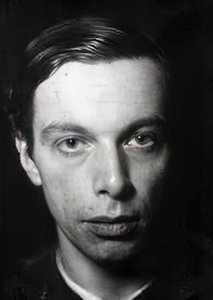
1880 - 1938 , Duitsland
Ontdek de subtiele kracht van zwart, wit en grijs in hoteldesign. Expert tips voor licht, textuur & moderne architectuur. Creëer rustgevende, luxe ruimtes met Most-Famous-Paintings.
Ontdek de 25 meest iconische werken van Kazimir Malevich, pionier van het suprematisme en abstracte kunst. Van 'Zwarte Vierkant' tot 'Witte op Wit', leer over zijn invloedrijke stijl & koop museumkwaliteit reproducties voor uw interieur. Explore the full collection online!

Explore the powerful world of Ernst Ludwig Kirchner and German Expressionism. Discover his iconic paintings, Die Brücke group, and the movement's exploration of urban anxiety & modern identity. Expert analysis for collectors & enthusiasts.
Ontdek de kracht van 'Mars Black' in 10 iconische schilderijen! Van Rembrandt tot Manet, duik in de donkere esthetiek en emotionele diepgang van meesterwerken. Vind museumkwaliteit reproducties & decoratie-inspiratie op Most-Famous-Paintings.com.
Ontdek de 10 meest iconische Expressionistische meesterwerken! Duik in de emotionele wereld van Kirchner, Kandinsky & Nolde. Museumkwaliteit kunst reproducties voor uw interieur. Exploreer de collectie op Most-Famous-Paintings.com.


Blijf op de hoogte van het laatste kunstnieuws, exclusieve aanbiedingen en decoratie-ideeën.
Vertel ons over uw project en onze kunstexperts geven u 3 gepersonaliseerde kunstsuggesties.
Wij stellen 3 opties speciaal voor u samen – Gratis!


 Delen
Delen


 Lees meer




































 De optie voor glas is alleen beschikbaar bij een formaat kleiner dan 110 cm.