x


 EtchingGerman Expressionism
 1929
1929 26.0 x 20.0 cm
Giclée- of canvasafdruk van museumkwaliteit met snelle productie en flexibele afwerkingsopties. ( Switch to hand made Painting Switch to Image)





























Kies uit onze vooraf ingestelde maten die overeenkomen met de originele verhoudingen van het kunstwerk.

U kunt uw eigen afmetingen opgeven om in een specifieke lijst of ruimte te passen. Als de door u gekozen maat niet overeenkomt met de proporties van het originele kunstwerk, zullen wij de afbeelding bijsnijden of uitbreiden met een gespiegelde of effen rand. Een digitaal mockup wordt ter goedkeuring naar u verzonden voordat de productie begint.
Houd er rekening mee dat de preview op het scherm de werkelijke bijsneding of uitbreiding niet weergeeft. Alleen de mockup toont de uiteindelijke compositie nauwkeurig.
Hoewel aangepaste maten beschikbaar zijn, raden wij aan een afmeting uit de vooraf bepaalde lijst te kiezen om de originele proporties te behouden.
Wereldwijde levering () binnen 2 weken in plaats van de standaard 4/5 weken. (28 juli)


Three Faces
Afmetingen reproductie
To gaze upon Ernst Ludwig Kirchner’s etching, "Three Faces," is not merely to observe lines on paper; it is to step directly into the volatile emotional landscape of early 20th-century Berlin. This black and white study, dating from 1929, captures a moment of profound psychological tension through the stark medium of the etching process. The composition presents three distinct visages clustered together, each one offering a different facet of the human condition—a silent, arresting tableau that speaks volumes without uttering a single word. Kirchner, deeply immersed in the fervor and anxiety of German Expressionism, possessed an unparalleled ability to distill complex inner turmoil into stark, graphic forms.
The choice of etching as a medium is crucial to understanding the work's raw power. The inherent nature of etching lends itself to sharp contrasts—the deep blacks against the pristine white ground—which serve to heighten the drama of the expressions. Notice how Kirchner manipulates shadow and line weight; these are not decorative elements but carriers of emotional charge. The viewer’s eye is immediately drawn across the trio, forced into a comparative study. The contrast between the left face's palpable frown, the middle figure's seemingly bright smile, and the right face's more brittle, perhaps even strained grin creates an immediate visual dialogue. It suggests that emotion itself is rarely singular or simple.
Painted in 1929, this work emerges from a period of immense societal upheaval, standing at the precipice of global conflict and radical social change. Kirchner’s art was always deeply engaged with the pulse of modern life—the alienation of the city, the mask worn in public spaces, and the struggle to maintain authentic selfhood amidst rapid modernization. "Three Faces" can be interpreted as a commentary on societal performance; are we all merely performing happiness for an audience? The tension captured here resonates far beyond its specific date, speaking to the universal anxieties of feeling observed, judged, or misunderstood.
The grouping of three faces is inherently symbolic. It suggests a triangulation of experience—perhaps the self versus society, or genuine emotion versus social expectation. The differing expressions invite deep contemplation from the collector or admirer. Is the smile on the right one of joy, or is it the forced composure required to navigate difficult times? Kirchner masterfully uses these subtle variations in musculature and gaze to explore the chasm between inner reality and outer presentation. Owning a reproduction of this piece allows one to bring that thoughtful, questioning energy into a living space, transforming a mere wall hanging into a philosophical anchor.
For those seeking art that possesses both historical weight and immediate emotional impact, "Three Faces" is an unparalleled choice. Its graphic intensity translates beautifully across reproductions, allowing the stark power of Kirchner's original etching to grace any interior setting—from a minimalist gallery wall to a richly decorated study. It serves as a constant, quiet reminder that beneath every composed facade lies a complex, shifting emotional narrative waiting to be observed.

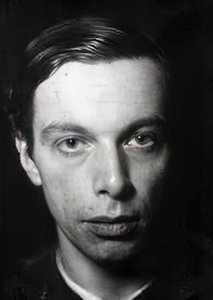
1880 - 1938 , Duitsland

Ontdek de top 25 meesterwerken uit het Metropolitan Museum of Art, New York! Van Van Gogh tot Monet – leer over kunstgeschiedenis en bewonder iconische schilderijen. Vind museumkwaliteit reproducties & interieurinspiratie op Most-Famous-Paintings.com.
Ontdek de 25 meest iconische meesterwerken van James Abbott McNeill Whistler, pionier van het esthetisme en impressionisme. Van zijn betoverende Nocturnes tot portretten vol harmonie. Vind museumkwaliteit reproducties & decoratie-inspiratie op Most-Famous-Paintings.com
Ontdek de 25 meesterwerken van Katsushika Hokusai, de Japanse Ukiyo-e kunstenaar! Reis door zijn iconische prints zoals 'The Great Wave' en Mount Fuji. Vind museumkwaliteit reproducties & inspiratie voor uw interieur op Most-Famous-Paintings.com.

Ontdek de 10 meest legendarische etsen die de kunstgeschiedenis veranderden! Van Rembrandt tot Goya, leer over meesterlijke technieken en iconische werken. Vind museumkwaliteit reproducties & interieurinspiratie op Most-Famous-Paintings.com.
Ontdek de 25 meest iconische werken van Egon Schiele! Duik diep in zijn expressionistische wereld vol intense portretten en emotionele kracht. Vind museumkwaliteit reproducties & unieke wanddecoratie op Most-Famous-Paintings.com. Exploreer de collectie online!


Blijf op de hoogte van het laatste kunstnieuws, exclusieve aanbiedingen en decoratie-ideeën.
Vertel ons over uw project en onze kunstexperts geven u 3 gepersonaliseerde kunstsuggesties.
Wij stellen 3 opties speciaal voor u samen – Gratis!


 Preview
 Verstuur
 Delen
Delen
 Details bekijken

 Download
 Vergelijkbare werken
 Röntgenonderzoek
 Diavoorstelling
 Lees meer







 De optie voor glas is alleen beschikbaar bij een formaat kleiner dan 110 cm.