x

 Acrylic On CanvasWallArtBiedermeier
 1834
1834 25.0 x 31.0 cm
 Hermitage Museum
Koop een digitale afbeelding in hoge resolutie met verbeterde kwaliteit, die veel superieur is aan de online voorvertoning.
Elk bestand wordt met uiterste precisie voorbereid door onze interne specialisten, met behulp van geavanceerde tools en deskundige handmatige retouche. Wij garanderen dat elke afbeelding een uitzonderlijke helderheid, nauwkeurige kleurweergave en verfijnde details bezit.
Het uiteindelijke bestand wordt binnen 72 uur per e-mail geleverd, geoptimaliseerd voor direct gebruik in professionele, redactionele en printomgevingen. Dit is dezelfde kwaliteit waarop vooraanstaande designstudio's, uitgevers en galerieën vertrouwen.
Download een bestand met hoge resolutie voor persoonlijke weergave, afdrukken en creatieve projecten. ( Bestel print Bestel handgeschilderde reproductie)
Wanneer u kiest voor Most-Famous-Paintings.com, ontvangt u niet alleen een afbeelding – u krijgt een professioneel verbeterd digitaal kunstwerk, met precisie vervaardigd en voorzien van een tevredenheidsgarantie. Dit is alles wat automatisch bij uw bestelling is inbegrepen:

Uw hoogwaardige digitale afbeeldingsbestand wordt binnen 72 uur na bestelling naar u gemaild – klaar voor direct gebruik.

Uw kunstwerk wordt professioneel geoptimaliseerd met behulp van geavanceerde AI-tools en handmatige bewerkingen, waardoor maximale details, helderheid en kleurnauwkeurigheid worden gegarandeerd.

Je bestand per ongeluk verwijderd of kwijtgeraakt? Geen zorgen – we sturen het u op elk gewenst moment gratis opnieuw toe.

Geniet direct van uw kunstwerk zonder invoerrechten, belastingen of verzendkosten – digitale downloads zijn altijd belastingvrij.

Met behulp van professionele hulpmiddelen en kleurbeheer zorgen wij ervoor dat uw digitale afbeelding de originele kleuren zo nauwkeurig mogelijk weergeeft.

Als u niet tevreden bent met uw digitale afbeelding, passen wij deze aan of storten wij 100% terug binnen 60 dagen – zonder vragen gesteld.

Niet tevreden? Ontvang binnen 60 dagen na ontvangst van uw digitale bestand uw volledige aankoopbedrag terug – zonder vragen te stellen.

Koop 3 afbeeldingen, bespaar 10% - Koop 5, bespaar 15% - Koop 10+, bespaar 20%. Ideaal voor creatieve projecten, galerieën en bureaus.
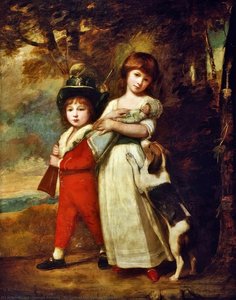
Ferdinand Georg Waldmüller's "Children," painted in 1834, isn’t merely a portrait; it’s a carefully constructed tableau of quiet dignity and poignant observation. The painting captures two young girls returning home from school along a winding path, bathed in the soft, diffused light characteristic of the Biedermeier style – an artistic movement deeply rooted in the appreciation of nature and the celebration of everyday life. Waldmüller, a pivotal figure within this aesthetic, eschewed grand historical or mythological subjects, instead focusing on scenes that offered glimpses into the lives of ordinary people, reflecting a shift away from the formal conventions of earlier art movements.
The scene unfolds with remarkable detail and restraint. The girls, rendered with an almost photographic precision, are dressed in simple, modest attire – a pink dress for one and a white one for the other – their faces conveying a sense of weariness mingled with contentment. Their clasped hands suggest a shared experience, a silent understanding forged through the journey home. The composition is deliberately balanced, drawing the eye along the path towards the distant, hazy mountains—a subtle reminder of the vastness and beauty beyond their immediate world. Waldmüller’s meticulous attention to texture – the rough fabric of their dresses, the worn earth beneath their feet – grounds the scene in a tangible reality.
To understand “Children,” one must appreciate the broader context of the Biedermeier period. Following the tumultuous years of the Napoleonic Wars and the subsequent Restoration, there was a desire for a return to simplicity and sincerity in art. Artists like Waldmüller sought inspiration in the natural world, rejecting the elaborate ornamentation and dramatic narratives favored by earlier styles. The Biedermeier aesthetic valued intimacy, domesticity, and the beauty of the commonplace. Waldmüller’s work embodies this philosophy perfectly; he doesn't attempt to elevate or idealize his subjects but rather presents them with honesty and respect.
The use of *plein air* painting – working directly from nature – was central to the Biedermeier approach, allowing artists to capture the subtle nuances of light and atmosphere. Waldmüller’s ability to render the soft, diffused light filtering through the trees is particularly striking, creating a sense of warmth and tranquility. The muted color palette—dominated by earthy tones and gentle blues—further enhances this effect, contributing to the painting's overall mood of quiet contemplation.
While seemingly straightforward, “Children” is rich in symbolic meaning. The girls’ journey home represents not just a return from school but also a transition into adulthood—a subtle acknowledgement of the challenges and responsibilities that lie ahead. The path itself can be interpreted as a metaphor for life's journey, with its twists and turns, its moments of hardship and joy. The distant mountains symbolize hope and possibility, suggesting that even in the face of adversity, there is always something to strive for.
Beyond its symbolic layers, “Children” evokes a powerful sense of empathy and nostalgia. Waldmüller’s masterful use of light and shadow, combined with his sensitive portrayal of the girls' expressions, creates an emotional connection that transcends time and place. The painting speaks to our shared humanity—to the simple pleasures of childhood, the bonds of family, and the enduring beauty of the natural world.
Reproduced on high-quality canvas or paper, “Children” offers a captivating addition to any interior space. The painting’s serene atmosphere and evocative imagery create a sense of calm and tranquility—making it an ideal choice for bedrooms, living rooms, or studies. Consider framing the artwork in a classic wooden frame to complement its Biedermeier aesthetic, or opt for a more contemporary minimalist design to create a striking contrast.
Ferdinand Georg Waldmüller’s “Children” remains a testament to the power of art to capture the essence of human experience. It is a timeless masterpiece that continues to resonate with viewers today, inviting us to pause and reflect on the simple joys of life and the enduring beauty of the natural world.


1793 - 1865 , Oostenrijk


Blijf op de hoogte van het laatste kunstnieuws, exclusieve aanbiedingen en decoratie-ideeën.
Vertel ons over uw project en onze kunstexperts geven u 3 gepersonaliseerde kunstsuggesties.
Wij stellen drie opties speciaal voor u samen – gratis!


 Voorvertoning
 Verstuur
 Delen
Delen
 Details bekijken

 Download
 Vergelijkbare items
 Röntgenonderzoek
 Diavoorstelling
 Lees meer