


x

Met de hand geschilderd in olieverf op canvas in uw gewenste maat en lijst, op bestelling gemaakt door onze kunstenaars. ( Bestel een print Naar afbeelding wisselen)





























Kies uit onze vooraf ingestelde maten die overeenkomen met de originele verhoudingen van het kunstwerk.

U kunt uw eigen afmetingen invoeren om in een specifieke lijst of ruimte te passen. Als de door u gekozen maat niet overeenkomt met de verhoudingen van het originele beeld, zullen we het kunstwerk bijsnijden of het schilderij uitbreiden met extra handgeschilderde elementen. Een digitale mockup wordt ter goedkeuring naar u verzonden voordat de productie begint.
Houd er rekening mee dat de preview op het scherm niet de werkelijke uitsnede of uitbreiding weergeeft. Alleen de mockup toont de uiteindelijke compositie nauwkeurig.
Hoewel aangepaste afmetingen mogelijk zijn, raden we aan een maat uit de vooraf gedefinieerde lijst te selecteren om de originele verhoudingen te behouden.
Wereldwijde levering () binnen 3 tot 4 weken in plaats van de standaard 5 weken. (9 augustus). Zonder concessies aan de kwaliteit.


Contrast of Forms
Formaat reproductie
The canvas breathes with an energy that transcends mere pigment; it pulsates with the rhythm of industrial progress, captured in the bold strokes and vibrant hues of Fernand Léger’s “Contrast of Forms.” Painted in 1918, this monumental artwork is far more than a simple arrangement of shapes—it is a profound assertion of their significance as conduits for emotion and embodiments of the transformative forces reshaping European society at the dawn of the twentieth century. As one gazes upon the composition, there is an immediate sense of movement, a visual cadence that mirrors the clatter and momentum of a world transitioning into the machine age. Léger, deeply influenced by Cubism’s fragmentation of perspective, refused to abandon the tangible world; instead, he synthesized abstraction with the mechanical reality of his era, creating a piece that feels both structurally grounded and wildly energetic.
The visual language of the piece is defined by a striking geometric abstraction rooted in meticulous observation. Léger did not merely invent shapes; he painstakingly analyzed the forms found in factories and urban landscapes—the repetitive arcs of cranes, the angular planes of architecture, and the rhythmic movement of pistons—translable into simplified circles, squares, triangles, and rectangles. These elements are imbued with a primary palette of reds, yellows, and blues that convey a palpable sense of dynamism. By deliberately avoiding smooth color blending and opting instead for juxtaposed, high-contrast hues, Léger creates a visual tension that reinforces the artwork's underlying message of disruption and transformation. For the collector or interior designer, this piece serves as a powerful focal point, offering a sophisticated interplay of color that can energize a contemporary space.
The execution of “Contrast of Forms” exemplifies Léger’s masterful command over texture and application. He employed thick, deliberate brushstrokes that lend a physical weight to the geometric elements, ensuring that each shape possesses its own sculptural presence on the canvas. This layered approach creates a surface that invites close inspection, revealing the artist's struggle to capture the essence of motion through static medium. The interplay between the large red central circle and the smaller, scattered fragments of yellow and blue creates a sense of organized chaos, a controlled explosion of geometry that mimics the complexity of modern life.
Beyond its aesthetic brilliance, the painting carries a deep historical and emotional weight. Created during a period of immense global upheaval, the work reflects the anxieties and excitements of urbanization and technological advancement. It captures the spirit of an era where the old world was being dismantled to make way for the new, mechanical, and efficient. To possess a reproduction of this work is to hold a fragment of the avant-garde's soul—a piece that celebrates the beauty found in the industrial, the strength found in structure, and the eternal dance between form and color. It remains an essential inspiration for those who appreciate art that does not merely decorate a room, but commands it with historical depth and unyielding vitality.

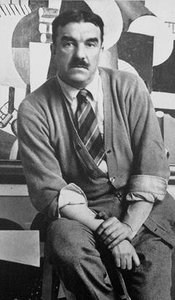
1881 - 1955 , Frankrijk

Explore the profound impact of Minimalism and Geometric Abstraction. From Mondrian to Malevich, discover how stripping art to its essential forms revolutionized modern aesthetics through our expert-led historical guide.


Blijf op de hoogte van het laatste kunstnieuws, exclusieve aanbiedingen en inspirerende interieurideeën.
Vertel ons over uw project en onze kunstexperts geven u 3 gepersonaliseerde kunstsuggesties.
Wij stellen 3 opties speciaal voor u samen – Gratis!


 Bekijk op ware grootte
 Verstuur
 Delen
Delen
 Details bekijken

 Download
 Vergelijkbare werken
 Röntgenonderzoek
 Diavoorstelling

 Lees meer







 De optie voor glas is alleen beschikbaar bij een formaat kleiner dan 110 cm.


