


x

 Acrylic On CanvasWallArtCubist Still Life
 1944Modern
 21.0 x 14.0 cm
Met de hand geschilderd in olieverf op canvas in uw gewenste maat en lijst, op bestelling gemaakt door onze kunstenaars. ( Switch to Print Switch to Image)





























Kies uit onze vooraf ingestelde maten die overeenkomen met de originele verhoudingen van het kunstwerk.

U kunt uw eigen afmetingen invoeren om in een specifieke lijst of ruimte te passen. Als de door u gekozen maat niet overeenkomt met de verhoudingen van het originele beeld, zullen we het kunstwerk bijsnijden of het schilderij uitbreiden met extra handgeschilderde elementen. Een digitale mockup wordt ter goedkeuring naar u verzonden voordat de productie begint.
Houd er rekening mee dat de preview op het scherm niet de werkelijke uitsnede of uitbreiding weergeeft. Alleen de mockup toont de uiteindelijke compositie nauwkeurig.
Hoewel aangepaste afmetingen mogelijk zijn, raden we aan een maat uit de vooraf gedefinieerde lijst te selecteren om de originele verhoudingen te behouden.
Wereldwijde levering () binnen 3/4 weken in plaats van de standaard 5 weken. (28 juli). Geen concessies aan de kwaliteit.


New York
Afmetingen reproductie
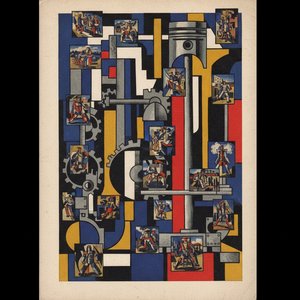
Fernand Léger's 1944 painting, "New York," is more than just a depiction of an American cityscape; it’s a vibrant declaration of the modern age. Executed in a moment of significant social and artistic change – following World War II and amidst the burgeoning industrial expansion of the United States – the work embodies Léger's signature style: a bold, geometric abstraction infused with a profound appreciation for the dynamism of machinery and urban life. Measuring 21 x 14 cm, this intimate scale allows for an intensely focused engagement with the painting’s complex composition.
Léger's artistic journey was profoundly shaped by his experiences during World War I, witnessing firsthand the devastating impact of industrial warfare. This experience fueled his desire to translate the raw power and geometric precision of machines into a new visual language. “New York” exemplifies this approach perfectly. The painting is deeply rooted in Cubism, particularly Léger’s own development of ‘Grob’, a style characterized by simplified forms, fragmented perspectives, and an emphasis on underlying structure. However, unlike traditional Cubist explorations, Léger wasn't primarily interested in dissecting objects; he sought to capture their *essence* – the inherent energy and mechanical logic that defined the modern world.
The use of bold, contrasting colors—primarily blues, reds, and yellows—further amplifies this sense of dynamism. These hues aren’t used for representational accuracy but rather to convey emotional intensity and visual impact, aligning with Léger's belief in art as a means of expressing fundamental truths about the universe.
“New York” was created during a period of immense transformation in American history. The post-war era saw unprecedented economic growth, technological innovation, and urbanization. The painting can be interpreted as a celebration of this progress – a visual testament to the nation’s industrial might and its role as a global superpower. The American flag itself carries significant symbolic weight, representing freedom, democracy, and national identity.
Furthermore, Léger's work reflects the broader artistic currents of the time, including Constructivism and Futurism, which similarly embraced machine aesthetics and celebrated technological advancement. His focus on geometric abstraction was a direct response to the perceived decadence of traditional art forms, advocating for a new visual language that reflected the realities of the 20th century.
"New York" possesses a powerful emotional resonance, capturing not just a physical scene but also a sense of energy, movement, and ambition. Léger’s masterful use of color and form creates a visually arresting image that continues to captivate viewers today. This painting represents a pivotal moment in the career of one of modern art's most innovative figures, solidifying his place as a pioneer of geometric abstraction and a visionary artist who dared to translate the language of machines into a profound artistic statement.


1881 - 1955 , Frankrijk

Explore the evolution of Willem de Kooning's iconic Abstract Expressionist paintings. Discover his signature style, key themes & investment potential with expert insights for discerning art collectors.
Ontdek de 25 meest iconische werken van Fernand Léger! Duik in zijn kubistische wereld, machine esthetiek & kleurrijke composities. Vind museumkwaliteit kunst reproducties en interieur inspiratie op Most-Famous-Paintings.com.

Explore the revolutionary Ashcan School! Discover how artists like Henri & Sloan challenged tradition with gritty realism, capturing urban life in early 20th-century America. Learn about their impact on American art history.

Explore the art of transforming spaces with our comprehensive guide to wall decor. From historical movements to contemporary trends, discover how to curate impactful interiors and commission bespoke artwork for a truly personalized aesthetic.

Ontdek de 10 meest invloedrijke kubistische meesterwerken van Picasso, Braque & meer. Leer over hun baanbrekende technieken en betekenis. Vind museumkwaliteit kunst reproducties voor uw interieur op Most-Famous-Paintings.com!


Blijf op de hoogte van het laatste kunstnieuws, exclusieve aanbiedingen en decoratie-ideeën.
Vertel ons over uw project en onze kunstexperts geven u 3 gepersonaliseerde kunstsuggesties.
Wij stellen 3 opties speciaal voor u samen – Gratis!


 Preview
 Verstuur
 Delen
Delen
 Details bekijken

 Download
 Vergelijkbare werken
 Röntgenonderzoek
 Diavoorstelling
 Lees meer







 De optie voor glas is alleen beschikbaar bij een formaat kleiner dan 110 cm.


