x

Met de hand geschilderd in olieverf op canvas in uw gewenste maat en lijst, op bestelling gemaakt door onze kunstenaars. ( Bestel een print Naar afbeelding wisselen)





























Kies uit onze vooraf ingestelde maten die overeenkomen met de originele verhoudingen van het kunstwerk.

U kunt uw eigen afmetingen invoeren om in een specifieke lijst of ruimte te passen. Als de door u gekozen maat niet overeenkomt met de verhoudingen van het originele beeld, zullen we het kunstwerk bijsnijden of het schilderij uitbreiden met extra handgeschilderde elementen. Een digitale mockup wordt ter goedkeuring naar u verzonden voordat de productie begint.
Houd er rekening mee dat de preview op het scherm niet de werkelijke uitsnede of uitbreiding weergeeft. Alleen de mockup toont de uiteindelijke compositie nauwkeurig.
Hoewel aangepaste afmetingen mogelijk zijn, raden we aan een maat uit de vooraf gedefinieerde lijst te selecteren om de originele verhoudingen te behouden.
Wereldwijde levering () binnen 3 tot 4 weken in plaats van de standaard 5 weken. (11 augustus). Zonder concessies aan de kwaliteit.


The field trip
Formaat reproductie
Fernand Léger’s “The Field Trip,” completed in 1925, stands as an emblem of Surrealist innovation and a profound reflection on the anxieties and aspirations of the interwar period. More than just a depiction of schoolchildren embarking on a journey to observe a locomotive, Léger's canvas embodies a radical reimagining of artistic representation—a deliberate rejection of illusionism in favor of a visual language that prioritizes geometric abstraction and conveys an overwhelming sense of movement.
“The Field Trip” emerged during a period of intense social and technological upheaval. The rapid industrialization of Europe—fueled by advancements in steam power, metallurgy, and transportation—was reshaping urban landscapes and altering the rhythms of daily life. Artists responded to these changes with diverse strategies, ranging from outright rejection of modernity to attempts to synthesize its principles with traditional forms. Léger’s Surrealist approach distinguishes itself through a calculated embrace of abstraction—a deliberate distortion of reality intended not merely to shock but also to provoke contemplation about the nature of perception and representation.
Beyond its literal depiction of schoolchildren and locomotives, “The Field Trip” is laden with symbolic significance. Léger’s use of repetitive geometric shapes—particularly rectangles—represents the relentless march of industrial progress, mirroring the rhythmic pulsations of the locomotive engine. The flattened picture plane symbolizes a rejection of illusionism and an insistence on confronting viewers with the raw materiality of the artwork. Furthermore, Léger subtly transforms recognizable elements—faces, bodies—into stylized abstractions, suggesting that artistic representation transcends mere imitation of nature.
"The Field Trip" evokes a complex emotional response in the viewer. The painting’s assertive color palette and dynamic brushstrokes convey an underlying sense of anxiety—a reflection of the uncertainties surrounding the future. Yet, simultaneously, Léger imbues his artwork with moments of wonder—captured in the expressive faces of the children and the luminous glow emanating from the locomotive. Ultimately, Léger's masterpiece compels us to reconsider our relationship with both the physical world and artistic expression—challenging us to embrace abstraction as a tool for conveying profound truths about human experience.

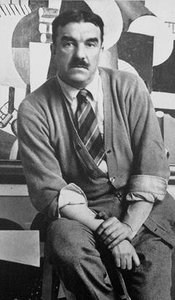
1881 - 1955 , Frankrijk


Blijf op de hoogte van het laatste kunstnieuws, exclusieve aanbiedingen en inspirerende interieurideeën.
Vertel ons over uw project en onze kunstexperts geven u 3 gepersonaliseerde kunstsuggesties.
Wij stellen 3 opties speciaal voor u samen – Gratis!


 Bekijk op ware grootte
 Verstuur
 Delen
Delen
 Details bekijken

 Download
 Vergelijkbare werken
 Röntgenonderzoek
 Diavoorstelling
 Lees meer







 De optie voor glas is alleen beschikbaar bij een formaat kleiner dan 110 cm.