x

 Acrylic On CanvasWallArtCubist Abstraction
 Late Medieval
 32.0 x 45.0 cm
Koop een digitale afbeelding in hoge resolutie met verbeterde kwaliteit, die veel superieur is aan de online voorvertoning.
Elk bestand wordt met uiterste precisie voorbereid door onze interne specialisten, met behulp van geavanceerde tools en deskundige handmatige retouche. Wij garanderen dat elke afbeelding een uitzonderlijke helderheid, nauwkeurige kleurweergave en verfijnde details bezit.
Het uiteindelijke bestand wordt binnen 72 uur per e-mail geleverd, geoptimaliseerd voor direct gebruik in professionele, redactionele en printomgevingen. Dit is dezelfde kwaliteit waarop vooraanstaande designstudio's, uitgevers en galerieën vertrouwen.
Download een bestand met hoge resolutie voor persoonlijke weergave, afdrukken en creatieve projecten. ( Bestel print Bestel handgeschilderde reproductie)
Wanneer u kiest voor Most-Famous-Paintings.com, ontvangt u niet alleen een afbeelding – u krijgt een professioneel verbeterd digitaal kunstwerk, met precisie vervaardigd en voorzien van een tevredenheidsgarantie. Dit is alles wat automatisch bij uw bestelling is inbegrepen:

Uw hoogwaardige digitale afbeeldingsbestand wordt binnen 72 uur na bestelling naar u gemaild – klaar voor direct gebruik.

Uw kunstwerk wordt professioneel geoptimaliseerd met behulp van geavanceerde AI-tools en handmatige bewerkingen, waardoor maximale details, helderheid en kleurnauwkeurigheid worden gegarandeerd.

Je bestand per ongeluk verwijderd of kwijtgeraakt? Geen zorgen – we sturen het u op elk gewenst moment gratis opnieuw toe.

Geniet direct van uw kunstwerk zonder invoerrechten, belastingen of verzendkosten – digitale downloads zijn altijd belastingvrij.

Met behulp van professionele hulpmiddelen en kleurbeheer zorgen wij ervoor dat uw digitale afbeelding de originele kleuren zo nauwkeurig mogelijk weergeeft.

Als u niet tevreden bent met uw digitale afbeelding, passen wij deze aan of storten wij 100% terug binnen 60 dagen – zonder vragen gesteld.

Niet tevreden? Ontvang binnen 60 dagen na ontvangst van uw digitale bestand uw volledige aankoopbedrag terug – zonder vragen te stellen.

Koop 3 afbeeldingen, bespaar 10% - Koop 5, bespaar 15% - Koop 10+, bespaar 20%. Ideaal voor creatieve projecten, galerieën en bureaus.
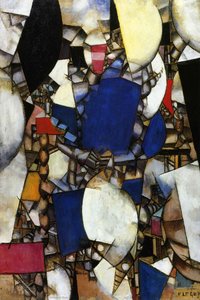
Fernand Léger’s “The Observatory, Study for the City” isn’t merely a depiction of an architectural structure; it’s a vibrant, dynamic exploration of modernity itself. Created around 1912-13, this monochrome drawing – now meticulously reproduced on canvas – offers a compelling glimpse into the artist's pioneering approach to Cubism and his fascination with the burgeoning industrial world. It’s a work that simultaneously evokes a sense of disorientation and an underlying energy, reflecting the rapid transformations occurring in Europe at the time. Léger wasn’t simply interested in representing objects; he sought to capture their essence – their mechanical nature, their rhythmic movement – and translate it onto the canvas through a radical simplification of form.
The composition immediately commands attention with its swirling lines and intersecting planes. Forget traditional perspective; Léger abandons depth in favor of a simultaneous view, presenting multiple viewpoints within a single frame. This fragmentation isn’t chaotic, however. Instead, it creates a sense of controlled dynamism, as if the city itself is constantly shifting and evolving. The central circular form, reminiscent of an observatory dome, anchors the composition while surrounding angular structures – hinting at buildings, machinery, or perhaps even the skeletal framework of a futuristic cityscape – radiate outwards in a complex dance of geometric shapes. Notice how these forms aren’t sharply defined; they bleed into one another, creating a textured surface that invites close examination.
Executed primarily with ink or charcoal on paper – a technique that lends the reproduction its remarkable depth and tactile quality – “The Observatory” showcases Léger’s masterful control of line. Bold, angular lines define the core shapes, while subtle hatching and cross-hatching create tonal variations and suggest volume without relying on traditional shading. This deliberate use of line isn't about creating realistic outlines; it’s about conveying energy and movement through a carefully orchestrated network of marks. The monochromatic palette – shades of black, grey, and white against a creamy background – amplifies the dynamism of the composition, forcing the viewer to focus on the interplay of form and line.
Léger's approach aligns perfectly with the tenets of Cubism, but it’s distinct from Picasso or Braque. Léger wasn’t interested in dissecting objects into geometric fragments; he sought to synthesize them – to create a new visual language that captured the spirit of the machine age. The simplified forms, the emphasis on mechanical shapes, and the rejection of traditional perspective all contribute to this unique vision. The work feels both abstract and intensely observational, as if Léger is distilling the essence of urban life into its most fundamental components.
“The Observatory” isn’t simply a study for a larger work; it's a statement about the changing world. The title itself – “Observatory” – suggests a desire to understand, to analyze, and perhaps even to control the forces shaping modern society. The fragmented forms can be interpreted as representing the breakdown of traditional values and the rise of industrialization, while the dynamic composition conveys a sense of urgency and transformation. Léger’s work resonates with a feeling of both excitement and anxiety – a recognition of progress alongside a questioning of its consequences.
Interestingly, Léger's early life in rural Normandy provided a powerful contrast to the mechanized world he depicted. This juxtaposition likely informed his artistic vision, allowing him to approach modernity with a sense of detached observation and critical awareness. “The Observatory” is a testament to Léger’s ability to translate this complex experience into a visually arresting and emotionally resonant work of art.
Most-Famous-Paintings offers meticulously hand-painted reproductions of “The Observatory, Study for the City,” capturing the essence of Léger’s unique style with unparalleled detail and vibrancy. Each reproduction is created by skilled artists who understand the nuances of Léger's technique, ensuring that you receive a faithful representation of this iconic work. Whether adorning your living room, office, or studio, this reproduction will serve as a captivating reminder of Léger’s pioneering vision and his enduring legacy in the world of modern art.

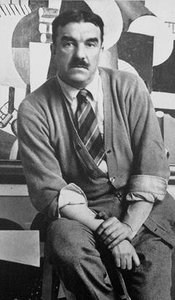
1881 - 1955 , Frankrijk


Blijf op de hoogte van het laatste kunstnieuws, exclusieve aanbiedingen en decoratie-ideeën.
Vertel ons over uw project en onze kunstexperts geven u 3 gepersonaliseerde kunstsuggesties.
Wij stellen drie opties speciaal voor u samen – gratis!


 Voorvertoning
 Verstuur
 Delen
Delen
 Details bekijken

 Download
 Vergelijkbare items
 Röntgenonderzoek
 Diavoorstelling
 Lees meer