x

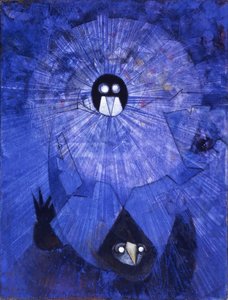
 102.0 x 61.0 cm
 The Fleming Collection
Koop een digitale afbeelding in hoge resolutie met verbeterde kwaliteit, die veel superieur is aan de online voorvertoning.
Elk bestand wordt met uiterste precisie voorbereid door onze interne specialisten, met behulp van geavanceerde tools en deskundige handmatige retouche. Wij garanderen dat elke afbeelding een uitzonderlijke helderheid, nauwkeurige kleurweergave en verfijnde details bezit.
Het uiteindelijke bestand wordt binnen 72 uur per e-mail geleverd, geoptimaliseerd voor direct gebruik in professionele, redactionele en printomgevingen. Dit is dezelfde kwaliteit waarop vooraanstaande designstudio's, uitgevers en galerieën vertrouwen.
Download een bestand met hoge resolutie voor persoonlijke weergave, afdrukken en creatieve projecten. ( Bestel print Bestel handgeschilderde reproductie)
Wanneer u kiest voor Most-Famous-Paintings.com, ontvangt u niet alleen een afbeelding – u krijgt een professioneel verbeterd digitaal kunstwerk, met precisie vervaardigd en voorzien van een tevredenheidsgarantie. Dit is alles wat automatisch bij uw bestelling is inbegrepen:

Uw hoogwaardige digitale afbeeldingsbestand wordt binnen 72 uur na bestelling naar u gemaild – klaar voor direct gebruik.

Uw kunstwerk wordt professioneel geoptimaliseerd met behulp van geavanceerde AI-tools en handmatige bewerkingen, waardoor maximale details, helderheid en kleurnauwkeurigheid worden gegarandeerd.

Je bestand per ongeluk verwijderd of kwijtgeraakt? Geen zorgen – we sturen het u op elk gewenst moment gratis opnieuw toe.

Geniet direct van uw kunstwerk zonder invoerrechten, belastingen of verzendkosten – digitale downloads zijn altijd belastingvrij.

Met behulp van professionele hulpmiddelen en kleurbeheer zorgen wij ervoor dat uw digitale afbeelding de originele kleuren zo nauwkeurig mogelijk weergeeft.

Als u niet tevreden bent met uw digitale afbeelding, passen wij deze aan of storten wij 100% terug binnen 60 dagen – zonder vragen gesteld.

Niet tevreden? Ontvang binnen 60 dagen na ontvangst van uw digitale bestand uw volledige aankoopbedrag terug – zonder vragen te stellen.

Koop 3 afbeeldingen, bespaar 10% - Koop 5, bespaar 15% - Koop 10+, bespaar 20%. Ideaal voor creatieve projecten, galerieën en bureaus.

Flora Macdonald Reid was an artist who possessed a rare gift for finding the extraordinary within the ordinary. Born in London in 1860 to Scottish parents, her early years were shaped by a rich cultural tapestry that spanned from the bustling streets of Islington to the academic rigor of Edinburgh. As a child, she moved with her family to Scotland, where her artistic sensibilities were first nurtured at the Trustees Academy School of Art. This formative period was deeply influenced by her brother, the esteemed painter John Robertson Reid, who served as both a sibling and a mentor. Under his guidance, Flora developed a keen eye for the subtle interplay of light and shadow, a skill that would become the hallmark of her mature work. Her upbringing was one of shared creative passion, as her sisters Elizabeth and Janet were also accomplished artists, creating a familial atmosphere where art was not merely a pursuit but a way of life.
The trajectory of Reid’s career was marked by a remarkable sense of movement and international curiosity. In 1881, she returned to London with her siblings, settling in the vibrant area of Haverstock Hill. This period saw her emergence on the prestigious stages of the British art world; by the age of sixteen, she was already exhibiting at the Royal Scottish Academy, and as she matured, her work graced the walls of the Royal Academy in London and the Royal Glasgow Institute of the Fine Arts. Her ambitions, however, were never confined to the British Isles. Reid’s travels took her through Norway, France, and Belgium, allowing her to absorb the diverse atmospheres of Europe. This cosmopolitan journey culminated in significant international recognition, most notably at the 1900 Exposition Universelle in Paris, where she was awarded a bronze medal for her painting Faith (later known as A Bruges Market Place), and her participation in the groundbreaking Woman's Building at the 1893 World's Columbian Exposition in Chicago.
While her training was rooted in classical observation, Reid’s true artistic soul found its most profound expression in the landscapes and lives of Cornwall. Between 1891 and 1907, she lived in the coastal villages of Looe and Polperro, a decade that would fundamentally transform her palette and subject matter. It was here that her work transitioned into a beautiful synthesis of realism and Impressionism. She became a chronicler of the Cornish way of life, capturing the rhythmic toil of fishermen hauling nets and the vibrant, sun-drenched energy of local marketplaces. Her canvases are celebrated for their ability to convey the fleeting effects of light—the way a golden afternoon glow settles upon a thatched cottage or how dappled sunlight dances across a crowded market stall.
Reid’s technique was characterized by a meticulous attention to detail that never sacrificed the emotional weight of the scene. While she primarily worked in oils, her occasional forays into etching and pastel demonstrated a versatile mastery over different textures and mediums. Her subjects were rarely grand or heroic; instead, she found dignity in the everyday. Whether depicting The Flemish Lacemaker or scenes of women engaged in domestic tasks, she imbued her figures with a quiet, soulful presence. This focus on the working classes and the beauty of mundane existence allowed her to create works that resonate with a timeless, human quality. Her ability to blend the precise observation of a realist with the atmospheric sensitivity of an Impressionist ensured that her paintings were not merely records of a place, but emotional evocations of a moment in time.
The historical significance of Flora Macdonald Reid lies in her role as a prominent female voice during a transformative era for British art. In an age where women artists often struggled for recognition, Reid achieved sustained success on the international stage, proving herself a formidable talent capable of competing in the most prestigious salons of Europe. Her work serves as a vital visual record of late 19th and early 20th-century life, preserving the textures of Cornish maritime culture and the bustling energy of European marketplaces with an intimacy that few others could achieve.
Today, her contributions are honored in several esteemed collections, ensuring that her luminous vision continues to inspire. Her legacy is defined by:

1860 - 1938


Blijf op de hoogte van het laatste kunstnieuws, exclusieve aanbiedingen en decoratie-ideeën.
Vertel ons over uw project en onze kunstexperts geven u 3 gepersonaliseerde kunstsuggesties.
Wij stellen drie opties speciaal voor u samen – gratis!


 Voorvertoning
 Verstuur
 Delen
Delen
 Details bekijken

 Download
 Vergelijkbare items
 Röntgenonderzoek
 Diavoorstelling
 Lees meer