


x

 Acrylic On CanvasWallArtExpressionist Abstraction
 1952
1952 66.0 x 56.0 cm
 Tate Britain
Koop een digitale afbeelding in hoge resolutie met verbeterde kwaliteit, die veel superieur is aan de online voorvertoning.
Elk bestand wordt met uiterste precisie voorbereid door onze interne specialisten, met behulp van geavanceerde tools en deskundige handmatige retouche. Wij garanderen dat elke afbeelding een uitzonderlijke helderheid, nauwkeurige kleurweergave en verfijnde details bezit.
Het uiteindelijke bestand wordt binnen 72 uur per e-mail geleverd, geoptimaliseerd voor direct gebruik in professionele, redactionele en printomgevingen. Dit is dezelfde kwaliteit waarop vooraanstaande designstudio's, uitgevers en galerieën vertrouwen.
Download een bestand met hoge resolutie voor persoonlijke weergave, afdrukken en creatieve projecten. ( Bestel print Bestel handgeschilderde reproductie)
Wanneer u kiest voor Most-Famous-Paintings.com, ontvangt u niet alleen een afbeelding – u krijgt een professioneel verbeterd digitaal kunstwerk, met precisie vervaardigd en voorzien van een tevredenheidsgarantie. Dit is alles wat automatisch bij uw bestelling is inbegrepen:

Uw hoogwaardige digitale afbeeldingsbestand wordt binnen 72 uur na bestelling naar u gemaild – klaar voor direct gebruik.

Uw kunstwerk wordt professioneel geoptimaliseerd met behulp van geavanceerde AI-tools en handmatige bewerkingen, waardoor maximale details, helderheid en kleurnauwkeurigheid worden gegarandeerd.

Je bestand per ongeluk verwijderd of kwijtgeraakt? Geen zorgen – we sturen het u op elk gewenst moment gratis opnieuw toe.

Geniet direct van uw kunstwerk zonder invoerrechten, belastingen of verzendkosten – digitale downloads zijn altijd belastingvrij.

Met behulp van professionele hulpmiddelen en kleurbeheer zorgen wij ervoor dat uw digitale afbeelding de originele kleuren zo nauwkeurig mogelijk weergeeft.

Als u niet tevreden bent met uw digitale afbeelding, passen wij deze aan of storten wij 100% terug binnen 60 dagen – zonder vragen gesteld.

Niet tevreden? Ontvang binnen 60 dagen na ontvangst van uw digitale bestand uw volledige aankoopbedrag terug – zonder vragen te stellen.

Koop 3 afbeeldingen, bespaar 10% - Koop 5, bespaar 15% - Koop 10+, bespaar 20%. Ideaal voor creatieve projecten, galerieën en bureaus.
Francis Bacon's "Study for a Portrait," painted in 1952, isn’t merely a depiction of a man; it’s an excavation of the human psyche grappling with trauma and isolation. This intimate yet unsettling work, measuring just 66 x 56 cm, immediately draws the viewer into a space thick with unspoken anxieties – a testament to Bacon's profound ability to translate inner turmoil onto canvas. The painting captures a figure caught in a moment of intense, perhaps agonized, expression; his mouth agape, suggesting a scream trapped within, or a desperate plea lost in the void. The glasses and tie, seemingly mundane details, become symbols of an attempt at composure, a fragile facade struggling against the overwhelming force of emotion.
Understanding “Study for a Portrait” requires acknowledging the formative experiences that shaped Francis Bacon’s artistic vision. Born in Dublin in 1909, his childhood was marked by instability and emotional distance. Frequent moves due to his mother’s illness instilled a deep-seated sense of displacement – a feeling he would repeatedly explore throughout his career. His complex relationship with his father, coupled with the nurturing presence of his nanny, Jessie Lightfoot, further contributed to a landscape of unresolved emotions. It's crucial to note that Bacon didn’t begin painting until his late twenties, a delay that arguably intensified the urgency and raw power of his later works. This unconventional start fueled a relentless pursuit of expressing the unspoken anxieties simmering beneath the surface of human experience.
Bacon's technique is instantly recognizable – a deliberate distortion of form, a fragmentation of the figure that reflects its psychological state. He achieved this through layers of thin paint applied with rapid brushstrokes, creating a sense of movement and instability. The figures aren’t rendered realistically; instead, they are fractured, elongated, and often contorted into grotesque shapes. This stylistic choice isn't about ugliness, but rather about conveying the subjective experience of trauma – the feeling of being broken, fragmented, and utterly overwhelmed. The use of a palette knife adds to this textural intensity, creating a surface that feels both vulnerable and powerfully charged.
“Study for a Portrait” is laden with symbolic weight. The open mouth isn’t simply an expression of shouting; it represents a desperate attempt to release pent-up emotions, a futile cry for help. The glasses could symbolize a desire to see clearly through the fog of pain and confusion, while the tie suggests an adherence to societal expectations – a performance of normalcy that masks profound inner turmoil. Ultimately, the painting speaks to the universal experience of isolation, anxiety, and the struggle to maintain composure in the face of overwhelming adversity. It’s a hauntingly beautiful depiction of vulnerability, inviting viewers to confront their own anxieties and contemplate the hidden depths of the human condition.

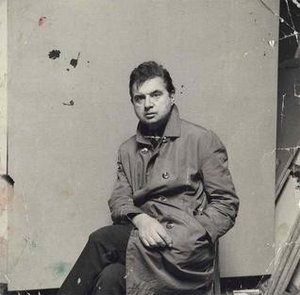
1909 - 1992 , Ierland


Blijf op de hoogte van het laatste kunstnieuws, exclusieve aanbiedingen en decoratie-ideeën.
Vertel ons over uw project en onze kunstexperts geven u 3 gepersonaliseerde kunstsuggesties.
Wij stellen drie opties speciaal voor u samen – gratis!


 Voorvertoning
 Verstuur
 Delen
Delen
 Details bekijken

 Download
 Vergelijkbare items
 Röntgenonderzoek
 Diavoorstelling
 Lees meer


