


x

Koop een digitale afbeelding in hoge resolutie met verbeterde kwaliteit, die veel superieur is aan de online voorvertoning.
Elk bestand wordt met uiterste precisie voorbereid door onze interne specialisten, met behulp van geavanceerde tools en deskundige handmatige retouche. Wij garanderen dat elke afbeelding een uitzonderlijke helderheid, nauwkeurige kleurweergave en verfijnde details bezit.
Het uiteindelijke bestand wordt binnen 72 uur per e-mail geleverd, geoptimaliseerd voor direct gebruik in professionele, redactionele en printomgevingen. Dit is dezelfde kwaliteit waarop vooraanstaande designstudio's, uitgevers en galerieën vertrouwen.
Download een bestand met hoge resolutie voor persoonlijke weergave, afdrukken en creatieve projecten. ( Bestel print Bestel handgeschilderde reproductie)
Wanneer u kiest voor Most-Famous-Paintings.com, ontvangt u niet alleen een afbeelding – u krijgt een professioneel verbeterd digitaal kunstwerk, met precisie vervaardigd en voorzien van een tevredenheidsgarantie. Dit is alles wat automatisch bij uw bestelling is inbegrepen:

Uw hoogwaardige digitale afbeeldingsbestand wordt binnen 72 uur na bestelling naar u gemaild – klaar voor direct gebruik.

Uw kunstwerk wordt professioneel geoptimaliseerd met behulp van geavanceerde AI-tools en handmatige bewerkingen, waardoor maximale details, helderheid en kleurnauwkeurigheid worden gegarandeerd.

Je bestand per ongeluk verwijderd of kwijtgeraakt? Geen zorgen – we sturen het u op elk gewenst moment gratis opnieuw toe.

Geniet direct van uw kunstwerk zonder invoerrechten, belastingen of verzendkosten – digitale downloads zijn altijd belastingvrij.

Met behulp van professionele hulpmiddelen en kleurbeheer zorgen wij ervoor dat uw digitale afbeelding de originele kleuren zo nauwkeurig mogelijk weergeeft.

Als u niet tevreden bent met uw digitale afbeelding, passen wij deze aan of storten wij 100% terug binnen 60 dagen – zonder vragen gesteld.

Niet tevreden? Ontvang binnen 60 dagen na ontvangst van uw digitale bestand uw volledige aankoopbedrag terug – zonder vragen te stellen.

Koop 3 afbeeldingen, bespaar 10% - Koop 5, bespaar 15% - Koop 10+, bespaar 20%. Ideaal voor creatieve projecten, galerieën en bureaus.
This powerful panel is a cornerstone of Francis Bacon's emotionally charged oeuvre, born from profound personal tragedy. Created in the wake of his lover George Dyer’s death, it forms part of a larger triptych – a format Bacon increasingly favored for its capacity to explore multifaceted perspectives on a single subject. This work, and its companions, represent a raw and unflinching exploration of grief, isolation, and the fragmented nature of human existence, marking a pivotal shift towards his haunting “Black Triptychs.”
The right panel presents a solitary male figure seated before a mirror. Dressed in the conventional attire of a suit and tie – symbols of societal constraint and perhaps, in this context, the trappings of a life now irrevocably altered – the man’s head is deliberately turned away from our direct gaze. Instead, we are confronted with his reflection. This positioning isn't accidental; it creates an unsettling dynamic, denying us immediate access to his emotions while simultaneously forcing us to confront their distorted manifestation. The figure’s expression remains ambiguous, hinting at a complex inner turmoil – despair, resignation, or perhaps a detached self-observation born of trauma. Two subtly rendered figures in the background amplify the sense of claustrophobia and alienation. A chair and dining table anchor the scene within a domestic setting, yet render it profoundly unsettling.
Bacon’s signature style is immediately recognizable: brutally honest figuration pushed to the brink of abstraction. He employs loose, gestural brushstrokes and a deliberately limited color palette – dominated by blacks, greys, and fleshy tones – to create an atmosphere of raw emotional intensity. Anatomical accuracy is sacrificed in favor of distortion and fragmentation, reflecting Bacon’s belief in the inherent vulnerability and decay of the human form. The blurred lines and flattened perspective contribute to the painting's claustrophobic feel, trapping the figure within its own psychological space. This isn’t a portrait aiming for likeness; it’s an excavation of inner torment.
Francis Bacon (1909-1992) emerged as a leading voice in the post-war era, a period defined by existential questioning and disillusionment. His work grapples with themes of violence, mortality, and the absurdity of life – reflecting a broader cultural anxiety. The triptych format itself was crucial to Bacon’s process; he described seeing images “in series,” believing that three panels allowed for a more complete exploration of a subject without imposing a fixed narrative. The 1971 triptychs are particularly poignant, directly addressing his personal grief following Dyer's suicide and transforming private anguish into universal statements about loss. The mirror isn’t merely a reflective surface; it symbolizes self-confrontation, the fractured identity born of trauma, and the inescapable nature of mortality.
*Triptych, 1971 (Right Panel)* is not an easy painting to encounter. It evokes feelings of unease, isolation, and profound sadness. The distorted figure and oppressive atmosphere compel viewers to confront uncomfortable truths about the human condition. However, within this darkness lies a strange beauty – a testament to Bacon’s ability to find poetry in pain and capture the raw essence of experience.
This panel is more than just a painting; it's a visceral experience that challenges viewers to confront their own mortality and the complexities of the human psyche – a powerful statement piece for those who appreciate art with depth and emotional resonance.

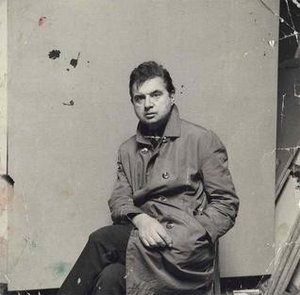
1909 - 1992 , Ierland


Blijf op de hoogte van het laatste kunstnieuws, exclusieve aanbiedingen en decoratie-ideeën.
Vertel ons over uw project en onze kunstexperts geven u 3 gepersonaliseerde kunstsuggesties.
Wij stellen drie opties speciaal voor u samen – gratis!


 Voorvertoning
 Verstuur
 Delen
Delen
 Details bekijken

 Download
 Vergelijkbare items
 Röntgenonderzoek
 Diavoorstelling

 Lees meer


