


x

Met de hand geschilderd in olieverf op canvas in uw gewenste maat en lijst, op bestelling gemaakt door onze kunstenaars. ( Bestel print Koop afbeelding)





























Kies uit onze vooraf ingestelde maten die overeenkomen met de originele verhoudingen van het kunstwerk.

U kunt uw eigen afmetingen invoeren om in een specifieke lijst of ruimte te passen. Als de door u gekozen maat niet overeenkomt met de verhoudingen van het originele beeld, zullen we het kunstwerk bijsnijden of het schilderij uitbreiden met extra handgeschilderde elementen. Een digitale mockup wordt ter goedkeuring naar u verzonden voordat de productie begint.
Houd er rekening mee dat de preview op het scherm niet de werkelijke uitsnede of uitbreiding weergeeft. Alleen de mockup toont de uiteindelijke compositie nauwkeurig.
Hoewel aangepaste afmetingen mogelijk zijn, raden we aan een maat uit de vooraf gedefinieerde lijst te selecteren om de originele verhoudingen te behouden.
Wereldwijde levering () binnen 3 tot 4 weken in plaats van de standaard 5 weken. (14 augustus). Zonder concessies aan de kwaliteit.


Mrs Thomas Rees
Afmetingen reproductie

The story of George Frederick Harris is one of profound movement, spanning continents and bridging the gap between the intimate world of portraiture and the grand scale of public muralism. Born in Birmingham, West Midlands, in 1856, Harris’s early years were rooted in the industrial heart of England, yet his spirit was destined for a much broader stage. As a painter of both landscape and portrait, he possessed a rare ability to capture the essence of his subjects, whether through the delicate textures of lace in a formal sitting or the sweeping, atmospheric vistas of the natural world. His early career saw him establishing a significant presence in Wales, where he served as the chairman and secretary of the South Wales Art Society in Cardiff, demonstrating an early commitment to the cultivation of artistic communities.
Harris’s life was characterized by a remarkable series of transitions that mirrored the shifting tides of the late 19th and early 20th centuries. After building a successful business in portraiture and photography in Merthyr Tydfil, he embarked on a transformative journey to Australia in 1920. This migration did not signal an end to his creativity but rather a new chapter of exploration. In the vibrant landscape of Sydney, Harris continued to refine his craft, leaving behind a legacy that connected his Welsh heritage with the burgeoning art scene of the Southern Hemisphere. His personal life was equally rich and complex, marked by significant familial connections; he was the father of the celebrated Australian illustrator Pixie O'Harris, whose whimsical style would later enchant generations of readers.
To observe a work by Harris is to witness a meticulous marriage of technical precision and emotional depth. His approach to portraiture was deeply rooted in the classical tradition, utilizing oil on canvas to create layers of texture that breathed life into his sitters. He had an extraordinary eye for detail, often focusing on the subtle interplay of light and shadow to convey character and status. In works such as his 1896 portrait of Rosina Davies, one can see how he employed a realistic style to highlight elegant floral elements and intricate fabrics, creating a sense of timelessness that remains captivating to the modern viewer.
Beyond the individual, Harris’s work often touched upon the broader social fabric. His ability to translate the anxieties and triumphs of his era into visual language allowed him to move between genres with ease. Whether he was capturing the quiet dignity of a gentleman in a studio setting or the rugged beauty of a landscape, his brushwork remained purposeful and evocative. This versatility ensured that his art was not merely decorative but served as a historical record of the people and places that defined his era. His contributions to public collections, such as those held at the Cyfarthfa Castle Museum & Art Gallery, ensure that his technical mastery continues to be studied by those seeking to understand the evolution of portraiture during this transformative period.
The historical significance of George Frederick Harris lies in his role as a cultural conduit. He was an artist who did not exist in isolation but was deeply embedded in the institutional fabric of the art worlds he inhabited. Through his leadership roles in Wales and his eventual integration into the Australian art landscape, he helped foster the growth of professional societies and the appreciation of fine arts across borders. His life serves as a testament to the itinerant nature of the artist, proving that creativity knows no geographic boundaries.
Today, the works of Harris are cherished not only for their aesthetic beauty but for the window they provide into a bygone era of craftsmanship. His legacy is preserved through:

1856 - 1924
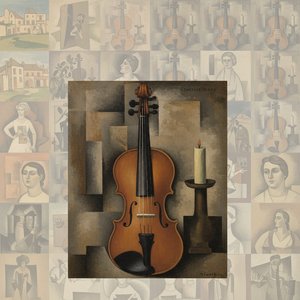
Ontdek de 25 meest iconische meesterwerken van Georges Braque, pionier van het Cubisme. Lees over zijn techniek, inspiratie & de impact op moderne kunst. Vind museumkwaliteit reproducties en verrijk uw interieur met Most-Famous-Paintings.com!
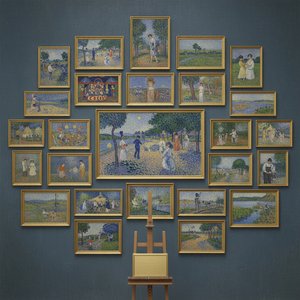
Ontdek de 25 meesterwerken van Georges Seurat! Duik in Pointillisme, Impressionisme & chromoluminarism. Bewonder 'A Sunday on La Grande Jatte' en meer. Museumkwaliteit kunst reproducties op Most-Famous-Paintings.com.

Explore the captivating world of Frederick Morgan, a key figure in Victorian Aestheticism. Discover his beautiful paintings, recurring themes, and lasting legacy with our expert analysis. Learn more today!

Explore the evocative Victorian paintings of George Goodwin Kilburne. Discover his detailed scenes of domestic life, masterful use of light, and lasting impact on British genre painting. Learn more at Most-Famous-Paintings.

Explore the captivating Victorian genre paintings of Frederick Richard Lee. Discover his life, style, influences & legacy. Expert insights for collectors and art enthusiasts at Most-Famous-Paintings.


Blijf op de hoogte van het laatste kunstnieuws, exclusieve aanbiedingen en decoratie-ideeën.
Vertel ons over uw project en onze kunstexperts geven u 3 gepersonaliseerde kunstsuggesties.
Wij stellen drie opties speciaal voor u samen – gratis!


 Voorvertoning
 Verstuur
 Delen
Delen
 Details bekijken

 Download
 Vergelijkbare items
 Röntgenonderzoek
 Diavoorstelling


 Lees meer







 De optie voor glas is alleen beschikbaar bij een formaat kleiner dan 110 cm.


