


x

 Acrylic On CanvasWallArtEarly Venetian Renaissance
 1510
1510 745.0 x 545.0 cm
Giclée- of canvasafdruk van museumkwaliteit met een snelle productie en flexibele afwerkingsmogelijkheden. ( Bestel handgeschilderde reproductie Koop afbeelding)





























Kies uit onze vooraf ingestelde maten die overeenkomen met de originele verhoudingen van het kunstwerk.

U kunt uw eigen afmetingen opgeven om in een specifieke lijst of ruimte te passen. Als de door u gekozen maat niet overeenkomt met de proporties van het originele kunstwerk, zullen wij de afbeelding bijsnijden of uitbreiden met een gespiegelde of effen rand. Een digitaal mockup wordt ter goedkeuring naar u verzonden voordat de productie begint.
Houd er rekening mee dat de preview op het scherm de werkelijke bijsneding of uitbreiding niet weergeeft. Alleen de mockup toont de uiteindelijke compositie nauwkeurig.
Hoewel aangepaste maten beschikbaar zijn, raden wij aan een afmeting uit de vooraf bepaalde lijst te kiezen om de originele proporties te behouden.
Wereldwijde levering () binnen 2 weken in plaats van de standaard 4/5 weken. (21 augustus)


Ceres
Afmetingen reproductie
Giorgio Barbarelli da Castelfranco, known universally as Giorgione (1477 – 1510), remains one of the most perplexing enigmas within the canon of Early Venetian Renaissance painting. Unlike many artists of his era whose biographies offer detailed accounts of their lives and careers, Giorgione’s story is fragmented—a tapestry woven from sparse historical records primarily gleaned from Giorgio Vasari’s biographical sketches. Born in Castelfranco Veneto, a town nestled on the outskirts of Venice, Giorgione’s artistic journey began under the tutelage of Giovanni Bellini, absorbing the established stylistic conventions before embarking upon an independent exploration that would ultimately redefine Venetian art.
‘The Tempest,’ housed in the Gallerie Venezia Palazzo Ducale, exemplifies Giorgione's unparalleled mastery of atmospheric illusionism and psychological subtlety. Painted circa 1506-1508, this monumental canvas depicts a shadowy interior scene—a room dominated by a woman seated on a stone bench beneath a tempestuous sky glimpsed through arched windows. The painting’s brilliance lies not merely in its technical virtuosity but also in its profound emotional resonance.
Giorgione revolutionized Venetian painting with his groundbreaking use of sfumato—a technique perfected by Bellini and subsequently embraced by Leonardo da Vinci—that achieved an unprecedented level of tonal gradation. Layers upon layers of translucent glaze meticulously blended to create soft, hazy contours that dissolved boundaries between light and dark. This masterful manipulation of color and texture wasn’t simply decorative; it served as a conduit for conveying mood and emotion with remarkable precision.
‘The Tempest’ emerged during a period of artistic ferment in Venice—a city grappling with the legacy of Dante Alighieri's ‘Divine Comedy’ and increasingly attuned to humanist ideals. Giorgione’s painting reflects this intellectual climate, prioritizing contemplation and psychological exploration over literal representation. It stands as a testament to Venetian artists’ commitment to capturing not just what was seen but also what was felt—a pursuit that distinguished Venice from other European capitals.
The tempestuous sky serves as a powerful symbol of inner turmoil—representing both external forces and psychological anxieties. The woman’s enigmatic gaze invites viewers to contemplate her thoughts and emotions, prompting questions about identity, desire, and fate. Giorgione's deliberate ambiguity ensures that ‘The Tempest’ remains perpetually open to interpretation, captivating audiences across centuries with its haunting beauty and enduring mystery.
Giorgione’s influence extends far beyond the confines of Venetian painting. His pioneering sfumato technique profoundly impacted subsequent generations of artists—including Leonardo da Vinci and Raphael—solidifying his place as a cornerstone of Western art history. ‘The Tempest,’ therefore, isn't merely a stunning visual experience; it is an embodiment of Giorgione’s artistic vision—a testament to the transformative power of atmosphere, emotion, and psychological insight.

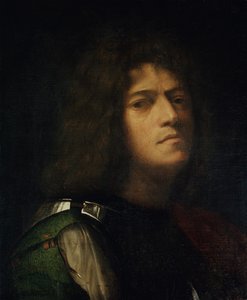
1477 - 1510 , Italië

Explore the luminous mastery of the Venetian Renaissance. Discover how masters like Titian and Giorgione revolutionized art through colorito, light, and atmosphere. An expert guide to the golden age of Italian painting for collectors and enthusiasts.


Blijf op de hoogte van het laatste kunstnieuws, exclusieve aanbiedingen en decoratie-ideeën.
Vertel ons over uw project en onze kunstexperts geven u 3 gepersonaliseerde kunstsuggesties.
Wij stellen drie opties speciaal voor u samen – gratis!


 Voorvertoning
 Verstuur
 Delen
Delen
 Details bekijken

 Download
 Vergelijkbare items
 Röntgenonderzoek
 Diavoorstelling
 Lees meer







 De optie voor glas is alleen beschikbaar bij een formaat kleiner dan 110 cm.


