x


 Print kopen Koop afbeelding in hoge resolutie
 Verstuur
 Details bekijken
 Toevoegen aan favorieten
 Download
 Vergelijkbare werken
 Röntgenonderzoek
 Diavoorstelling
Met de hand geschilderd in olieverf op canvas in uw gewenste maat en lijst, op bestelling gemaakt door onze kunstenaars.
Kies uit onze vooraf ingestelde maten die overeenkomen met de originele verhoudingen van het kunstwerk.

U kunt uw eigen afmetingen invoeren om in een specifieke lijst of ruimte te passen. Als de door u gekozen maat niet overeenkomt met de verhoudingen van het originele beeld, zullen we het kunstwerk bijsnijden of het schilderij uitbreiden met extra handgeschilderde elementen. Een digitale mockup wordt ter goedkeuring naar u verzonden voordat de productie begint.
Houd er rekening mee dat de preview op het scherm niet de werkelijke uitsnede of uitbreiding weergeeft. Alleen de mockup toont de uiteindelijke compositie nauwkeurig.
Hoewel aangepaste afmetingen mogelijk zijn, raden we aan een maat uit de vooraf gedefinieerde lijst te selecteren om de originele verhoudingen te behouden.
Wereldwijde levering () binnen 3/4 weken in plaats van de standaard 5 weken. (18 juli). Geen concessies aan de kwaliteit.


Saint Stephen
Afmetingen reproductie
Giotto di Bondone fundamentally reshaped Western painting in the early 14th century, bridging the gap between the stylized Byzantine tradition and the burgeoning Renaissance. This depiction of Saint Stephen, one of his most poignant works, exemplifies this revolutionary shift and stands as a powerful testament to both artistic skill and religious devotion.
The Narrative of Sacrifice
The artwork portrays the harrowing moment of Saint Stephen’s martyrdom. As the first Christian martyr, Stephen is shown amidst the stones being hurled at him by unseen assailants – an event recounted in the Acts of the Apostles. While the violence isn't graphically depicted, Giotto masterfully conveys the intensity of the scene through expressive gestures and carefully considered composition. Stephen appears calm yet resolute, his gaze directed upwards as if seeking divine strength in the face of unimaginable suffering. He clutches a book, symbolizing his unwavering faith and intellectual commitment to Christianity, even unto death.
Breaking with Tradition: Giotto’s Style
Giotto's style marks a dramatic departure from the prevailing Byzantine aesthetic. Where earlier depictions often presented figures as flat, gold-haloed icons lacking depth or emotional resonance, Giotto imbues Stephen with a tangible physicality and profound humanity. He achieves this through innovative use of *chiaroscuro* – the interplay of light and shadow – to model form and create a sense of volume. The drapery folds naturally around the figure, revealing underlying anatomy, and his facial features are rendered with remarkable realism, conveying both pain and spiritual fortitude. This focus on naturalism was groundbreaking for its time.
Technique & Materials: Tempera on Wood
Executed in tempera on wood panel – a common practice before the widespread adoption of oil paint – this work showcases Giotto’s mastery of the medium. Tempera requires precise application and layering to achieve luminosity and detail. The rich, vibrant colors, particularly the reds and blues in Stephen's garments, are testament to his skill in pigment preparation and application. The use of gold leaf, though restrained compared to Byzantine art, still highlights Stephen’s sanctity and elevates the spiritual significance of the scene.
Historical & Religious Context
Painted during a period of significant religious fervor and social change, this *Saint Stephen* reflects the growing emphasis on personal piety and emotional connection with faith. Giotto's work resonated deeply with contemporary audiences who were increasingly seeking relatable representations of biblical narratives. The painting served not only as an object of devotion but also as a powerful visual sermon, reinforcing core Christian beliefs about sacrifice, redemption, and unwavering belief in the face of persecution.
Symbolism & Emotional Resonance
Ultimately, Giotto’s *Saint Stephen* is not merely a historical or religious painting; it's a deeply moving exploration of human courage, faith, and the enduring power of the spirit. Its emotional impact continues to resonate with viewers centuries later, making it a timeless masterpiece and an inspiring addition to any collection or interior space.
Photo Description: --Overall Impression-- The artwork is a close-up depiction of a young man, likely a saint or religious figure, rendered in the style of Italian Renaissance iconography. It’s a highly detailed and ornate painting executed with tempera on wood panel, exhibiting typical characteristics of the period including meticulous rendering of facial features, rich fabrics, and elaborate gold leaf embellishments. The composition is centered around the figure, framed by an archway that dominates the upper portion of the image. The subject wears a robe adorned with intricate patterns and a decorative vestment featuring red and gold details. He holds a book open in his hands, suggesting piety or scholarly pursuits. The background is dark and undefined, emphasizing the central figure. Lines are used to define the contours of the face, clothing, and architectural elements. Shapes are predominantly geometric – circles (in the halo), squares and rectangles within the robe’s patterns, and the overall arch shape. Textures appear layered, with visible brushstrokes creating a sense of depth and adding to the richness of the surface. Lighting is dramatic, highlighting the figure's face and clothing while casting shadows that contribute to the three-dimensionality of the scene. Perspective is somewhat flattened, typical of Byzantine and early Renaissance painting, prioritizing symbolic representation over realistic spatial illusion. Depth is created through layering and shading.
Size: Unknown
Date: Unknown

Giotto di Bondone, geboren rond 1267 nabij Florence, Italië, is een naam die synoniem staat voor de overgang van de middeleeuwse kunst naar de Renaissance. Zijn leven is omgeven door verhalen en legendes, waaronder het beroemde verhaal van de jonge herdersjongen die op rotsen levensgetrouwe schapen tekende, waardoor hij de aandacht trok van de gerenommeerde Florentijnse meester Cimabue. Of dit verhaal waarheid bevat of niet, het symboliseert Giotto’s uitzonderlijke talent: een aangeboren vermogen om de natuurlijke wereld met ongekende realisme en emotionele diepte vast te leggen. Als leerling van Cimabue absorbeerde Giotto technische vaardigheden, maar hij begon al snel zijn eigen pad te bewandelen, weg van de gevestigde Byzantijnse stijl die destijds heerste. Deze stijl kenmerkte zich door gestileerde figuren, afgevlakte perspectieven en weelderige gouden achtergronden – symbolen van spirituele transcendentie in plaats van aardse representatie. Giotto daarentegen verlangde ernaar de mensheid niet als etherische iconen af te beelden, maar als individuen doordrenkt van gevoelens, bestaand in een tastbare ruimte.
Giotto’s artistieke revolutie was geen plotselinge omwenteling, maar een geleidelijke evolutie. Zijn vroege werken verraadden al de verschuiving die zou komen, met een groeiende nadruk op volume, gewicht en geloofwaardige anatomie. Hij begon licht en schaduw niet alleen als decoratieve elementen te zien, maar als hulpmiddelen om vormen vorm te geven en diepte te creëren. Dit ontluikende naturalisme is zichtbaar in zijn bijdragen aan de fresco’s in de Bovenbasiliek van Sint Franciscus van Assisi – hoewel het auteurschap ervan nog steeds wordt bediscussieerd, herkennen veel geleerden Giotto’s hand in scènes die een opmerkelijke afwijking vertonen van de heersende Byzantijnse esthetiek. Hij verwierp traditie niet simpelweg; hij bouwde erop voort en voorzag gevestigde vormen van een nieuw gevoel van menselijkheid en emotionele resonantie. Giotto begreep de kracht van narratie, en creëerde composities die verhalen vertelden niet door rigide symboliek, maar door expressieve gebaren, geloofwaardige interacties en zorgvuldig opgebouwde omgevingen.
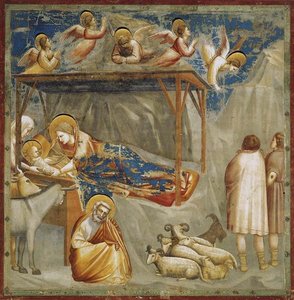
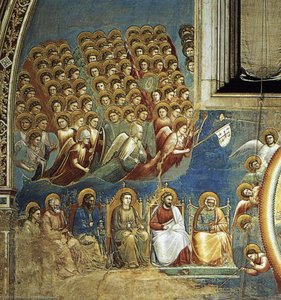
Giotto’s meesterwerk, en misschien wel een van de belangrijkste werken in de westerse kunstgeschiedenis, is de fresco cyclus die de Scrovegni Kapel (ook bekend als de Arena Kapel) in Padua siert. Voltoooid rond 1305, toont deze adembenemende serie het leven van Christus en Maria met een revolutionair niveau van realisme en emotionele intensiteit. Elke scène ontvouwt zich als een zorgvuldig geënsceneerd drama, bevolkt door figuren die niet slechts representaties zijn van religieuze archetypen, maar volledig gerealiseerde mensen die vreugde, verdriet, angst en hoop ervaren. Het *Laatste Oordeel*, dat een hele wand domineert, is een krachtig bewijs van Giotto’s vaardigheid om zowel goddelijke majesteit als de rauwe kwetsbaarheid van de mensheid voor haar uiteindelijke oordeel over te brengen. Het gebruik van perspectief, hoewel niet wiskundig nauwkeurig volgens latere Renaissance-normen, creëert een overtuigende illusie van diepte en trekt de kijker in het verhaal. De figuren staan stevig op de grond, hun lichamen hebben gewicht en volume, en hun uitdrukkingen tonen een scala aan emoties dat voorheen onbekend was in religieuze kunst.
Giotto’s talenten strekten zich verder uit dan schilderen; hij was ook een gerespecteerd architect. In 1334 kreeg hij de opdracht om de Campanile – de klokkentoren – van de kathedraal van Florence te ontwerpen, een project dat zijn innovatieve benadering van architectonische vorm liet zien. Hoewel hij voor zijn voltooiing overleed, legden zijn ontwerpen de basis voor dit iconische Florentijnse monument. Zijn invloed op latere generaties kunstenaars is onmeetbaar. Hij overbrugde de kloof tussen de middeleeuwse en Renaissance-wereld, en baande de weg voor meesters als Masaccio, Leonardo da Vinci en Michelangelo. Vasari, in zijn baanbrekende *Levens van de Kunstenaars*, schreef Giotto toe “de schilderkunst de grote kunst te hebben gegeven om dingen naar het leven te doen”, een bewijs van zijn diepgaande impact op het verloop van de westerse kunst. Giotto portretteerde niet alleen de wereld; hij zocht deze te begrijpen, haar essentie vast te leggen en dat begrip over te brengen door de kracht van visuele verhaalvertelling. Zijn nalatenschap blijft eeuwen na zijn dood ontzag en bewondering inspireren, waardoor zijn plaats als een van de grootste kunstinnovatoren in de geschiedenis wordt verstevigd.

1267 - 1337 , Italy

Explore the profound history of biblical art! Discover Renaissance masterpieces by Giotto & more. Uncover symbolism, artistic techniques, and lasting influence. Expert insights at Most-Famous-Paintings.
Ontdek de 10 meesterwerken die de Proto-Renaissance definieerden! Van Giotto tot Cimabue, leer over Italiaanse schilderkunst & vroege renaissance technieken. Vind museumkwaliteit kunst reproducties en inspiratie voor wanddecoratie op Most-Famous-Paintings.com.
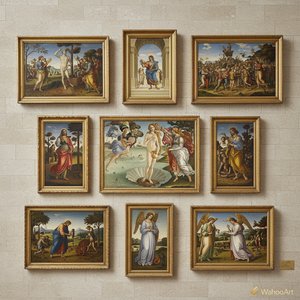
Ontdek de 10 grootste meesterwerken van de Vroege Renaissance! Lees over Leonardo da Vinci, Michelangelo & Botticelli. Laat u inspireren door Italiaanse kunst en koop museumkwaliteit reproducties voor uw interieur op Most-Famous-Paintings.com.
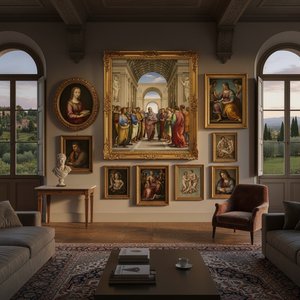
Ontdek de 25 meest iconische meesterwerken van Raphael! Duik in de Renaissance kunst, bewonder zijn portretten & religieuze schilderijen. Hoogwaardige reproducties voor uw interieur op Most-Famous-Paintings.com.

Explore the revolutionary art of Giotto di Bondone! Discover his groundbreaking techniques, iconic frescoes like those in the Arena Chapel, and lasting impact on Renaissance painting. A deep dive for art enthusiasts.


Blijf op de hoogte van het laatste kunstnieuws, exclusieve aanbiedingen en decoratie-ideeën.
Vertel ons over uw project en onze kunstexperts geven u 3 gepersonaliseerde kunstsuggesties.
Wij stellen 3 opties speciaal voor u samen – Gratis!


 Delen
Delen


 Lees meer




































 De optie voor glas is alleen beschikbaar bij een formaat kleiner dan 110 cm.