x

Met de hand geschilderd in olieverf op canvas in uw gewenste maat en lijst, op bestelling gemaakt door onze kunstenaars. ( Bestel een print Naar afbeelding wisselen)





























Kies uit onze vooraf ingestelde maten die overeenkomen met de originele verhoudingen van het kunstwerk.

U kunt uw eigen afmetingen invoeren om in een specifieke lijst of ruimte te passen. Als de door u gekozen maat niet overeenkomt met de verhoudingen van het originele beeld, zullen we het kunstwerk bijsnijden of het schilderij uitbreiden met extra handgeschilderde elementen. Een digitale mockup wordt ter goedkeuring naar u verzonden voordat de productie begint.
Houd er rekening mee dat de preview op het scherm niet de werkelijke uitsnede of uitbreiding weergeeft. Alleen de mockup toont de uiteindelijke compositie nauwkeurig.
Hoewel aangepaste afmetingen mogelijk zijn, raden we aan een maat uit de vooraf gedefinieerde lijst te selecteren om de originele verhoudingen te behouden.
Wereldwijde levering () binnen 3 tot 4 weken in plaats van de standaard 5 weken. (11 augustus). Zonder concessies aan de kwaliteit.


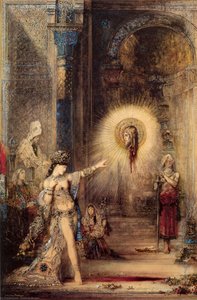
Sultane
Formaat reproductie
Gustave Moreau's *Sultane*, painted during his most intensely Symbolist period, is not merely a depiction of a man in red; it’s an immersion into a world of veiled secrets and potent symbolism. Created between 1882 and 1885, this enigmatic work embodies the core tenets of the Symbolist movement – a deliberate rejection of objective representation in favor of exploring subjective emotions, spiritual ideas, and fantastical narratives. Moreau, deeply influenced by mythology, religion, and the burgeoning field of psychology, sought to evoke an atmosphere of dreamlike intensity rather than offering a straightforward visual record.
Moreau's *Sultane* is deeply rooted in the Symbolist fascination with ancient myths and religious iconography. Sultan Ibrahim Effendi himself was a renowned collector of oriental artifacts, including a famed collection of Persian carpets, which heavily influenced Moreau’s artistic vision. The scene evokes elements of the Ottoman court, but more importantly, it functions as a symbolic representation of power, knowledge, and perhaps even madness. The raised hands of the Sultan suggest a moment of revelation or contemplation – a descent into the subconscious. The kneeling attendant could represent submission, obedience, or perhaps a conduit for divine inspiration.
Beyond its immediate visual impact, *Sultane* is laden with symbolic meaning. The Sultan’s raised hands can be interpreted as a gesture of prayer, contemplation, or even madness – a common motif in Symbolist art. The kneeling attendant represents subservience and loyalty, but also potentially the vulnerability of those who seek knowledge. The overall composition suggests a fragmented narrative, inviting viewers to actively participate in constructing their own interpretations. Moreau deliberately avoided providing clear answers, preferring instead to stimulate the viewer’s imagination and emotional response.

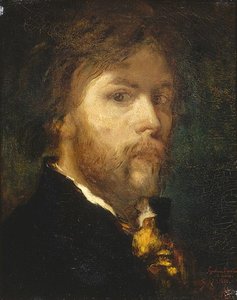
1826 - 1898 , Frankrijk

Explore the evocative world of Symbolist painting. Discover how masters like Gustave Moreau rejected realism to capture dreams, myths, and the subconscious through fine art history and expert analysis.

Explore the profound history and technical mastery of woodcut relief printing. From ancient origins to German Expressionism, discover how artists use the subtractive process to create iconic works. A definitive guide for art students, collectors, and historians.

Discover the technical mastery behind Most-Famous-Paintings.com's premium Giclée canvas prints. Our guide for elite collectors explores archival pigment inks, museum-grade substrates, and the science of high-fidelity reproduction to ensure lasting beauty and historical accuracy.


Blijf op de hoogte van het laatste kunstnieuws, exclusieve aanbiedingen en inspirerende interieurideeën.
Vertel ons over uw project en onze kunstexperts geven u 3 gepersonaliseerde kunstsuggesties.
Wij stellen 3 opties speciaal voor u samen – Gratis!


 Bekijk op ware grootte
 Verstuur
 Delen
Delen
 Details bekijken

 Download
 Vergelijkbare werken
 Röntgenonderzoek
 Diavoorstelling

 Lees meer







 De optie voor glas is alleen beschikbaar bij een formaat kleiner dan 110 cm.