


x

Met de hand geschilderd in olieverf op canvas in uw gewenste maat en lijst, op bestelling gemaakt door onze kunstenaars. ( Bestel print Koop afbeelding)
Kies uit onze vooraf ingestelde maten die overeenkomen met de originele verhoudingen van het kunstwerk.

U kunt uw eigen afmetingen invoeren om in een specifieke lijst of ruimte te passen. Als de door u gekozen maat niet overeenkomt met de verhoudingen van het originele beeld, zullen we het kunstwerk bijsnijden of het schilderij uitbreiden met extra handgeschilderde elementen. Een digitale mockup wordt ter goedkeuring naar u verzonden voordat de productie begint.
Houd er rekening mee dat de preview op het scherm niet de werkelijke uitsnede of uitbreiding weergeeft. Alleen de mockup toont de uiteindelijke compositie nauwkeurig.
Hoewel aangepaste afmetingen mogelijk zijn, raden we aan een maat uit de vooraf gedefinieerde lijst te selecteren om de originele verhoudingen te behouden.
Wereldwijde levering () binnen 3 tot 4 weken in plaats van de standaard 5 weken. (23 augustus). Zonder concessies aan de kwaliteit.


Blue Pitcher
Afmetingen reproductie
Henri Matisse's “Blue Pitcher,” painted in 1901, stands as a cornerstone of Fauvist art—a movement that irrevocably altered the course of twentieth-century painting. More than just a depiction of domestic objects, it embodies Matisse’s revolutionary approach to color and composition, reflecting his profound belief that art should express emotion rather than merely imitate reality.
The canvas presents a deceptively simple arrangement: a blue vase dominates the center stage, perched atop a pitcher. Surrounding it are two bottles positioned on either side, creating an equilibrium that’s subtly reinforced by the inclusion of a spoon resting upon the tabletop. Matisse eschewed traditional perspective and shading techniques, prioritizing instead the vibrancy of color to convey feeling. This deliberate rejection of academic conventions was precisely what defined Fauvism—a bold assertion that color could be its own reward.
Matisse’s masterful brushwork is instantly recognizable. Thick, impasto strokes – meaning paint applied thickly – imbue the canvas with palpable energy and texture. Each stroke isn't merely a mark; it’s an instrument of expression, channeling Matisse’s inner vision onto the surface. The artist meticulously layered hues of blue—ranging from cerulean to indigo—creating depth and luminosity that transcends mere visual representation.
"Blue Pitcher" emerged during a period of artistic ferment, challenging the prevailing aesthetic sensibilities of Impressionism. While Impressionists sought to capture fleeting moments of light and atmosphere, Matisse deliberately prioritized color as its primary vehicle for conveying emotion. This decision aligns with broader intellectual currents of the time—a burgeoning interest in psychology and symbolism—reflecting Matisse’s conviction that art should resonate beyond superficial appearances.
The choice of blue itself is significant. Often associated with tranquility, spirituality, and introspection, it serves as a counterpoint to the darker tones surrounding it. The vase and pitcher—familiar objects imbued with everyday life—become symbols of domestic harmony and contemplation. Ultimately, “Blue Pitcher” invites viewers into Matisse’s emotional landscape, prompting reflection on beauty, color, and the expressive power of art. It remains an enduring testament to Matisse's genius and a pivotal work in the history of Fauvist painting.


1869 - 1954 , Frankrijk
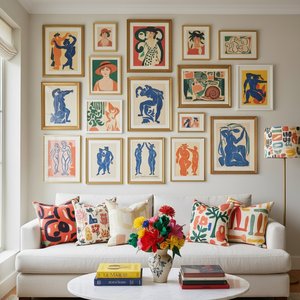
Ontdek de top 25 meesterwerken van Henri Matisse! Duik in de wereld van Fauvisme, kleurrijke composities & expressieve kunst. Vind museumkwaliteit reproducties en decoratie-inspiratie op Most-Famous-Paintings.com. Exploreer de collectie online!

Ontdek de 10 meest iconische Fauvist meesterwerken van kunstenaars als Matisse & Derain. Duik in expressieve kleuren en baanbrekende technieken! Museumkwaliteit reproducties voor uw interieur op Most-Famous-Paintings.com
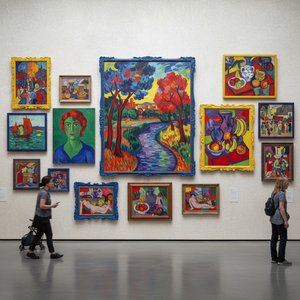
Ontdek de 10 meest iconische Fauvistische meesterwerken van kunstenaars als Matisse & Derain. Leer over kleur, expressie en hun invloed op moderne kunst. Museumkwaliteit reproducties voor uw interieur? Bekijk ze nu op Most-Famous-Paintings.com!

Ontdek 10 beroemde schilderijen gedomineerd door de prachtige tint 'Slate Blue'. Van Monet tot Van Gogh, leer over kunstgeschiedenis & techniek. Museumkwaliteit reproducties voor uw interieur op Most-Famous-Paintings.com! Ontdek de collectie online.

Ontdek 10 iconische kunstwerken die durf en expressie belichamen! Van Van Gogh tot Picasso, leer over de verhalen achter krachtige schilderijen & vind museumkwaliteit reproducties voor jouw interieur. Explore the full collection on Most-Famous-Paintings.com


Blijf op de hoogte van het laatste kunstnieuws, exclusieve aanbiedingen en decoratie-ideeën.
Vertel ons over uw project en onze kunstexperts geven u 3 gepersonaliseerde kunstsuggesties.
Wij stellen drie opties speciaal voor u samen – gratis!


 Voorvertoning
 Verstuur
 Delen
Delen
 Details bekijken

 Download
 Vergelijkbare items
 Röntgenonderzoek
 Diavoorstelling

 Lees meer




































 De optie voor glas is alleen beschikbaar bij een formaat kleiner dan 110 cm.


