x

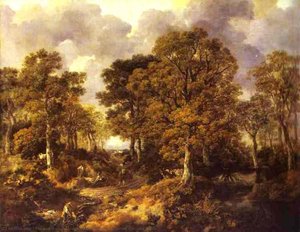
 155.0 x 107.0 cm
 Wolverhampton Art Gallery
Koop een digitale afbeelding in hoge resolutie met verbeterde kwaliteit, die veel superieur is aan de online voorvertoning.
Elk bestand wordt met uiterste precisie voorbereid door onze interne specialisten, met behulp van geavanceerde tools en deskundige handmatige retouche. Wij garanderen dat elke afbeelding een uitzonderlijke helderheid, nauwkeurige kleurweergave en verfijnde details bezit.
Het uiteindelijke bestand wordt binnen 72 uur per e-mail geleverd, geoptimaliseerd voor direct gebruik in professionele, redactionele en printomgevingen. Dit is dezelfde kwaliteit waarop vooraanstaande designstudio's, uitgevers en galerieën vertrouwen.
Download een bestand met hoge resolutie voor persoonlijke weergave, afdrukken en creatieve projecten. ( Bestel print Bestel handgeschilderde reproductie)
Wanneer u kiest voor Most-Famous-Paintings.com, ontvangt u niet alleen een afbeelding – u krijgt een professioneel verbeterd digitaal kunstwerk, met precisie vervaardigd en voorzien van een tevredenheidsgarantie. Dit is alles wat automatisch bij uw bestelling is inbegrepen:

Uw hoogwaardige digitale afbeeldingsbestand wordt binnen 72 uur na bestelling naar u gemaild – klaar voor direct gebruik.

Uw kunstwerk wordt professioneel geoptimaliseerd met behulp van geavanceerde AI-tools en handmatige bewerkingen, waardoor maximale details, helderheid en kleurnauwkeurigheid worden gegarandeerd.

Je bestand per ongeluk verwijderd of kwijtgeraakt? Geen zorgen – we sturen het u op elk gewenst moment gratis opnieuw toe.

Geniet direct van uw kunstwerk zonder invoerrechten, belastingen of verzendkosten – digitale downloads zijn altijd belastingvrij.

Met behulp van professionele hulpmiddelen en kleurbeheer zorgen wij ervoor dat uw digitale afbeelding de originele kleuren zo nauwkeurig mogelijk weergeeft.

Als u niet tevreden bent met uw digitale afbeelding, passen wij deze aan of storten wij 100% terug binnen 60 dagen – zonder vragen gesteld.

Niet tevreden? Ontvang binnen 60 dagen na ontvangst van uw digitale bestand uw volledige aankoopbedrag terug – zonder vragen te stellen.

Koop 3 afbeeldingen, bespaar 10% - Koop 5, bespaar 15% - Koop 10+, bespaar 20%. Ideaal voor creatieve projecten, galerieën en bureaus.

In the grand tapestry of Victorian British art, few threads are as vital yet subtly woven as that of Henry Mark Anthony. A master of light and atmosphere, Anthony stands as a transformative figure who bridged the gap between traditional studio landscapes and the revolutionary en plein air movement. Born in 1817 at Rusholme Lane, Manchester, his early years were shaped by a blend of Welsh heritage and an burgeoning artistic curiosity. Following his family's move to Cowbridge, Glamorgan, his initial creative sparks were fanned by an apprenticeship under Dr. Harrison, an amateur artist who recognized the young boy's innate sensitivity to the natural world. This early foundation in meticulous observation would later become the hallmark of his mature style.
The trajectory of Anthony’s career took a decisive turn when he moved to London around 1833. It was during this period of profound exploration that his artistic identity truly began to coalesce. Supported by newfound patronage, he embarked on extensive travels across the European continent, venturing through the Netherlands, France, Ireland, and Spain. These journeys were far more than mere sightseeing; they were rigorous academic pursuits. At the Hague and within the prestigious Académie des Beaux-Arts in Paris, Anthony immersed himself in the techniques of masters such as Paul Delaroche, Ary Scheffer, and Horace Vernet. However, it was his time in Fontainebleau in 1837 that would forever alter his brushwork. Immersed in the ethos of the Barbizon School, he drew deep inspiration from the works of Jean-Baptiste-Camille Corot and Jules Dupré, learning to capture not just the geography of a place, but its very soul through direct engagement with the elements.
What set Henry Mark Anthony apart from his contemporaries was his courageous rejection of the static, controlled environment of the studio in favor of the unpredictable beauty of the outdoors. He is widely credited with being among the first British artists to introduce the French plein-air style to the London art scene. This method required a radical shift in technique—a need for speed, spontaneity, and an acute awareness of fleeting atmospheric effects. His canvases began to breathe with the moisture of English mist and the warmth of Mediterranean sun, capturing textural nuances that had previously been lost in more formal compositions.
Critics of his era often drew favorable comparisons between Anthony and the legendary John Constable, noting a shared devotion to the sublime beauty of the landscape. His ability to render the ephemeral—the way light filters through a canopy of trees or how shadows stretch across a meadow—gave his work an emotional resonance that captivated audiences. This mastery of atmosphere was not merely a technical feat but a poetic one, as he sought to translate the transient moments of nature into permanent visual poetry. His frequent exhibitions at prestigious institutions such as the Royal Academy, the British Institution, and the Society of British Artists solidified his reputation as a leading voice in the Romantic movement.
The impact of Henry Mark Anthony extended far beyond his own canvases. By bringing the sensibilities of the Barbizon School to Britain, he helped pave the way for subsequent generations of landscape painters. His commitment to the careful observation of nature resonated deeply with the Pre-Raphaelite Brotherhood; he maintained a close friendship with Ford Madox Brown and earned the admiration of artists who sought a similar truth in their depictions of the natural world. His work served as a vital link between the classical traditions of the early 19th century and the more modern, impressionistic approaches that would follow.
Throughout his life, Anthony’s achievements were marked by both critical acclaim and institutional recognition. Notable milestones include:
When Henry Mark Anthony passed away in Hampstead in 1886, he left behind a transformed landscape painting tradition. He had successfully taught the British eye to look closer at the world, to find the extraordinary within the ordinary, and to appreciate the profound beauty found in a single, sun-drenched moment captured directly from the earth.

1817 - 1886


Blijf op de hoogte van het laatste kunstnieuws, exclusieve aanbiedingen en decoratie-ideeën.
Vertel ons over uw project en onze kunstexperts geven u 3 gepersonaliseerde kunstsuggesties.
Wij stellen drie opties speciaal voor u samen – gratis!


 Voorvertoning
 Verstuur
 Delen
Delen
 Details bekijken

 Download
 Vergelijkbare items
 Röntgenonderzoek
 Diavoorstelling
 Lees meer