


x

 Olieverf op canvasWanddecoratieSurrealist Symbolism
 60.0 x 167.0 cm
Koop een digitale afbeelding in hoge resolutie met verbeterde kwaliteit, die veel superieur is aan de online voorvertoning.
Elk bestand wordt met uiterste precisie voorbereid door onze interne specialisten, met behulp van geavanceerde tools en deskundige handmatige retouche. Wij garanderen dat elke afbeelding een uitzonderlijke helderheid, nauwkeurige kleurweergave en verfijnde details bezit.
Het uiteindelijke bestand wordt binnen 72 uur per e-mail geleverd, geoptimaliseerd voor direct gebruik in professionele, redactionele en printomgevingen. Dit is dezelfde kwaliteit waarop vooraanstaande designstudio's, uitgevers en galerieën vertrouwen.
Download een bestand met hoge resolutie voor persoonlijke weergave, afdrukken en creatieve projecten. ( Bestel print Bestel handgeschilderde reproductie)
Wanneer u kiest voor Most-Famous-Paintings.com, ontvangt u niet alleen een afbeelding – u krijgt een professioneel verbeterd digitaal kunstwerk, met precisie vervaardigd en voorzien van een tevredenheidsgarantie. Dit is alles wat automatisch bij uw bestelling is inbegrepen:

Uw hoogwaardige digitale afbeeldingsbestand wordt binnen 72 uur na bestelling naar u gemaild – klaar voor direct gebruik.

Uw kunstwerk wordt professioneel geoptimaliseerd met behulp van geavanceerde AI-tools en handmatige bewerkingen, waardoor maximale details, helderheid en kleurnauwkeurigheid worden gegarandeerd.

Je bestand per ongeluk verwijderd of kwijtgeraakt? Geen zorgen – we sturen het u op elk gewenst moment gratis opnieuw toe.

Geniet direct van uw kunstwerk zonder invoerrechten, belastingen of verzendkosten – digitale downloads zijn altijd belastingvrij.

Met behulp van professionele hulpmiddelen en kleurbeheer zorgen wij ervoor dat uw digitale afbeelding de originele kleuren zo nauwkeurig mogelijk weergeeft.

Als u niet tevreden bent met uw digitale afbeelding, passen wij deze aan of storten wij 100% terug binnen 60 dagen – zonder vragen gesteld.

Niet tevreden? Ontvang binnen 60 dagen na ontvangst van uw digitale bestand uw volledige aankoopbedrag terug – zonder vragen te stellen.

Koop 3 afbeeldingen, bespaar 10% - Koop 5, bespaar 15% - Koop 10+, bespaar 20%. Ideaal voor creatieve projecten, galerieën en bureaus.
Hieronymus Bosch’s “Last Judgment, Right Wing,” a monumental panel from his triptych of the same name, isn’t merely a depiction of judgment; it’s an immersive descent into the very architecture of sin and punishment. Painted around 1503-1514, this section of the work offers a visceral glimpse into Bosch's profoundly unsettling vision of humanity’s moral state – a world where earthly pleasures morph into instruments of eternal torment. Born in ’s-Hertogenbosch, Netherlands, during a period of intense religious fervor and burgeoning societal anxieties, Bosch developed a unique artistic language that blended meticulous detail with fantastical imagery, creating scenes both terrifyingly real and profoundly symbolic.
The panel immediately assaults the viewer with its oppressive darkness. A chaotic assembly of figures – some writhing in agony, others passively accepting their fate – is crammed into a bizarre landscape dominated by grotesque structures and unsettling details. The sheer density of bodies, coupled with Bosch’s masterful use of perspective, creates an overwhelming sense of claustrophobia and impending doom. This isn't the serene judgment often portrayed in religious art; it’s a brutal confrontation with our own mortality and the consequences of our choices.
Bosch’s work is renowned for its intricate symbolism, and this section offers a starting point for understanding the panel's complex narrative. The central figure, a towering, almost monstrous being resembling a judge or angel, oversees the proceedings. Beneath him lies a swirling vortex of souls – some ascending to paradise, others plummeting into hell. Notice the meticulously rendered details: the decaying fruit representing earthly temptations, the chained figures symbolizing sin, and the bizarre assortment of animals, each carrying its own symbolic weight. The bird on the left, often interpreted as an angel or a messenger, adds another layer of ambiguity to the scene.
The landscape itself is a key element of Bosch’s symbolism. It's a warped reflection of earthly delights – a lavish banquet overflowing with decadent food and drink, juxtaposed against the stark reality of eternal damnation. The presence of a giant, grotesque tree, laden with fruit, speaks to the corruption of innocence and the allure of worldly pleasures. Even seemingly innocuous details, like the numerous skulls scattered throughout the scene, serve as constant reminders of death and decay.
Bosch's technique is characterized by an extraordinary level of detail and a masterful command of oil paint. He employed a layering technique, building up colors and textures to create a remarkably realistic – albeit disturbing – effect. The figures are rendered with meticulous precision, capturing their expressions of anguish, despair, and resignation. His use of perspective is particularly noteworthy; he creates a sense of depth and spatial complexity that draws the viewer into the scene.
The “Last Judgment” panel was likely commissioned for a private collector or religious institution, possibly in Spain or Austria, reflecting Bosch’s extensive travels throughout his career. It's believed to be part of a larger triptych, with the left wing depicting the Garden of Eden and the right wing portraying Paradise. Understanding this broader context is crucial to appreciating the full scope of Bosch’s vision – a complex meditation on sin, redemption, and the human condition.
Despite its unsettling imagery, “Last Judgment, Right Wing” resonates deeply with viewers centuries after its creation. It taps into our primal fears about death, judgment, and the consequences of our actions. Bosch’s work isn't simply a depiction of hell; it’s an exploration of the darkness within ourselves – the temptations that lead us astray, the sins we commit, and the potential for eternal punishment. The panel serves as a powerful reminder of the importance of moral responsibility and the enduring struggle between good and evil.

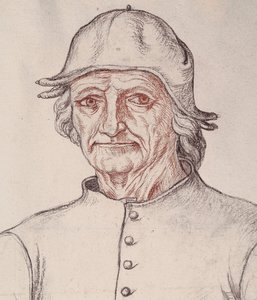
1450 - 1516 , Nederland


Blijf op de hoogte van het laatste kunstnieuws, exclusieve aanbiedingen en decoratie-ideeën.
Vertel ons over uw project en onze kunstexperts geven u 3 gepersonaliseerde kunstsuggesties.
Wij stellen drie opties speciaal voor u samen – gratis!


 Voorvertoning
 Verstuur
 Delen
Delen
 Details bekijken

 Download
 Vergelijkbare items
 Röntgenonderzoek
 Diavoorstelling
 Lees meer


