x


 Print kopen Koop afbeelding in hoge resolutie
 Verstuur
 Details bekijken
 Toevoegen aan favorieten
 Download
 Vergelijkbare werken
 Röntgenonderzoek
 Diavoorstelling
 Acrylic On CanvasWallArtRealism
 186519th Century
 65.0 x 90.0 cm
 National Gallery of Canada
Met de hand geschilderd in olieverf op canvas in uw gewenste maat en lijst, op bestelling gemaakt door onze kunstenaars.





























Kies uit onze vooraf ingestelde maten die overeenkomen met de originele verhoudingen van het kunstwerk.

U kunt uw eigen afmetingen invoeren om in een specifieke lijst of ruimte te passen. Als de door u gekozen maat niet overeenkomt met de verhoudingen van het originele beeld, zullen we het kunstwerk bijsnijden of het schilderij uitbreiden met extra handgeschilderde elementen. Een digitale mockup wordt ter goedkeuring naar u verzonden voordat de productie begint.
Houd er rekening mee dat de preview op het scherm niet de werkelijke uitsnede of uitbreiding weergeeft. Alleen de mockup toont de uiteindelijke compositie nauwkeurig.
Hoewel aangepaste afmetingen mogelijk zijn, raden we aan een maat uit de vooraf gedefinieerde lijst te selecteren om de originele verhoudingen te behouden.
Wereldwijde levering () binnen 3/4 weken in plaats van de standaard 5 weken. (22 juli). Geen concessies aan de kwaliteit.


The Third-class Carriage
Afmetingen reproductie
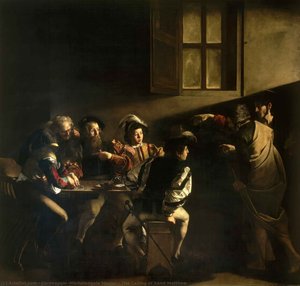
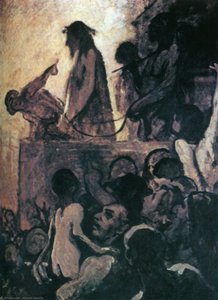
Honoré Daumier's 1865 painting, “The Third-Class Carriage,” is more than a simple depiction of a train journey; it’s a poignant snapshot of mid-19th century French society, rendered with the artist’s characteristic blend of realism and social commentary. Measuring 65 x 90 cm, this black and white composition immediately draws the viewer into the cramped confines of a third-class railway car, capturing a moment of everyday life that speaks volumes about class divisions and the burgeoning urbanization of France during the Second Empire.
Daumier’s style is immediately recognizable through his meticulous draftsmanship and a deliberate avoidance of idealized beauty. He was deeply influenced by artists like Rubens, particularly in his use of dramatic lighting (chiaroscuro) to sculpt forms and create mood. In “The Third-Class Carriage,” this influence is evident in the strong contrasts between light and shadow, which highlight the textures of the benches, luggage, and clothing. The artist’s technique relies on precise lines and detailed observation, reflecting his commitment to capturing reality with unflinching honesty. His work was often characterized by a rough, almost sketch-like quality, contributing to its raw emotional impact.
Painted in 1865, “The Third-Class Carriage” reflects the significant social and political changes occurring in France during this period. The rapid growth of Paris and other industrial centers led to a massive influx of rural populations seeking work and opportunity – often finding themselves crammed into overcrowded, poorly maintained train cars like the one depicted here. Daumier’s work aligns with the broader trend of Realist art, which sought to depict everyday life without romanticizing or idealizing it. The painting subtly critiques the social inequalities inherent in this transition, offering a glimpse into the lives of those marginalized by industrialization and urbanization.
Beyond its documentary value, “The Third-Class Carriage” possesses a powerful symbolic resonance. The presence of a woman holding a baby amidst the bustling crowd evokes themes of family, vulnerability, and the challenges faced by working-class families. The scattered luggage represents not just possessions but also dreams, aspirations, and the burdens carried on journeys – both literal and metaphorical. The overall mood is one of quiet observation, inviting viewers to contemplate the lives of these anonymous individuals and consider their place within a rapidly changing society. This artwork’s enduring appeal lies in its ability to capture a fleeting moment of human experience with remarkable sensitivity and artistic skill.


1808 - 1879 , Frankrijk

Ontdek de top 25 meesterwerken uit het Metropolitan Museum of Art, New York! Van Van Gogh tot Monet – leer over kunstgeschiedenis en bewonder iconische schilderijen. Vind museumkwaliteit reproducties & interieurinspiratie op Most-Famous-Paintings.com.

Ontdek de 25 meest iconische meesterwerken van het MoMA in New York! Van Van Gogh's Starry Night tot Picasso’s kubisme. Leer over kunstgeschiedenis, technieken & emoties achter deze schilderijen. Museumkwaliteit reproducties op Most-Famous-Paintings.com.

Ontdek de 25 meest betoverende meesterwerken van Dante Gabriel Rossetti! Duik in de wereld van Pre-Raphaëlitische kunst, symbolisme & romantiek. Vind museumkwaliteit reproducties en inspiratie voor uw interieur op Most-Famous-Paintings.com.

Ontdek de top 25 meesterwerken van het Detroit Institute of Arts! Van Van Gogh tot Monet, bewonder iconische schilderijen en hun verhaal. Vind museumkwaliteit reproducties & woondecoratie inspiratie op Most-Famous-Paintings.com.
Ontdek de top 25 meesterwerken van National Gallery Washington! Van Cézanne tot Picasso, leer het verhaal achter iconische kunst. Vind museumkwaliteit reproducties & interieurinspiratie op Most-Famous-Paintings.com.


Blijf op de hoogte van het laatste kunstnieuws, exclusieve aanbiedingen en decoratie-ideeën.
Vertel ons over uw project en onze kunstexperts geven u 3 gepersonaliseerde kunstsuggesties.
Wij stellen 3 opties speciaal voor u samen – Gratis!


 Delen
Delen

 Lees meer







 De optie voor glas is alleen beschikbaar bij een formaat kleiner dan 110 cm.