Verkoop uw kunst
Verlanglijstje Winkelwagen Cart
VoorvertoningVoorvertoning Bekijk in ARBekijk in AR Bestel handgeschilderde reproductie Bestel handgeschilderde reproductieKoop afbeelding Koop afbeelding VerstuurVerstuur
Details bekijkenDetails bekijken Toevoegen aan favorieten Toevoegen aan favorieten DownloadDownload Vergelijkbare itemsVergelijkbare items RöntgenonderzoekRöntgenonderzoek DiavoorstellingDiavoorstelling

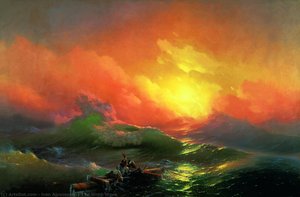
The Rainbow.

Ivan Aivazovsky: De meester van de zee! Zijn emotionele schepen en dramatische kustlandschappen, een symfonie van kleur en beweging uit de Russische Romantiek.

Giclée / Kunstafdrukken

Giclée- of canvasafdruk van museumkwaliteit met een snelle productie en flexibele afwerkingsmogelijkheden. (Bestel handgeschilderde reproductie Bestel handgeschilderde reproductieKoop afbeelding Koop afbeelding)

P118B $10
P118H $10
P118W $10
P438Z $10
P508JH $12
P508YH $12
P805H $10
P805Z $10
P919BZ $10
P919G $10
P919XJ $10
P959ZH $10
P968JZ $12
W106C $8
W218G $10
W218JH $8
W218Y $10
W307PJ $10
W316G $10
W316PJ $8
W316Y $10
W398PJ $8
W4111J $10
W500HY $15
W500JH $15
W692G $12
W849H $8
W940BG $15
W953PJ $8

Standard
custom
CM
INCH

Kies uit onze vooraf ingestelde maten die overeenkomen met de originele verhoudingen van het kunstwerk.

breedte
hoogte

U kunt uw eigen afmetingen opgeven om in een specifieke lijst of ruimte te passen. Als de door u gekozen maat niet overeenkomt met de proporties van het originele kunstwerk, zullen wij de afbeelding bijsnijden of uitbreiden met een gespiegelde of effen rand. Een digitaal mockup wordt ter goedkeuring naar u verzonden voordat de productie begint.
Houd er rekening mee dat de preview op het scherm de werkelijke bijsneding of uitbreiding niet weergeeft. Alleen de mockup toont de uiteindelijke compositie nauwkeurig.
Hoewel aangepaste maten beschikbaar zijn, raden wij aan een afmeting uit de vooraf bepaalde lijst te kiezen om de originele proporties te behouden.

Wereldwijde levering () binnen 2 weken in plaats van de standaard 4/5 weken. (20 augustus)

why_choose_icon
Gratis wereldwijde expressverzending
why_choose_icon
Hoogwaardig linnen canvas
why_choose_icon
Volledige verzendverzekering
why_choose_icon
Garantie op terugbetaling van invoerrechten
why_choose_icon
Garantie op exacte kleurweergave
why_choose_icon
Retourbeleid van 60 dagen (alleen bij defecten)
why_choose_icon
100% Geld-terug-garantie
why_choose_icon
Korting bij meerdere afnames

Totaalprijs

$ 69

reproduction

The Rainbow.

Giclée / Kunstafdrukken

Afmetingen reproductie

-

Eindtotaal

$ 69

Snelle feiten

  • Year: 1873
  • Influences: Romanticism
  • Movement: Romanticism
  • Title: The Rainbow
  • Subject or theme: Seascape; Hope symbolism
  • Notable elements or techniques: Pastel hues; Subtle light & shadow play
  • Location: Tretyakov Gallery, Moscow

Kunstquiz

Er is slechts één goed antwoord op elke vraag.

Vraag 1:
What artistic movement is ‘The Rainbow’ primarily associated with?
Vraag 2:
Where is Ivan Aivazovsky's masterpiece, 'The Rainbow,' currently housed?
Vraag 3:
What prominent symbol appears in the painting’s distant horizon?
Vraag 4:
How does Aivazovsky utilize light and shadow to convey emotion within ‘The Rainbow’?
Vraag 5:
What is a key characteristic of Romanticism that is evident in Aivazovsky’s approach to painting ‘The Rainbow’?

Beschrijving verzamelobject

A Symphony of Light and Hope: Exploring Ivan Aivazovsky’s “The Rainbow”

Ivan Konstantinovich Aivazovsky, born Hovhannes Aivazian in 1817, wasn't merely a painter of seascapes; he was a conduit to the ocean’s soul. His very existence seemed inextricably linked to the Black Sea—a vast, unpredictable expanse that would forever dominate his artistic vision and fuel an extraordinary career spanning nearly six decades. Born in the Crimean port city of Feodosia, Aivazovsky didn't merely observe the sea; he felt it – its raw energy, sublime beauty, and inherent danger becoming the very essence of his art. From a young age, this connection was nurtured, initially by local architect Jacob Koch who recognized the boy’s talent, then blossoming within the rigorous academic environment of the Imperial Academy of Arts in Saint Petersburg. Yet, formal training alone couldn't account for the depth of Aivazovsky’s understanding; it was the constant presence of salt-laced air and the cries of gulls that truly shaped his artistic sensibility. His canvases pulsed with an immediacy born from direct experience—a characteristic that would define his legacy as one of Russia’s foremost Romantic marine painters.

Romantic Vision: Capturing Emotion Through Landscape

“The Rainbow,” completed in 1873, exemplifies Aivazovsky's unwavering commitment to Romantic ideals. Unlike the bold, vibrant palettes favored by earlier artists like Turner and Friedrich, Aivazovsky employed a more subdued tonal range—muted blues, greens, and ochres—creating an atmosphere of contemplative grandeur rather than dramatic spectacle. This deliberate restraint serves not to diminish the painting’s impact but to heighten its emotional resonance. The artist skillfully manipulated light and shadow, guiding the viewer's gaze across the turbulent seascape and emphasizing the vulnerability of the small lifeboat battling against the waves. It is precisely this empathetic portrayal of human struggle juxtaposed with the serene beauty of nature that encapsulates the core tenets of Romanticism—a preoccupation with feeling, imagination, and the sublime power of the natural world.

Technique and Composition: Mastering Atmospheric Perspective

Aivazovsky’s mastery of technique is evident in his meticulous rendering of atmospheric perspective. He achieved this illusionistic depth by layering thin washes of color to simulate the haze and mist characteristic of coastal environments. The distant mountains are rendered in paler hues, gradually fading into obscurity—a technique that convincingly conveys the vastness and remoteness of the sea. Furthermore, Aivazovsky’s brushstrokes are loose and expressive, capturing the dynamism of the waves while simultaneously conveying a sense of tranquility. This careful balance between observation and artistic interpretation distinguishes his work from more literal depictions of maritime scenes.

Symbolism: The Rainbow as Emblematic Hope

Beyond its aesthetic qualities, “The Rainbow” is laden with symbolic significance. Appearing in the distance against the stormy backdrop, the rainbow transcends mere visual representation; it embodies hope—a promise of salvation amidst adversity. This motif aligns perfectly with Romantic sensibilities, which often explored themes of spirituality and transcendence. The turbulent sea symbolizes human vulnerability and struggle, while the rainbow represents divine grace and reassurance. Aivazovsky’s deliberate inclusion of this emblem underscores the painting's overarching message: even in moments of despair, beauty and solace can endure.

A Legacy Enduring Through Time

Currently housed at the Tretyakov Gallery in Moscow, “The Rainbow” stands as a testament to Ivan Aivazovsky’s artistic genius and his profound connection to the ocean. Its enduring appeal lies not only in its breathtaking visual splendor but also in its ability to evoke powerful emotions—a feeling of awe, compassion, and ultimately, optimism. To experience this masterpiece firsthand or through a meticulously crafted reproduction is to immerse oneself in the spirit of Romanticism—a movement that continues to inspire artists and captivate audiences worldwide. You can explore more about Ivan Aivazovsky’s artistic journey on Most-Famous-Paintings.com and delve deeper into Romantic art philosophy on Wikipedia.

Biografie van de kunstenaar

A Life Embraced by the Waves

Ivan Konstantinovich Aivazovsky, born Hovhannes Aivazian in 1817, was more than a painter of seascapes; he was a conduit to the ocean’s soul. His very existence seemed inextricably linked to the Black Sea—a vast, unpredictable expanse that would forever dominate his artistic vision and fuel an extraordinary career spanning nearly six decades. Born in the Crimean port city of Feodosia, Aivazovsky didn't merely observe the sea; he felt it – its raw energy, sublime beauty, and inherent danger becoming the very essence of his art. From a young age, this connection was nurtured, initially by local architect Jacob Koch who recognized the boy’s talent, then blossoming within the rigorous academic environment of the Imperial Academy of Arts in Saint Petersburg. Yet, formal training alone couldn't account for the depth of Aivazovsky’s understanding; it was the constant presence of salt-laced air and the cries of gulls that truly shaped his artistic sensibility. His Armenian heritage also played a significant role, as he was baptized at the St. Sargis Armenian Church in Feodosia and maintained strong cultural ties throughout his life, occasionally incorporating Armenian themes into his expansive body of work.

The Early Years: Crimean Roots and Artistic Beginnings

Aivazovsky’s early years were deeply rooted in the rugged beauty of Crimea. His family, originally from Western Armenia, had settled in Feodosia, a bustling port city with a rich maritime history. This environment—the salty air, the vibrant harbor, and the constant presence of ships—provided an unparalleled source of inspiration for the young Aivazian. He began to draw and paint as a child, capturing the local landscapes and the working life of the sailors. Recognizing his exceptional talent, Jacob Koch, a prominent local architect, encouraged him to pursue his artistic ambitions. This early encouragement led to his enrollment in the Simferopol gymnasium No.1, followed by studies at the Imperial Academy of Arts in Saint Petersburg—a prestigious institution that provided him with formal training in classical painting techniques. However, Aivazovsky’s true education came from direct experience; he spent countless hours observing the sea, studying its moods and capturing its ever-changing light. This intimate connection to the ocean would become the defining characteristic of his artistic style.

The Rise of a Marine Master: Italy and the Russian Navy

In 1840, Aivazovsky embarked on a transformative journey to Europe, beginning with Italy. The Italian landscape—with its dramatic coastlines, vibrant colors, and atmospheric light—proved to be an invaluable source of inspiration. He immersed himself in the works of artists like J.M.W. Turner and sought to emulate their ability to capture the power and beauty of nature. Returning to Russia, Aivazovsky’s talent quickly gained recognition, and he was appointed as the main painter of the Russian Navy in 1845. This appointment provided him with unprecedented access to naval life—ships, sailors, battles, and firsthand observations that profoundly influenced his work. He became intimately acquainted with maritime life, lending an authenticity to his depictions that resonated deeply with both military officials and art enthusiasts alike. The role afforded him the opportunity to document significant naval engagements, solidifying his reputation as a master of marine painting.

A Style Defined by Drama and Light

Aivazovsky’s artistic style is instantly recognizable for its dramatic compositions, masterful use of color, and evocative portrayal of the sea. He was particularly adept at capturing the effects of light on water—the shimmering reflections, the swirling foam, and the ethereal glow of moonlight. His paintings are often characterized by a sense of movement and energy, as if the viewer is caught in the midst of a storm or witnessing a naval battle. Aivazovsky’s technique involved working *en plein air*, directly from nature, allowing him to capture fleeting light effects with remarkable precision. He employed thin layers of paint to create luminous textures and used atmospheric perspective to convey depth and distance. His most celebrated works—such as The Ninth Wave, Seascape with Full Moon, and A Ship in a Stormy Sea—are testaments to his technical skill and artistic vision. These paintings are not merely representations of the sea; they are emotional experiences that transport the viewer to the heart of the storm or onto the deck of a ship battling towering waves.

Legacy and Enduring Influence

Ivan Konstantinovich Aivazovsky stands as one of the greatest masters of marine art in Russian history—a legacy cemented by his technical skill, emotional depth, and prolific output. His paintings are celebrated not only for their aesthetic beauty but also for their ability to evoke powerful emotions and capture the essence of the sea. He significantly contributed to the development of Russian landscape painting, influencing generations of artists with his innovative techniques and dramatic compositions. Aivazovsky’s work continues to resonate with audiences worldwide, exhibited in museums and galleries across the globe. His paintings are a testament to the enduring power of nature and the human spirit—a reminder of our vulnerability in the face of the elements and our capacity for resilience and hope. He wasn't simply a painter of seascapes; he was a poet of the ocean, translating its moods, mysteries, and majesty onto canvas with unparalleled skill and passion.
Ivan Aivazovsky

Ivan Aivazovsky

1817 - 1900 , Rusland

Belangrijkste feiten

  • Artistic Movement Or Style: Romantiek, Zeekunst
  • Artists Or Movements Influenced By This Artist: ['Russische landschap schilderkunst']
  • Artists Who Influenced This Artist: ['Turner']
  • Date Of Birth: 1817
  • Date Of Death: 1900
  • Full Name: Ivan Konstantinovich Aivazovsky
  • Nationality: Russisch-Armenisch
  • Notable Artworks:
    • De Negende Golf
    • Schip in een Stormachtig Zee
    • Landschap met Volle Maan
  • Place Of Birth: Feodosia, Rusland
Ontdek kunstwerken georganiseerd op thema, stijl en kenmerk.