


x

 1880
1880 36.0 x 25.0 cm
Giclée- of canvasafdruk van museumkwaliteit met een snelle productie en flexibele afwerkingsmogelijkheden. ( Bestel handgeschilderde reproductie Koop afbeelding)
Kies uit onze vooraf ingestelde maten die overeenkomen met de originele verhoudingen van het kunstwerk.

U kunt uw eigen afmetingen opgeven om in een specifieke lijst of ruimte te passen. Als de door u gekozen maat niet overeenkomt met de proporties van het originele kunstwerk, zullen wij de afbeelding bijsnijden of uitbreiden met een gespiegelde of effen rand. Een digitaal mockup wordt ter goedkeuring naar u verzonden voordat de productie begint.
Houd er rekening mee dat de preview op het scherm de werkelijke bijsneding of uitbreiding niet weergeeft. Alleen de mockup toont de uiteindelijke compositie nauwkeurig.
Hoewel aangepaste maten beschikbaar zijn, raden wij aan een afmeting uit de vooraf bepaalde lijst te kiezen om de originele proporties te behouden.
Wereldwijde levering () binnen 2 weken in plaats van de standaard 4/5 weken. (20 augustus)


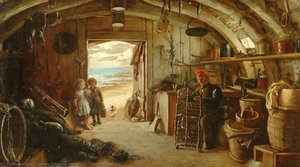
Burt's Close, Perth
Afmetingen reproductie

James Crichton Macintyre (1867-1911) stands as a pivotal figure in late 19th and early 20th century British art, particularly renowned for his evocative depictions of the Perthshire landscape and his meticulous copies after celebrated artists like John Everett Millais. Born in Ulster but raised primarily in Scotland, MacIntyre’s artistic journey was shaped by a deep connection to the rugged beauty of his homeland – a connection that profoundly informed his distinctive style and enduring legacy. His work isn't merely representation; it’s an intimate dialogue with light, atmosphere, and the subtle nuances of the Scottish Highlands.
MacIntyre’s early artistic training remains somewhat obscured, though he is believed to have studied at the Royal Academy in London. However, his true development occurred through a process of diligent observation and painstaking imitation. He began his career as a copying artist, meticulously recreating works by masters such as Clarkson Stanfield and John Everett Millais – an approach that initially defined his output. These copies weren’t mere reproductions; MacIntyre absorbed the techniques, color palettes, and compositional strategies of these influential artists, gradually refining his own artistic voice within this framework. This apprenticeship proved invaluable, providing him with a solid foundation in draughtsmanship and understanding of tonal values.
A key element of MacIntyre’s style is his masterful manipulation of light and atmosphere. He possessed an extraordinary ability to capture the fleeting effects of sunlight on water, stone, and vegetation – a skill that became increasingly pronounced as he moved beyond direct copying. His paintings are characterized by a delicate balance between observation and imagination, often imbued with a sense of melancholy and quiet contemplation. His subjects—typically scenes from Perthshire, including lochs, hillsides, and glimpses of rural life—are rendered with remarkable detail and sensitivity. The influence of the Pre-Raphaelites is undeniable, particularly in his use of color and his interest in depicting natural beauty, but MacIntyre ultimately forged a unique style that was distinctly his own.
MacIntyre’s most celebrated works are undoubtedly his copies after Millais, notably “Chill October,” which showcases his remarkable ability to capture the atmospheric effects of autumn. However, he also produced numerous independent paintings, including "The Watergate, Perth," a stunning example of his meticulous attention to detail and his skill in rendering complex textures. His work with watercolors is particularly noteworthy; he expertly utilized washes of color to create luminous surfaces and convey a sense of depth and atmosphere. The Swine Herd, a copy after William Ewart Lockhart, demonstrates his ability to capture the essence of a scene through subtle details and evocative brushwork.
Despite his relatively short career – he tragically died in 1911 at the age of 44 – James Crichton MacIntyre left an indelible mark on British art. His meticulous technique, atmospheric perspective, and profound appreciation for the beauty of the Scottish landscape continue to resonate with viewers today. He is remembered not only as a skilled copying artist but also as a talented independent painter who developed a distinctive style that reflected his deep connection to his homeland. His work remains a testament to the power of observation, imitation, and artistic dedication.
MacIntyre’s work emerged during a period of significant artistic change in Britain, marked by the revival of interest in Pre-Raphaelite ideals and a growing emphasis on realism and naturalism. The influence of artists like John Everett Millais, Clarkson Stanfield, and William Ewart Lockhart is readily apparent in his early works, but he gradually developed a more individual style that reflected his own unique vision. The Scottish landscape tradition, with its rugged beauty and dramatic light, also played a crucial role in shaping his artistic sensibilities.
Despite his relatively short career, James Crichton MacIntyre’s work continues to be appreciated for its technical skill, atmospheric quality, and evocative depiction of the Scottish Highlands. He is remembered as a significant figure in late 19th-century British art, whose meticulous technique and profound appreciation for the beauty of nature left a lasting legacy.
1867 - 1911


Blijf op de hoogte van het laatste kunstnieuws, exclusieve aanbiedingen en decoratie-ideeën.
Vertel ons over uw project en onze kunstexperts geven u 3 gepersonaliseerde kunstsuggesties.
Wij stellen drie opties speciaal voor u samen – gratis!


 Voorvertoning
 Verstuur
 Delen
Delen
 Details bekijken

 Download
 Vergelijkbare items
 Röntgenonderzoek
 Diavoorstelling
 Lees meer




































 De optie voor glas is alleen beschikbaar bij een formaat kleiner dan 110 cm.


