


x
 Oil On CanvasWallArtRococo
 1744
1744 61.0 x 49.0 cm
 Galleria degli Uffizi
Koop een digitale afbeelding in hoge resolutie met verbeterde kwaliteit, die veel superieur is aan de online voorvertoning.
Elk bestand wordt met uiterste precisie voorbereid door onze interne specialisten, met behulp van geavanceerde tools en deskundige handmatige retouche. Wij garanderen dat elke afbeelding een uitzonderlijke helderheid, nauwkeurige kleurweergave en verfijnde details bezit.
Het uiteindelijke bestand wordt binnen 72 uur per e-mail geleverd, geoptimaliseerd voor direct gebruik in professionele, redactionele en printomgevingen. Dit is dezelfde kwaliteit waarop vooraanstaande designstudio's, uitgevers en galerieën vertrouwen.
Download een bestand met hoge resolutie voor persoonlijke weergave, afdrukken en creatieve projecten. ( Bestel print Bestel handgeschilderde reproductie)
Wanneer u kiest voor Most-Famous-Paintings.com, ontvangt u niet alleen een afbeelding – u krijgt een professioneel verbeterd digitaal kunstwerk, met precisie vervaardigd en voorzien van een tevredenheidsgarantie. Dit is alles wat automatisch bij uw bestelling is inbegrepen:

Uw hoogwaardige digitale afbeeldingsbestand wordt binnen 72 uur na bestelling naar u gemaild – klaar voor direct gebruik.

Uw kunstwerk wordt professioneel geoptimaliseerd met behulp van geavanceerde AI-tools en handmatige bewerkingen, waardoor maximale details, helderheid en kleurnauwkeurigheid worden gegarandeerd.

Je bestand per ongeluk verwijderd of kwijtgeraakt? Geen zorgen – we sturen het u op elk gewenst moment gratis opnieuw toe.

Geniet direct van uw kunstwerk zonder invoerrechten, belastingen of verzendkosten – digitale downloads zijn altijd belastingvrij.

Met behulp van professionele hulpmiddelen en kleurbeheer zorgen wij ervoor dat uw digitale afbeelding de originele kleuren zo nauwkeurig mogelijk weergeeft.

Als u niet tevreden bent met uw digitale afbeelding, passen wij deze aan of storten wij 100% terug binnen 60 dagen – zonder vragen gesteld.

Niet tevreden? Ontvang binnen 60 dagen na ontvangst van uw digitale bestand uw volledige aankoopbedrag terug – zonder vragen te stellen.

Koop 3 afbeeldingen, bespaar 10% - Koop 5, bespaar 15% - Koop 10+, bespaar 20%. Ideaal voor creatieve projecten, galerieën en bureaus.
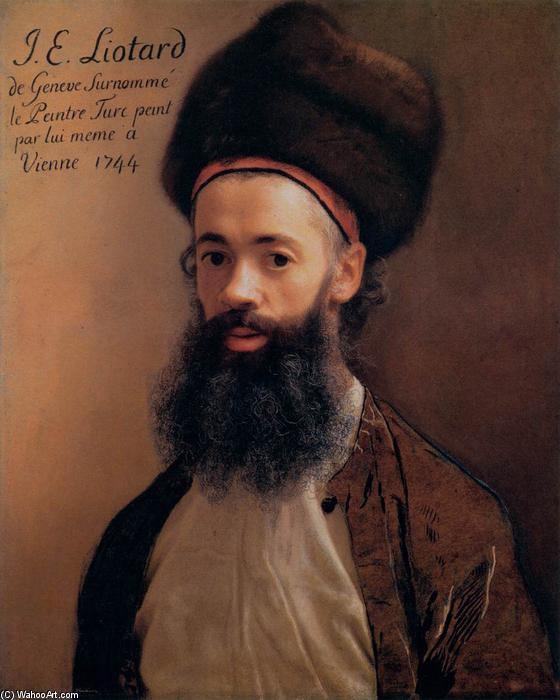
The year 1744 marks a pivotal moment in the artistic trajectory of Jean-Étienne Liotard, a Genevan painter whose oeuvre is defined by an exquisite blend of naturalism and ethereal beauty. His “Self-Portrait,” housed within the hallowed halls of the Uffizi Gallery in Florence, isn’t merely a depiction of a man; it's a carefully constructed meditation on identity, perception, and the delicate balance between the observed world and the inner self. Painted during his period in Rome, this pastel masterpiece exemplifies Liotard’s signature style – a luminous, almost dreamlike quality achieved through masterful layering and an unparalleled sensitivity to light and texture.
Liotard's technique is immediately striking. He eschews the rigid formality of traditional portraiture, opting instead for a relaxed pose and a gaze that feels both direct and contemplative. The pastel medium itself—a relatively new tool in 18th-century art—allowed Liotard to build up color with astonishing subtlety, creating an effect akin to sfumato, the hazy blurring technique perfected by Leonardo da Vinci. Notice how he employs delicate washes of pinks, blues, and greens to capture the nuances of light on his face and clothing, imbuing the portrait with a sense of atmospheric depth. The background, rendered in loose, impressionistic strokes, isn’t merely decorative; it subtly reinforces the feeling of introspection, suggesting an inner landscape mirroring the sitter's thoughts.
Born in Geneva in 1702, Liotard’s early life was shaped by his Huguenot heritage and a rigorous artistic training under esteemed miniaturists. However, it was his sojourn to Constantinople between 1738 and 1742 that profoundly influenced his artistic vision. Immersed in the vibrant culture of the Ottoman Empire, he developed a fascination with Eastern aesthetics – particularly the use of rich colors, luxurious fabrics, and the portrayal of everyday life. This influence is subtly present in “Self-Portrait,” not through overt Orientalist tropes, but rather through the overall mood of serenity and an appreciation for tactile textures. The loose brushwork and soft color palette evoke a sense of exoticism without resorting to stereotypical imagery.
Interestingly, Liotard’s embrace of the East wasn't solely aesthetic; it was also deeply personal. He deliberately adopted Turkish dress in his portraits, a conscious decision that challenged European conventions and established him as a unique figure within the art world. This choice, documented in numerous accounts, reflected not just an artistic preference but a genuine engagement with a culture vastly different from his own. It’s a testament to Liotard's intellectual curiosity and willingness to transcend conventional boundaries.
Beyond its technical brilliance, “Self-Portrait” is rich in symbolic meaning. The sitter’s direct gaze invites the viewer into his world, fostering a sense of intimacy and shared contemplation. The slightly parted lips suggest a quiet amusement, while the subtle furrow of his brow hints at underlying thoughts and emotions. Some art historians have interpreted the portrait as an exploration of the concept of “inner space”—a realm where the self is revealed through careful observation and artistic representation.
The inclusion of a small, partially visible book in the foreground adds another layer of complexity. It’s a subtle nod to Liotard's own intellectual pursuits – his studies of art theory and his role as an art dealer. The book symbolizes knowledge, reflection, and the pursuit of understanding—qualities that are central to the portrait’s overall message. The soft lighting and hazy atmosphere further contribute to this sense of introspection, creating a space where the viewer is invited to contemplate not just the subject's appearance but also his inner world.
Liotard’s “Self-Portrait” remains a captivating work of art, offering a rare glimpse into the mind and soul of a remarkable artist. Its delicate pastel technique, evocative atmosphere, and profound symbolism continue to resonate with viewers centuries after its creation. A high-quality reproduction captures much of this beauty, making it an ideal addition to any collection or interior space. The painting’s luminous quality and contemplative mood create a sense of serenity and intellectual engagement—a perfect choice for those seeking art that transcends mere decoration.


1702 - 1789 , Zwitserland


Blijf op de hoogte van het laatste kunstnieuws, exclusieve aanbiedingen en decoratie-ideeën.
Vertel ons over uw project en onze kunstexperts geven u 3 gepersonaliseerde kunstsuggesties.
Wij stellen drie opties speciaal voor u samen – gratis!


 Voorvertoning
 Verstuur
 Delen
Delen
 Details bekijken

 Download
 Vergelijkbare items
 Röntgenonderzoek
 Diavoorstelling
 Lees meer


