x

Met de hand geschilderd in olieverf op canvas in uw gewenste maat en lijst, op bestelling gemaakt door onze kunstenaars. ( Bestel print Koop afbeelding)





























Kies uit onze vooraf ingestelde maten die overeenkomen met de originele verhoudingen van het kunstwerk.

U kunt uw eigen afmetingen invoeren om in een specifieke lijst of ruimte te passen. Als de door u gekozen maat niet overeenkomt met de verhoudingen van het originele beeld, zullen we het kunstwerk bijsnijden of het schilderij uitbreiden met extra handgeschilderde elementen. Een digitale mockup wordt ter goedkeuring naar u verzonden voordat de productie begint.
Houd er rekening mee dat de preview op het scherm niet de werkelijke uitsnede of uitbreiding weergeeft. Alleen de mockup toont de uiteindelijke compositie nauwkeurig.
Hoewel aangepaste afmetingen mogelijk zijn, raden we aan een maat uit de vooraf gedefinieerde lijst te selecteren om de originele verhoudingen te behouden.
Wereldwijde levering () binnen 3 tot 4 weken in plaats van de standaard 5 weken. (15 augustus). Zonder concessies aan de kwaliteit.


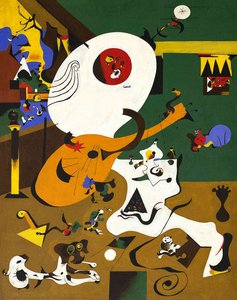
De Boer
Afmetingen reproductie
Joan Miró's "The Farm" isn’t merely a depiction of a rustic scene; it’s an intimate inventory, a vibrant snapshot of a Catalan farmhouse—a masia—and the life inextricably bound to its land. Painted between 1921 and 1922 during a pivotal period in Miró’s artistic evolution, this oil on canvas transcends simple representation, offering instead a deeply personal reflection on his roots and a nascent exploration of Surrealist themes. The painting’s power lies not just in its subject matter but in the way Miró imbues it with a dreamlike quality, blending elements of semi-Cubism and semi-realism into a uniquely evocative composition. It's as if he’s distilling the essence of his childhood home—a place saturated with memories, traditions, and the rhythms of rural existence—onto a single, captivating surface.
Miró’s connection to Mont-roig del Camp, the small Catalan village where he spent his summers with his family, is profoundly evident. The painting isn’t a literal transcription of the landscape; rather, it’s a carefully constructed memory—a distillation of shapes, colors, and textures that evoke a specific place and time. Notice the muted palette dominated by earthy browns, ochres, and yellows, mirroring the dry soil and sun-baked stone characteristic of the region. The buildings – a church, barn, and house – are rendered with a charming simplicity, while the surrounding fields and terraces suggest an abundance of crops and livestock. Yet, there’s an underlying sense of quiet solitude, hinting at the isolation and resilience required to sustain life in such a challenging environment. The inclusion of animals—horses, cows, and a dog—further reinforces this connection to the land and its bounty.
“The Farm” marks a crucial turning point in Miró’s artistic trajectory. Following his early realist works, he began experimenting with abstraction, moving away from strict representation towards a more symbolic and expressive style. This shift is particularly noticeable in the painting's composition—the figures are slightly distorted, the forms are simplified, and the perspective is deliberately skewed. Miró himself described the work as “a summary of my entire life in the countryside” and “the point of departure for what was to follow,” acknowledging its significance as a transitional piece. It’s a moment where he begins to embrace the subconscious, allowing his imagination to shape the landscape and imbue it with a sense of mystery and dreamlike quality—a foreshadowing of his later explorations into Surrealism.
Beyond its immediate depiction of a rural scene, “The Farm” is rich in symbolic meaning. The prominent eucalyptus tree at the center of the composition serves as a powerful emblem of strength, resilience, and connection to nature—a recurring motif in Miró’s work. The inclusion of traditional Catalan elements, such as the masia architecture and the agricultural tools, speaks to his deep-rooted identity and his reverence for the cultural heritage of his homeland. The painting can be interpreted as a celebration of rural life, a tribute to family traditions, and an affirmation of Miró’s connection to the land—a vital source of inspiration throughout his career. The very act of creating this inventory, this detailed record of his family's home, suggests a desire to preserve and immortalize a cherished memory.
“The Farm” remains one of Miró’s most iconic works, embodying his unique artistic vision and his profound connection to the natural world. It stands as a testament to his ability to blend diverse styles and themes into a cohesive and emotionally resonant composition. Reproductions capture the painting’s vibrant colors and dreamlike atmosphere, offering viewers a glimpse into Miró’s imaginative universe. For those seeking a piece that embodies both rustic charm and surrealist intrigue, “The Farm” is an exceptional choice—a timeless reminder of the beauty and complexity of rural life and the enduring power of memory.

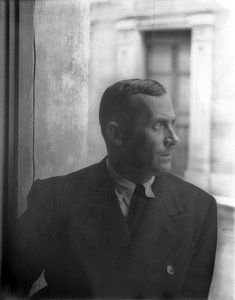
1893 - 1983 , Spanje

Explore the profound history of landscape masterpieces. From the Barbizon School to Monet's Impressionism, discover how timeless natural scenes bring serenity and prestige to your collection through museum-quality, hand-painted oil reproductions.


Blijf op de hoogte van het laatste kunstnieuws, exclusieve aanbiedingen en decoratie-ideeën.
Vertel ons over uw project en onze kunstexperts geven u 3 gepersonaliseerde kunstsuggesties.
Wij stellen drie opties speciaal voor u samen – gratis!


 Voorvertoning
 Verstuur
 Delen
Delen
 Details bekijken

 Download
 Vergelijkbare items
 Röntgenonderzoek
 Diavoorstelling

 Lees meer







 De optie voor glas is alleen beschikbaar bij een formaat kleiner dan 110 cm.