x


 Bestel schilderij Koop afbeelding in hoge resolutie
 Verstuur
 Details bekijken
 Toevoegen aan favorieten
 Download
 Vergelijkbare werken
 Röntgenonderzoek
 Diavoorstelling
 Oil On CanvasWallArtNaïve Art
 1963Modern
 179.0 x 98.0 cm
Giclée- of canvasafdruk van museumkwaliteit met snelle productie en flexibele afwerkingsopties.





























Kies uit onze vooraf ingestelde maten die overeenkomen met de originele verhoudingen van het kunstwerk.

U kunt uw eigen afmetingen opgeven om in een specifieke lijst of ruimte te passen. Als de door u gekozen maat niet overeenkomt met de proporties van het originele kunstwerk, zullen wij de afbeelding bijsnijden of uitbreiden met een gespiegelde of effen rand. Een digitaal mockup wordt ter goedkeuring naar u verzonden voordat de productie begint.
Houd er rekening mee dat de preview op het scherm de werkelijke bijsneding of uitbreiding niet weergeeft. Alleen de mockup toont de uiteindelijke compositie nauwkeurig.
Hoewel aangepaste maten beschikbaar zijn, raden wij aan een afmeting uit de vooraf bepaalde lijst te kiezen om de originele proporties te behouden.
Wereldwijde levering () binnen 2 weken in plaats van de standaard 4/5 weken. (21 juli)


King David
Afmetingen reproductie
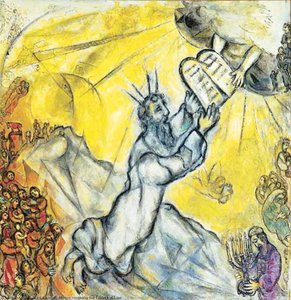
Marc Chagall, born Moishe Shagal in 1887 in Liozna, Belarus, wasn't merely a painter; he was a poet of color, a weaver of dreams, and a chronicler of memory. His life, spanning nearly a century, mirrored the tumultuous currents of the 20th century, yet his art remained steadfastly rooted in a deeply personal vision—one infused with the folklore of his Hasidic Jewish upbringing and an unwavering belief in the power of imagination. Vitebsk itself was more than just a birthplace; it became the emotional core of his artistic universe, a recurring motif populated by flying figures, whimsical animals, and the vibrant hues of remembered landscapes. The town’s unique blend of cultures—Russian Orthodox churches alongside bustling Jewish marketplaces—forged an aesthetic sensibility that would defy easy categorization throughout his long career. ‘King David,’ painted in 1963, exemplifies this deeply personal approach, a testament to Chagall's ability to translate profound spiritual and cultural themes into a visually arresting and emotionally resonant work.
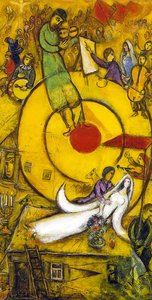
(Image: King David, 1963 - Marc Chagall - WikiArt.org)
This monumental oil on canvas, measuring 179.8 x 98 cm, is a prime example of what critics have termed Chagall’s “Naïve Art” or “Primitivism.” Rejecting the conventions of academic realism, Chagall employed bold colors, simplified forms, and a dreamlike quality to convey his deeply felt emotions and spiritual experiences. The painting eschews precise detail in favor of expressive lines and symbolic imagery—a deliberate choice that allows the viewer to connect with the work on an intuitive level. The grayscale lithograph version (referenced in Most-Famous-Paintings’s database) highlights this, emphasizing the dramatic scale and expressive lines, evoking a sense of biblical weight and solemnity.
At the heart of ‘King David’ stands the iconic figure of the biblical monarch himself. Dressed in a vibrant red robe—a color often associated with royalty and divine power—he plays his lyre, a symbol of music, poetry, and kingship. However, the scene is far from static. A ghostly woman, seemingly emerging from the shadows, stands beside him, her presence adding an element of mystery and perhaps representing David’s past or a spiritual guide. Several other figures populate the composition: one holding what appears to be a bird—a recurring motif in Chagall's work often symbolizing freedom and aspiration—and others engaged in conversation or seemingly lost in contemplation. The background features a stylized townscape beneath a crescent moon, further enhancing the painting’s dreamlike atmosphere and connecting it to the biblical narrative of David’s reign.
Created in 1963, during a period of significant personal reflection for Chagall, ‘King David’ reflects his lifelong fascination with Jewish history, mythology, and spirituality. It builds upon the earlier 'King David (II Samuel, VI, 4 5)' lithograph from 1956, demonstrating a continued exploration of this iconic biblical figure. The painting draws inspiration from the Book of Samuel, but Chagall’s interpretation transcends mere illustration; he imbues the scene with his own unique vision and emotional intensity. Chagall's work, including pieces like ‘King David,’ has been celebrated for its ability to bridge the gap between religious faith and artistic expression, making it a cornerstone of 20th-century art. The painting’s enduring appeal lies in its capacity to evoke a sense of wonder, mystery, and profound emotional resonance—a testament to Chagall's genius as both an artist and a poet of color.
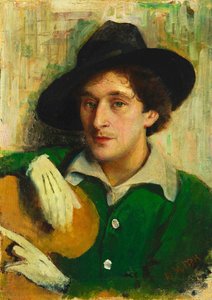
1887 - 1985 , Belarus

Explore the rich history of biblical art from Giotto to the Renaissance masters. Discover symbolism, techniques & enduring legacies with Most-Famous-Paintings – your source for museum-quality reproductions and expert art insights.

Ontdek de 10 meest legendarische olieverf meesterwerken die kunstgeschiedenis schreven! Van Van Gogh tot Rembrandt, leer over iconische technieken & emotionele impact. Vind museumkwaliteit reproducties en woondecoratie inspiratie op Most-Famous-Paintings.com.

Ontdek de 10 legendarische olieverfschilderijen die kunstgeschiedenis schreven! Van Rembrandt tot Monet, leer over meesterwerken & technieken. Vind museumkwaliteit reproducties en woondecoratie inspiratie op Most-Famous-Paintings.com.

Ontdek de 10 meest legendarische olieverfschilderijen op paneel die kunstgeschiedenis schreven! Van Jan van Eyck tot Pieter Bruegel, leer over meesterwerken uit de Renaissance & Vlaamse Primitieven. Vind museumkwaliteit reproducties en woondecoratie inspiratie op Most-Famous-Paintings.com.

Transform cherished photos into timeless oil paintings with skilled artists. Trusted for bespoke portraits & heirloom art. Discover the process, styles & lasting value – a legacy preserved.


Blijf op de hoogte van het laatste kunstnieuws, exclusieve aanbiedingen en decoratie-ideeën.
Vertel ons over uw project en onze kunstexperts geven u 3 gepersonaliseerde kunstsuggesties.
Wij stellen 3 opties speciaal voor u samen – Gratis!


 Delen
Delen

 Lees meer







 De optie voor glas is alleen beschikbaar bij een formaat kleiner dan 110 cm.