x

 Acrylic On PaperOtherExpressionism
 1963
1963 19.0 x 31.0 cm
Met de hand geschilderd in olieverf op canvas in uw gewenste maat en lijst, op bestelling gemaakt door onze kunstenaars. ( Bestel print Koop afbeelding)





























Kies uit onze vooraf ingestelde maten die overeenkomen met de originele verhoudingen van het kunstwerk.

U kunt uw eigen afmetingen invoeren om in een specifieke lijst of ruimte te passen. Als de door u gekozen maat niet overeenkomt met de verhoudingen van het originele beeld, zullen we het kunstwerk bijsnijden of het schilderij uitbreiden met extra handgeschilderde elementen. Een digitale mockup wordt ter goedkeuring naar u verzonden voordat de productie begint.
Houd er rekening mee dat de preview op het scherm niet de werkelijke uitsnede of uitbreiding weergeeft. Alleen de mockup toont de uiteindelijke compositie nauwkeurig.
Hoewel aangepaste afmetingen mogelijk zijn, raden we aan een maat uit de vooraf gedefinieerde lijst te selecteren om de originele verhoudingen te behouden.
Wereldwijde levering () binnen 3 tot 4 weken in plaats van de standaard 5 weken. (15 augustus). Zonder concessies aan de kwaliteit.


Moses with the Burning Bush
Afmetingen reproductie
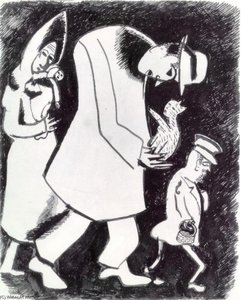
Marc Chagall’s “Moses with the Burning Bush,” created in 1963, isn’t merely a depiction of a biblical narrative; it’s an intensely personal and profoundly moving exploration of faith, memory, and the enduring power of dreams. This striking black-and-white drawing, measuring a modest 19 x 31 cm, immediately captivates with its dynamic composition and expressive energy – a far cry from the polished realism of many historical paintings. It feels less like a carefully constructed narrative and more like a fleeting glimpse into Chagall’s own inner world, a testament to his lifelong fascination with folklore, Jewish tradition, and the ethereal realm of imagination.
The drawing's immediate impact stems from its loose, almost sketch-like execution. Lines are thick and uneven, creating a palpable sense of movement and urgency. Figures aren’t rendered with precise detail but rather suggested through gestural marks and overlapping planes – a technique that echoes the influence of Expressionism while retaining Chagall’s uniquely individual style. The flattened perspective further contributes to this feeling of immediacy, drawing the viewer directly into the scene as if witnessing it unfold before their eyes.
At the heart of the composition is Moses himself, a figure both grounded and reaching upwards. He’s not presented as a heroic leader but rather as a man wrestling with revelation, his posture conveying a sense of profound contemplation. Crucially, he's surrounded by other figures – women, children, and animals – all caught in a swirling dance of movement, seemingly propelled skyward. This imagery is deeply rooted in Chagall’s personal mythology, referencing the folklore of his Hasidic Jewish upbringing where stories of flight and ascension were central to religious belief. These aren’t simply bystanders; they represent the collective experience of faith, drawn upwards towards the divine.
Dominating the scene is, of course, the burning bush – a potent symbol of God's presence and revelation. Chagall doesn’t offer a literal representation; instead, he captures its essence through an illuminated sphere at the top left corner, radiating light and drawing the eye upwards. This isn’t a static image of divine power but rather a dynamic force, actively illuminating the figures below and suggesting a transformative experience.
The artwork is primarily executed in pencil, utilizing hatching and cross-hatching to create varying tones and textures. This technique lends a raw, immediate quality to the piece – it feels as though Chagall worked directly onto the paper, capturing his thoughts and emotions with swift, decisive strokes. The use of black and white further emphasizes the drawing’s emotional intensity, stripping away any distractions and focusing attention on form, movement, and symbolism. The textured surface, created by the layering of graphite, adds a tactile dimension to the image, inviting viewers to engage with it on a sensory level.
“Moses with the Burning Bush” is more than just a biblical illustration; it’s a window into the soul of one of the 20th century’s most beloved artists. Born Moishe Shagal in Liozna, Belarus, Chagall’s life was shaped by his Jewish heritage and his deep connection to the folklore of his childhood. His art consistently reflects this influence, blending religious symbolism with personal memories and a boundless imagination. This drawing, created later in his career, demonstrates the continued strength of his vision – a testament to his ability to transform profound spiritual experiences into works of enduring beauty and emotional resonance. Reproductions offer a remarkable opportunity to bring this captivating piece into any space, inviting contemplation and sparking the imagination.

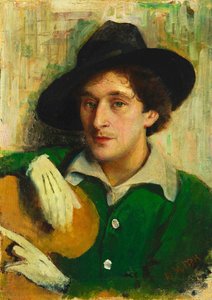
1887 - 1985 , Belarus

Elevate your interiors with impactful statement walls! Expert guide on scaling artwork for perfect proportions & design harmony. Custom solutions & free consultations at Most-Famous-Paintings.

Explore the rich history of biblical art from Giotto to the Renaissance masters. Discover symbolism, techniques & enduring legacies with Most-Famous-Paintings – your source for museum-quality reproductions and expert art insights.

Explore the profound history of biblical art! Discover Renaissance masterpieces by Giotto & more. Uncover symbolism, artistic techniques, and lasting influence. Expert insights at Most-Famous-Paintings.

Ontdek de kunst van gelaagde narratieven met meerdelige kunstwerken. Expert advies voor hoteldesign & interieurstyling. Creëer unieke ruimtes met museumkwaliteit prints en op maat gemaakte oplossingen.

Ontdek de kracht van ivoorkleurig zwart in 10 iconische schilderijen. Van Rembrandt tot Manet, duik in de verhalen achter deze meesterwerken en vind perfecte kunst voor uw interieur. Museumkwaliteit reproducties op Most-Famous-Paintings.com


Blijf op de hoogte van het laatste kunstnieuws, exclusieve aanbiedingen en decoratie-ideeën.
Vertel ons over uw project en onze kunstexperts geven u 3 gepersonaliseerde kunstsuggesties.
Wij stellen drie opties speciaal voor u samen – gratis!


 Voorvertoning
 Verstuur
 Delen
Delen
 Details bekijken

 Download
 Vergelijkbare items
 Röntgenonderzoek
 Diavoorstelling
 Lees meer







 De optie voor glas is alleen beschikbaar bij een formaat kleiner dan 110 cm.