x


 Preview
 Bestel schilderij Koop afbeelding in hoge resolutie
 Verstuur
 Details bekijken
 Toevoegen aan favorieten
 Download
 Vergelijkbare werken
 Röntgenonderzoek
 Diavoorstelling
Giclée- of canvasafdruk van museumkwaliteit met snelle productie en flexibele afwerkingsopties.





























Kies uit onze vooraf ingestelde maten die overeenkomen met de originele verhoudingen van het kunstwerk.

U kunt uw eigen afmetingen opgeven om in een specifieke lijst of ruimte te passen. Als de door u gekozen maat niet overeenkomt met de proporties van het originele kunstwerk, zullen wij de afbeelding bijsnijden of uitbreiden met een gespiegelde of effen rand. Een digitaal mockup wordt ter goedkeuring naar u verzonden voordat de productie begint.
Houd er rekening mee dat de preview op het scherm de werkelijke bijsneding of uitbreiding niet weergeeft. Alleen de mockup toont de uiteindelijke compositie nauwkeurig.
Hoewel aangepaste maten beschikbaar zijn, raden wij aan een afmeting uit de vooraf bepaalde lijst te kiezen om de originele proporties te behouden.
Wereldwijde levering () binnen 2 weken in plaats van de standaard 4/5 weken. (25 juli)


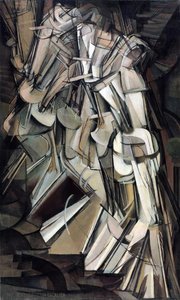
Trébuchet (Trap)
Afmetingen reproductie
Marcel Duchamp's “Trébuchet (Trap),” created in 1964, transcends mere sculpture; it embodies a profound exploration of artistic concepts within the seemingly simple framework of everyday objects. This unassuming wooden plank adorned with four strategically positioned metal hooks presents an arresting paradox – a deliberate rejection of traditional representation that speaks volumes about Duchamp’s revolutionary approach to art.
Born Henri-Robert-Marcel Duchamp in 1887, Marcel Duchamp was a figure whose influence reverberates throughout the twentieth century. Initially trained in classical painting and sculpture, he swiftly abandoned academic conventions, recognizing their limitations in conveying intellectual ideas. Embracing the tenets of Dadaism – an anti-art movement born from disillusionment with the horrors of World War I – Duchamp championed the concept of “ready-made,” elevating commonplace items to artistic status.
The sculpture’s execution is remarkably understated. Duchamp utilized a single piece of wood, chosen for its inherent materiality and textural qualities. The metal hooks—likely sourced from industrial hardware—were affixed with meticulous precision, demonstrating a deliberate contrast between organic and inorganic elements. This careful selection of materials underscores Duchamp's intention to challenge conventional artistic techniques by focusing on the physicality of the artwork itself.
"Trébuchet (Trap)" operates on multiple symbolic levels. The “trebuchet,” a medieval siege weapon designed to hurl projectiles over fortifications, represents not brute force but calculated strategy—a concept Duchamp applied to his artistic endeavors. More subtly, the hooks evoke imagery of ladders or rungs, suggesting aspiration and upward movement, yet simultaneously hinting at entrapment and constraint. This duality reflects Duchamp’s preoccupation with exploring paradoxical ideas within seemingly banal forms.
Despite its minimalist aesthetic, “Trébuchet (Trap)” possesses a powerful emotional resonance. The sculpture invites viewers to contemplate the relationship between art and everyday life—to question what constitutes beauty and significance. Duchamp’s deliberate refusal to embellish or decorate compels contemplation of form alone, fostering a sense of quiet introspection and prompting dialogue about artistic intention.


1887 - 1968 , Frankrijk

Ontdek de top 25 meesterwerken uit het Metropolitan Museum of Art, New York! Van Van Gogh tot Monet – leer over kunstgeschiedenis en bewonder iconische schilderijen. Vind museumkwaliteit reproducties & interieurinspiratie op Most-Famous-Paintings.com.

Ontdek de 10 meest legendarische bronzen beeldhouwwerken die kunstgeschiedenis schreven! Van Rodin tot Michelangelo, leer over hun meesterwerken & technieken. Vind museumkwaliteit reproducties en inspiratie voor uw interieur op Most-Famous-Paintings.com.

Ontdek de top 25 meesterwerken van het Detroit Institute of Arts! Van Van Gogh tot Monet, bewonder iconische schilderijen en hun verhaal. Vind museumkwaliteit reproducties & woondecoratie inspiratie op Most-Famous-Paintings.com.

Ontdek de 10 meest legendarische bronzen meesterwerken die de kunstgeschiedenis veranderden! Van Rodin tot Michelangelo, leer over techniek & betekenis. Museumkwaliteit reproducties voor uw interieur op Most-Famous-Paintings.com. Exploreer de collectie online!
Ontdek de 25 meest iconische meesterwerken van James Abbott McNeill Whistler, pionier van het esthetisme en impressionisme. Van zijn betoverende Nocturnes tot portretten vol harmonie. Vind museumkwaliteit reproducties & decoratie-inspiratie op Most-Famous-Paintings.com


Blijf op de hoogte van het laatste kunstnieuws, exclusieve aanbiedingen en decoratie-ideeën.
Vertel ons over uw project en onze kunstexperts geven u 3 gepersonaliseerde kunstsuggesties.
Wij stellen 3 opties speciaal voor u samen – Gratis!


 Delen
Delen


 Lees meer







 De optie voor glas is alleen beschikbaar bij een formaat kleiner dan 110 cm.