


x

 Acrylic On CanvasWallArtAbstract Expressionism
 1964Modern
 267.0 x 204.0 cm
Koop een digitale afbeelding in hoge resolutie met verbeterde kwaliteit, die veel superieur is aan de online voorvertoning.
Elk bestand wordt met uiterste precisie voorbereid door onze interne specialisten, met behulp van geavanceerde tools en deskundige handmatige retouche. Wij garanderen dat elke afbeelding een uitzonderlijke helderheid, nauwkeurige kleurweergave en verfijnde details bezit.
Het uiteindelijke bestand wordt binnen 72 uur per e-mail geleverd, geoptimaliseerd voor direct gebruik in professionele, redactionele en printomgevingen. Dit is dezelfde kwaliteit waarop vooraanstaande designstudio's, uitgevers en galerieën vertrouwen.
Download een bestand met hoge resolutie voor persoonlijke weergave, afdrukken en creatieve projecten. ( Bestel print Bestel handgeschilderde reproductie)
Wanneer u kiest voor Most-Famous-Paintings.com, ontvangt u niet alleen een afbeelding – u krijgt een professioneel verbeterd digitaal kunstwerk, met precisie vervaardigd en voorzien van een tevredenheidsgarantie. Dit is alles wat automatisch bij uw bestelling is inbegrepen:

Uw hoogwaardige digitale afbeeldingsbestand wordt binnen 72 uur na bestelling naar u gemaild – klaar voor direct gebruik.

Uw kunstwerk wordt professioneel geoptimaliseerd met behulp van geavanceerde AI-tools en handmatige bewerkingen, waardoor maximale details, helderheid en kleurnauwkeurigheid worden gegarandeerd.

Je bestand per ongeluk verwijderd of kwijtgeraakt? Geen zorgen – we sturen het u op elk gewenst moment gratis opnieuw toe.

Geniet direct van uw kunstwerk zonder invoerrechten, belastingen of verzendkosten – digitale downloads zijn altijd belastingvrij.

Met behulp van professionele hulpmiddelen en kleurbeheer zorgen wij ervoor dat uw digitale afbeelding de originele kleuren zo nauwkeurig mogelijk weergeeft.

Als u niet tevreden bent met uw digitale afbeelding, passen wij deze aan of storten wij 100% terug binnen 60 dagen – zonder vragen gesteld.

Niet tevreden? Ontvang binnen 60 dagen na ontvangst van uw digitale bestand uw volledige aankoopbedrag terug – zonder vragen te stellen.

Koop 3 afbeeldingen, bespaar 10% - Koop 5, bespaar 15% - Koop 10+, bespaar 20%. Ideaal voor creatieve projecten, galerieën en bureaus.
Mark Rothko's “No. 8,” painted in 1964, isn’t merely a depiction of rectangles; it’s an immersion into the profound anxieties and spiritual yearning that defined his mature style. The sheer scale – 267 x 204 cm – immediately commands attention, enveloping the viewer within its dark expanse. This monumental canvas speaks to a desire for something beyond the everyday, a reaching towards an unknowable truth. The muted palette of deep blacks punctuated by sparse, luminous whites creates a tension that is both unsettling and deeply compelling. It’s a painting that demands contemplation, inviting the observer to confront their own perceptions of light, shadow, and ultimately, existence itself.

(Image Placeholder - Replace with an actual image of the artwork)
Rothko’s technique, rooted in a meticulous layering of translucent acrylic paint, is crucial to understanding “No. 8.” He didn't employ traditional brushstrokes; instead, he built up the color fields through countless thin washes, creating an almost velvety texture. This process, known as ‘allagrismi,’ allowed the colors to bleed into one another subtly, generating a shimmering effect and imbuing the painting with a sense of movement and depth. The rectangles themselves aren’t static forms; they seem to pulse with an inner light, shifting in appearance depending on the viewer's perspective and the ambient lighting. This deliberate ambiguity is key – Rothko sought to evoke emotion rather than represent a concrete subject.
Born Markus Yakovlevich Rothkowitz in 1903, in Daugavpils, Latvia, Mark Rothko’s life was profoundly shaped by displacement and loss. His early experiences – the pogroms, his father's death, and the family’s emigration to Portland – instilled a deep-seated awareness of human suffering. This trauma became the bedrock of his artistic vision. “No. 8,” created during a period of intense personal struggle, reflects this preoccupation with mortality and the search for solace in the face of existential dread. The painting can be seen as an attempt to grapple with these difficult emotions through abstraction, offering a visual representation of the intangible.
While Rothko resisted definitive interpretations of his work, art historians have identified recurring motifs within his paintings. The rectangles are often interpreted as representing windows or portals – glimpses into another realm, perhaps reflecting the artist’s own yearning for transcendence. The darkness isn't simply a lack of light; it symbolizes the unknown, the unconscious, and the inevitability of death. The small white rectangles, strategically placed, act as beacons of hope within this oppressive darkness, offering a fragile suggestion of redemption or spiritual awakening. “No. 8” is not about providing answers but about posing profound questions – questions that resonate deeply with the human condition.
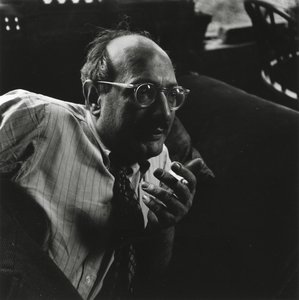
1903 - 1970 , Letland


Blijf op de hoogte van het laatste kunstnieuws, exclusieve aanbiedingen en decoratie-ideeën.
Vertel ons over uw project en onze kunstexperts geven u 3 gepersonaliseerde kunstsuggesties.
Wij stellen drie opties speciaal voor u samen – gratis!


 Voorvertoning
 Verstuur
 Delen
Delen
 Details bekijken

 Download
 Vergelijkbare items
 Röntgenonderzoek
 Diavoorstelling
 Lees meer


