x

Giclée- of canvasafdruk van museumkwaliteit met een snelle productie en flexibele afwerkingsmogelijkheden. ( Bestel handgeschilderde reproductie Koop afbeelding)





























Kies uit onze vooraf ingestelde maten die overeenkomen met de originele verhoudingen van het kunstwerk.

U kunt uw eigen afmetingen opgeven om in een specifieke lijst of ruimte te passen. Als de door u gekozen maat niet overeenkomt met de proporties van het originele kunstwerk, zullen wij de afbeelding bijsnijden of uitbreiden met een gespiegelde of effen rand. Een digitaal mockup wordt ter goedkeuring naar u verzonden voordat de productie begint.
Houd er rekening mee dat de preview op het scherm de werkelijke bijsneding of uitbreiding niet weergeeft. Alleen de mockup toont de uiteindelijke compositie nauwkeurig.
Hoewel aangepaste maten beschikbaar zijn, raden wij aan een afmeting uit de vooraf bepaalde lijst te kiezen om de originele proporties te behouden.
Wereldwijde levering () binnen 2 weken in plaats van de standaard 4/5 weken. (20 augustus)


The Weaver
Afmetingen reproductie
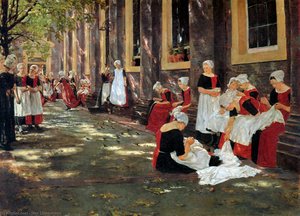
Max Liebermann’s “The Weaver” isn't merely a depiction of a woman at her loom; it’s a carefully constructed tableau that invites us into the heart of late 19th-century German craft. Painted in 1882, this oil-on-canvas work resides within the Stadelsches Kunstinstitut in Frankfurt, Germany, and immediately draws the viewer in with its warm palette and intimate setting. Liebermann, a master of capturing everyday life with an Impressionistic sensibility, skillfully avoids romanticizing the scene. Instead, he presents a realistic portrayal of a woman diligently engaged in her trade – a weaver working within the modest confines of her home. The composition is deliberately balanced, featuring the central figure bathed in soft light, surrounded by familiar domestic objects: a chair, a table laden with bottles and bowls, and glimpses of other individuals contributing to the household’s activity.
(Image source: Artvee)
Liebermann’s approach to “The Weaver” is a fascinating blend of Impressionistic techniques and a deep appreciation for the tangible world. He employs broken brushstrokes, layering colors to create a sense of light and atmosphere – a hallmark of the Impressionist movement. However, unlike many of his contemporaries who focused on capturing fleeting moments in nature, Liebermann grounds his work in the realities of daily life. The meticulous detail with which he renders the loom, the threads, and the textures of the fabrics speaks to his respect for the craft itself. This isn’t a painting about beauty; it's about honest labor and the quiet dignity of skilled artisans. The warm tones – ochres, browns, and muted yellows – evoke a sense of comfort and familiarity, suggesting the coziness of the weaver’s domestic space.
Beyond its aesthetic qualities, “The Weaver” offers a poignant glimpse into the social dynamics of the time. The scene unfolds within a humble dwelling, reflecting the lives of working-class families who relied on skilled crafts for their livelihood. Liebermann subtly portrays the interconnectedness of these individuals – the man weaving, the other figures assisting with various tasks. This isn’t a portrait of isolation; it's a depiction of community and shared labor. The painting serves as a reminder of the importance of artisans in society, highlighting their contribution to the economic and cultural fabric of the era. It subtly raises questions about social class and the value placed on manual labor – themes that resonate even today.
Liebermann’s masterful use of color is central to the painting's impact. The warm hues create a sense of intimacy and tranquility, drawing the viewer into the scene. Notice how he uses light to illuminate the weaver’s hands as they move across the loom – a gesture that emphasizes her skill and dedication. The arrangement of objects within the room also carries symbolic weight. The bottles and bowls suggest sustenance and domesticity, while the loom itself represents both labor and creativity. “The Weaver” is more than just a representation of a craft; it’s a carefully considered meditation on work, community, and the beauty found in everyday life.


1847 - 1935 , Duitsland

Discover how to transform your new home with the warmth of textile art. Our expert guide for newlyweds explores handwoven tapestries, tactile fibers, and timeless ways to curate a soulful, sophisticated interior through beautiful woven wonders.

Ontdek de top 10 impressionistische meesterwerken van Monet, Renoir & meer! Duik in kleur, licht en emotie met deze iconische schilderijen. Vind museumkwaliteit kunst reproducties voor uw interieur op Most-Famous-Paintings.com.

Embark on a sophisticated journey through the tactile realm of textile art. Unveil the historical evolution from utilitarian craft to museum-grade masterpieces, exploring the intricate textures and legendary artists that redefine the boundaries of fine art.

Explore the captivating world of Impressionism! Discover its history, key artists like Monet & Renoir, defining techniques, and lasting impact on modern art. Expert insights for collectors.

Ontdek de nuances tussen Impressionisme en Post-Impressionisme. Expertadvies voor kunstverzamelaars over investeren in tijdloze meesterwerken van Monet, Van Gogh & Cézanne.


Blijf op de hoogte van het laatste kunstnieuws, exclusieve aanbiedingen en decoratie-ideeën.
Vertel ons over uw project en onze kunstexperts geven u 3 gepersonaliseerde kunstsuggesties.
Wij stellen drie opties speciaal voor u samen – gratis!


 Voorvertoning
 Verstuur
 Delen
Delen
 Details bekijken

 Download
 Vergelijkbare items
 Röntgenonderzoek
 Diavoorstelling


 Lees meer







 De optie voor glas is alleen beschikbaar bij een formaat kleiner dan 110 cm.