x


 Bestel schilderij Koop afbeelding in hoge resolutie
 Verstuur
 Details bekijken
 Toevoegen aan favorieten
 Download
 Vergelijkbare werken
 Röntgenonderzoek
 Diavoorstelling
Giclée- of canvasafdruk van museumkwaliteit met snelle productie en flexibele afwerkingsopties.





























Kies uit onze vooraf ingestelde maten die overeenkomen met de originele verhoudingen van het kunstwerk.

U kunt uw eigen afmetingen opgeven om in een specifieke lijst of ruimte te passen. Als de door u gekozen maat niet overeenkomt met de proporties van het originele kunstwerk, zullen wij de afbeelding bijsnijden of uitbreiden met een gespiegelde of effen rand. Een digitaal mockup wordt ter goedkeuring naar u verzonden voordat de productie begint.
Houd er rekening mee dat de preview op het scherm de werkelijke bijsneding of uitbreiding niet weergeeft. Alleen de mockup toont de uiteindelijke compositie nauwkeurig.
Hoewel aangepaste maten beschikbaar zijn, raden wij aan een afmeting uit de vooraf bepaalde lijst te kiezen om de originele proporties te behouden.
Wereldwijde levering () binnen 2 weken in plaats van de standaard 4/5 weken. (22 juli)


Untitled
Afmetingen reproductie
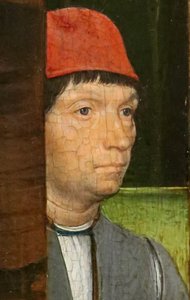
Hans Memling's “Untitled (D2X7SN),” painted around 1480, is not merely an image; it’s a quiet revelation. The work depicts Jesus Christ, rendered with the meticulous detail and serene grace that define his style, holding a luminous sphere in his hand. This isn’t a depiction of triumphant power or dramatic suffering, but one of contemplative stillness. The painting invites us into a moment of profound introspection, set against a backdrop of rolling hills, verdant trees, and a distant, castle-like structure – elements that ground the divine figure within a recognizable, earthly realm. The oil on wood panel technique lends itself beautifully to Memling’s style; the medium allows for layers of translucent glaze, creating a rich depth of color and texture that seems to emanate light from within.
To understand this painting is to understand Hans Memling himself. Born in Germany around 1430, he rose to prominence as one of the leading figures of the Early Netherlandish school. His journey began with an apprenticeship under Rogier van der Weyden in Brussels, a master renowned for his emotional intensity and refined realism. From Van der Weyden, Memling absorbed a dedication to precise detail and a nuanced understanding of human expression. However, Memling’s work distinguishes itself through its inherent tranquility and clarity. He settled in Bruges by 1465, becoming a respected citizen and prolific artist within the thriving artistic community of Flanders. Bruges at this time was a hub of commerce and culture, attracting patrons from across Europe – individuals who sought not only religious devotion but also sophisticated artistry in their commissions.
The central element demanding our attention is, undoubtedly, the sphere held by Christ. Its smooth, polished surface reflects light and draws the eye, yet its meaning remains tantalizingly ambiguous. Spheres, in Renaissance art, often symbolize the world, or *cosmos*, representing God’s creation and dominion over it. In this context, it could signify Christ's role as both creator and sustainer of all things. Alternatively, the sphere might represent divine wisdom or perfection – qualities embodied by Christ himself. The landscape behind him isn’t merely decorative; it reinforces this idea of a world held in balance, overseen by a benevolent power. The castle in the distance could symbolize the heavenly city, a destination for the faithful, or perhaps allude to earthly power structures existing under divine authority. Memling doesn't offer easy answers; he presents symbols that invite contemplation and personal interpretation.
Memling’s paintings possess an enduring quality – a sense of peace and spiritual resonance that transcends centuries. “Untitled (D2X7SN)” is no exception. It's a work that speaks to the human desire for connection with the divine, offering not grand pronouncements but quiet contemplation. The painting exemplifies Memling’s ability to blend meticulous realism with profound spirituality, creating an image that is both visually stunning and emotionally moving. Today, his works are treasured in museums worldwide, including the Memling Museum in Bruges – housed within the historic Sint Jans Hospital – a testament to his lasting influence on art history. Owning a reproduction of this piece isn’t simply acquiring a beautiful object; it's inviting a moment of serenity and spiritual reflection into your space.

Duitsland
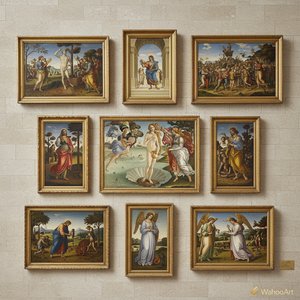
Ontdek de 10 grootste meesterwerken van de Vroege Renaissance! Lees over Leonardo da Vinci, Michelangelo & Botticelli. Laat u inspireren door Italiaanse kunst en koop museumkwaliteit reproducties voor uw interieur op Most-Famous-Paintings.com.

Ontdek de top 25 meesterwerken uit het Metropolitan Museum of Art, New York! Van Van Gogh tot Monet – leer over kunstgeschiedenis en bewonder iconische schilderijen. Vind museumkwaliteit reproducties & interieurinspiratie op Most-Famous-Paintings.com.

Ontdek de 10 meesterwerken van Jan van Eyck, Rogier van der Weyden & andere Vlaamse Primitieven. Duik in de rijke symboliek en olieverfschilderijen van de Vroege Nederlandse Schilderkunst. Vind museumkwaliteit reproducties op Most-Famous-Paintings.com!

Ontdek de 10 meesterwerken van de Vroege Nederlandse Renaissance! Van Jan van Eyck tot Rogier van der Weyden, leer over hun techniek & symboliek. Vind museumkwaliteit kunst reproducties en decoratie-inspiratie op Most-Famous-Paintings.com.
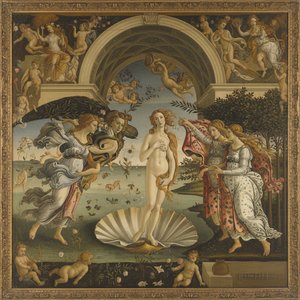
Ontdek de 25 mooiste meesterwerken van Sandro Botticelli! Duik in de Renaissance, bewonder 'De Geboorte van Venus' & 'Primavera'. Museumkwaliteit reproducties voor uw interieur. Bekijk de collectie op Most-Famous-Paintings.com.


Blijf op de hoogte van het laatste kunstnieuws, exclusieve aanbiedingen en decoratie-ideeën.
Vertel ons over uw project en onze kunstexperts geven u 3 gepersonaliseerde kunstsuggesties.
Wij stellen 3 opties speciaal voor u samen – Gratis!


 Delen
Delen


 Lees meer







 De optie voor glas is alleen beschikbaar bij een formaat kleiner dan 110 cm.