


x

 Oil On CanvasWallArtPost-Impressionism
 195219th Century
 100.0 x 65.0 cm
 Marubeni Gallery
Met de hand geschilderd in olieverf op canvas in uw gewenste maat en lijst, op bestelling gemaakt door onze kunstenaars. ( Bestel print Koop afbeelding)





























Kies uit onze vooraf ingestelde maten die overeenkomen met de originele verhoudingen van het kunstwerk.

U kunt uw eigen afmetingen invoeren om in een specifieke lijst of ruimte te passen. Als de door u gekozen maat niet overeenkomt met de verhoudingen van het originele beeld, zullen we het kunstwerk bijsnijden of het schilderij uitbreiden met extra handgeschilderde elementen. Een digitale mockup wordt ter goedkeuring naar u verzonden voordat de productie begint.
Houd er rekening mee dat de preview op het scherm niet de werkelijke uitsnede of uitbreiding weergeeft. Alleen de mockup toont de uiteindelijke compositie nauwkeurig.
Hoewel aangepaste afmetingen mogelijk zijn, raden we aan een maat uit de vooraf gedefinieerde lijst te selecteren om de originele verhoudingen te behouden.
Wereldwijde levering () binnen 3 tot 4 weken in plaats van de standaard 5 weken. (15 augustus). Zonder concessies aan de kwaliteit.


Mimosas
Afmetingen reproductie
Moïse Kisling's “Mimosas,” painted in 1952, is more than just a still life; it’s a vibrant testament to the artist’s enduring fascination with beauty and abundance. This captivating work, measuring 100 x 65 cm, offers a glimpse into the world of a man who navigated the tumultuous shifts of the 20th century – a “king of Montparnasse” as he was affectionately known – and whose artistic legacy continues to resonate today. The painting’s immediate impact lies in its audacious use of color: a riot of golden mimosa blossoms erupting from a striking blue vase, all set against a deep, almost velvety green backdrop. This isn't merely representation; it’s an orchestrated emotional experience.
Born in Kraków in 1891, Moïse Kisling’s journey was one of constant evolution. Initially influenced by the rigorous training he received at the Krakow Academy of Fine Arts, his relocation to Paris in 1910 marked a pivotal moment. Immersed in the epicenter of modern art – Montmartre – he encountered and absorbed the revolutionary ideas of figures like Cézanne, Picasso, and Black, ultimately forging his own distinctive style. Kisling’s life was inextricably linked to the artistic currents of his time, from teaching in American schools during World War II to finally achieving recognition with a successful exhibition in France in 1951. His preference for evocative depictions of flowers, particularly the mimosa, reveals a deep appreciation for the transient beauty of nature and a desire to capture its essence with remarkable intensity.
“Mimosas” transcends a simple botanical study; it’s laden with symbolic meaning. The profusion of yellow mimosa flowers – Kisling's favored subject – evokes notions of fertility, prosperity, and the fleeting beauty of life. The blue vase acts as a focal point, intensifying the impact of the golden blooms. The overall effect is one of warmth, vibrancy, and an almost intoxicating sense of joy. This painting embodies the spirit of its creator—a man who embraced life with passion and translated that enthusiasm into his art.


1891 - 1953 , Polen

Explore the rich history of floral painting! Discover symbolism, techniques & masterpieces from Van Huysum to O'Keeffe. Expert insights for art lovers & collectors at Most-Famous-Paintings.

Explore the rich history of flower symbolism in Western painting! Discover how artists from the Renaissance to Modernism used blossoms to convey meaning, emotion & beauty. Learn about iconic artworks and movements.

Explore the captivating history of flower painting! Discover Dutch masters, symbolic meanings, & botanical art. Expert insights & high-quality reproductions at Most-Famous-Paintings.

Explore the rich history of still life painting with Most-Famous-Paintings. Discover Dutch Masters, decode vanitas symbolism & learn about collecting timeless art. Expert insights and museum-quality reproductions.
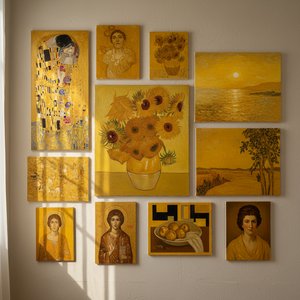
Ontdek de top 10 beroemde schilderijen gedomineerd door okergeel! Van Gogh, Rembrandt & Vermeer – leer hun verhaal en bewonder warme kleuren in kunst. Vind museumkwaliteit reproducties voor uw interieur op Most-Famous-Paintings.com.


Blijf op de hoogte van het laatste kunstnieuws, exclusieve aanbiedingen en decoratie-ideeën.
Vertel ons over uw project en onze kunstexperts geven u 3 gepersonaliseerde kunstsuggesties.
Wij stellen drie opties speciaal voor u samen – gratis!


 Voorvertoning
 Verstuur
 Delen
Delen
 Details bekijken

 Download
 Vergelijkbare items
 Röntgenonderzoek
 Diavoorstelling
 Lees meer







 De optie voor glas is alleen beschikbaar bij een formaat kleiner dan 110 cm.


![Portrait Of Mrs. Renée Kisling [portrait De Madame Renée Kisling] — Moïse Kisling, École De Paris](/media/artworks/images/thumbnails/41/78/4178eb5f6eaf46bc95859ec8f39e1e80.jpg)


![Natuurlijk Stilte met Krantenblad [Still Life with Newspaper]](/media/artworks/images/thumbnails/1d/ee/1deeb738215942999aead6bd85c8f57a.jpg)