x


 Preview
 Bestel schilderij Koop afbeelding in hoge resolutie
 Verstuur
 Details bekijken
 Toevoegen aan favorieten
 Download
 Vergelijkbare werken
 Röntgenonderzoek
 Diavoorstelling
Giclée- of canvasafdruk van museumkwaliteit met snelle productie en flexibele afwerkingsopties.





























Kies uit onze vooraf ingestelde maten die overeenkomen met de originele verhoudingen van het kunstwerk.

U kunt uw eigen afmetingen opgeven om in een specifieke lijst of ruimte te passen. Als de door u gekozen maat niet overeenkomt met de proporties van het originele kunstwerk, zullen wij de afbeelding bijsnijden of uitbreiden met een gespiegelde of effen rand. Een digitaal mockup wordt ter goedkeuring naar u verzonden voordat de productie begint.
Houd er rekening mee dat de preview op het scherm de werkelijke bijsneding of uitbreiding niet weergeeft. Alleen de mockup toont de uiteindelijke compositie nauwkeurig.
Hoewel aangepaste maten beschikbaar zijn, raden wij aan een afmeting uit de vooraf bepaalde lijst te kiezen om de originele proporties te behouden.
Wereldwijde levering () binnen 2 weken in plaats van de standaard 4/5 weken. (23 juli)


Nicolas Poussin
Afmetingen reproductie
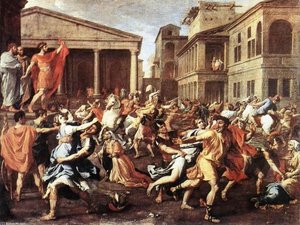
Nicolas Poussin’s “The Noble Deed Of Scipio,” painted around 1640, isn’t merely a depiction of an ancient Roman legend; it's a profound meditation on honor, restraint, and the enduring values of antiquity. This captivating work, now residing within the esteemed Pushkin State Museum in Moscow, offers a glimpse into the Baroque era’s masterful command of light, composition, and emotional resonance – qualities that continue to enthrall viewers centuries later. Poussin, already establishing himself as a leading figure in French art, meticulously crafted this scene based on a Roman tale: the story of Scipio Africanus’s act of chivalry—returning a captive woman to her awaiting fiancé after she had been briefly held by his soldiers. More than just a recounting of an event, Poussin elevates it into a potent allegory for human virtue.
The painting immediately draws the eye with its carefully orchestrated arrangement. The central figures – Scipio himself and the young woman – are positioned within a shallow space, creating a sense of intimacy and immediacy. Notice how Poussin employs a subtle pyramidal composition, guiding the viewer’s gaze upward towards Scipio, who stands in a commanding red robe, a color traditionally associated with nobility and leadership. This vibrant hue contrasts beautifully with the pristine white of the woman’s dress, symbolizing her innocence and purity—a visual shorthand for virtue itself. The surrounding figures – soldiers, attendants, and other Roman nobles – are rendered with remarkable detail, each contributing to the scene’s overall sense of dignity and importance. The artist’s skill in depicting textures—the folds of the robes, the sheen of armor, the delicate fabric of the woman’s dress—is truly astonishing.
Poussin was a master of *chiaroscuro*, the dramatic use of light and shadow, a hallmark of the Baroque style. He doesn’t simply illuminate the scene; he sculpts it with light, creating depth and emphasizing key elements. Observe how the light falls across Scipio's face, highlighting his noble expression and conveying a sense of solemn resolve. The shadows deepen the background, receding into an atmospheric haze that suggests distance and adds to the painting’s overall mood. This masterful manipulation of light isn’t just aesthetic; it serves to heighten the emotional impact of the scene, reinforcing Scipio’s virtuous act.
Furthermore, Poussin’s meticulous attention to detail is evident in every aspect of the composition. The swords and military equipment scattered throughout the painting serve as a poignant reminder of the context—a world of war and conquest. However, they are presented not as symbols of aggression but rather as elements that underscore Scipio’s restraint and self-control. The artist’s use of linear perspective – creating an illusion of depth through converging lines – is exceptionally precise, contributing to the painting’s realism and sense of spatial coherence. The subtle variations in color and tone further enhance this effect, drawing the viewer into the scene.
Beyond its technical brilliance, “The Noble Deed Of Scipio” is rich in symbolism. The red robe worn by Scipio isn’t simply a signifier of his status; it represents his commitment to honor and justice. The woman's white dress symbolizes her vulnerability and innocence—a virtue that Scipio protects with unwavering restraint. Even the background landscape, rendered with atmospheric perspective, contributes to the painting’s symbolic meaning, evoking a sense of timelessness and moral grandeur. The presence of the attendants, some gesturing towards the scene, subtly reinforces the importance of this particular act.
Poussin's work stands as a testament to his deep engagement with classical ideals—particularly those of ancient Rome. He sought to capture not just the outward appearance of historical events but also their underlying moral significance. “The Noble Deed Of Scipio” is more than just a beautiful painting; it’s an invitation to contemplate the enduring values of honor, restraint, and compassion – qualities that remain relevant today. As a work deeply rooted in classical tradition, Poussin's influence can be seen throughout the course of Western art history, inspiring generations of artists with his masterful technique and profound understanding of human nature. For those seeking a stunning reproduction or a deeper appreciation of this iconic masterpiece, Most-Famous-Paintings offers meticulously crafted hand-painted reproductions that faithfully capture the essence of Poussin’s vision.
The painting’s enduring appeal lies in its ability to convey complex ideas about virtue and honor through deceptively simple visual elements. Its masterful composition and luminous chiaroscuro technique continue to inspire admiration and offer a profound meditation on human morality.


1594 - 1665 , Frankrijk

Ontdek de top 25 meesterwerken uit het Metropolitan Museum of Art, New York! Van Van Gogh tot Monet – leer over kunstgeschiedenis en bewonder iconische schilderijen. Vind museumkwaliteit reproducties & interieurinspiratie op Most-Famous-Paintings.com.

Ontdek de top 25 meesterwerken van het Detroit Institute of Arts! Van Van Gogh tot Monet, bewonder iconische schilderijen en hun verhaal. Vind museumkwaliteit reproducties & woondecoratie inspiratie op Most-Famous-Paintings.com.

Ontdek de top 25 meesterwerken van National Gallery Washington! Van Cézanne tot Picasso, leer het verhaal achter iconische kunst. Vind museumkwaliteit reproducties & interieurinspiratie op Most-Famous-Paintings.com.

Ontdek de top 25 meesterwerken van het Louvre, Parijs! Van de Mona Lisa tot Delacroix' Vrijheid. Leer over kunstgeschiedenis & koop museumkwaliteit reproducties voor uw interieur op Most-Famous-Paintings.com.

Ontdek de 25 meest iconische meesterwerken van James Abbott McNeill Whistler, pionier van het esthetisme en impressionisme. Van zijn betoverende Nocturnes tot portretten vol harmonie. Vind museumkwaliteit reproducties & decoratie-inspiratie op Most-Famous-Paintings.com


Blijf op de hoogte van het laatste kunstnieuws, exclusieve aanbiedingen en decoratie-ideeën.
Vertel ons over uw project en onze kunstexperts geven u 3 gepersonaliseerde kunstsuggesties.
Wij stellen 3 opties speciaal voor u samen – Gratis!


 Delen
Delen


 Lees meer







 De optie voor glas is alleen beschikbaar bij een formaat kleiner dan 110 cm.