x

 Oil On CanvasWallArtClassical French Baroque
 1625
1625 57.0 x 128.0 cm
Koop een digitale afbeelding in hoge resolutie met verbeterde kwaliteit, die veel superieur is aan de online voorvertoning.
Elk bestand wordt met uiterste precisie voorbereid door onze interne specialisten, met behulp van geavanceerde tools en deskundige handmatige retouche. Wij garanderen dat elke afbeelding een uitzonderlijke helderheid, nauwkeurige kleurweergave en verfijnde details bezit.
Het uiteindelijke bestand wordt binnen 72 uur per e-mail geleverd, geoptimaliseerd voor direct gebruik in professionele, redactionele en printomgevingen. Dit is dezelfde kwaliteit waarop vooraanstaande designstudio's, uitgevers en galerieën vertrouwen.
Download een bestand met hoge resolutie voor persoonlijke weergave, afdrukken en creatieve projecten. ( Bestel print Bestel handgeschilderde reproductie)
Wanneer u kiest voor Most-Famous-Paintings.com, ontvangt u niet alleen een afbeelding – u krijgt een professioneel verbeterd digitaal kunstwerk, met precisie vervaardigd en voorzien van een tevredenheidsgarantie. Dit is alles wat automatisch bij uw bestelling is inbegrepen:

Uw hoogwaardige digitale afbeeldingsbestand wordt binnen 72 uur na bestelling naar u gemaild – klaar voor direct gebruik.

Uw kunstwerk wordt professioneel geoptimaliseerd met behulp van geavanceerde AI-tools en handmatige bewerkingen, waardoor maximale details, helderheid en kleurnauwkeurigheid worden gegarandeerd.

Je bestand per ongeluk verwijderd of kwijtgeraakt? Geen zorgen – we sturen het u op elk gewenst moment gratis opnieuw toe.

Geniet direct van uw kunstwerk zonder invoerrechten, belastingen of verzendkosten – digitale downloads zijn altijd belastingvrij.

Met behulp van professionele hulpmiddelen en kleurbeheer zorgen wij ervoor dat uw digitale afbeelding de originele kleuren zo nauwkeurig mogelijk weergeeft.

Als u niet tevreden bent met uw digitale afbeelding, passen wij deze aan of storten wij 100% terug binnen 60 dagen – zonder vragen gesteld.

Niet tevreden? Ontvang binnen 60 dagen na ontvangst van uw digitale bestand uw volledige aankoopbedrag terug – zonder vragen te stellen.

Koop 3 afbeeldingen, bespaar 10% - Koop 5, bespaar 15% - Koop 10+, bespaar 20%. Ideaal voor creatieve projecten, galerieën en bureaus.
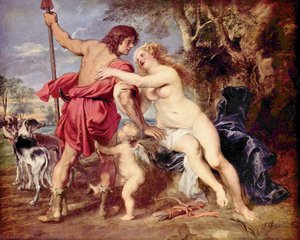
Nicolas Poussin's "Venus Weeping Over Adonis," painted around 1626, is more than just a depiction of a classical myth; it’s a poignant meditation on love, loss, and the cyclical nature of life and death. This masterpiece, currently residing in the Musée des Beaux-Arts de Caen, France, transcends its mythological subject matter to resonate with an enduring emotional power that continues to captivate viewers centuries later. Poussin, deeply influenced by the artistic ideals of antiquity and the Venetian masters he admired, masterfully blended classical composition with a distinctly personal sensibility, creating works that are both intellectually stimulating and profoundly moving.
The scene itself is deceptively simple yet intensely dramatic. Venus, her face etched with grief, kneels beside the lifeless body of Adonis, the young hunter slain by a boar. The setting—a softly lit landscape hinting at dawn or dusk—contributes to the painting’s melancholic atmosphere. Notice the careful attention to detail: the delicate folds of Venus's drapery, the subtle play of light on the water, and the meticulously rendered foliage all speak to Poussin’s technical virtuosity. He employed a technique known as *sfumato*, blurring lines and softening edges to create an ethereal quality, further enhancing the sense of sorrow and transience.
The story depicted is drawn from Ovid's *Metamorphoses*, where Venus, consumed by grief over Adonis’s death, attempts to restore him to life by transforming his blood into anemones—small blue flowers that bloom in the spring. This transformation symbolizes both loss and renewal, a poignant reminder that even in death, beauty and new beginnings can emerge. The presence of the doves, often associated with love and mourning, reinforces this theme. The figure representing the river Adonis, lying prone at the base of the composition, adds another layer of symbolism—a representation of the passage of time and the inevitable decay of all things.
Beyond the immediate narrative, Poussin imbues the scene with broader allegorical meanings. The painting can be interpreted as a meditation on the fleeting nature of beauty and youth, the pain of separation, and the enduring power of love. The contrast between the vibrant colors of Venus’s garments and the muted tones of the landscape further emphasizes this duality—the vibrancy of life juxtaposed against the stillness of death.
Poussin was a staunch devotee of classical art, and his work is characterized by its rigorous adherence to principles of proportion, perspective, and harmony. He meticulously studied ancient sculptures and ruins, seeking to emulate their idealized forms and balanced compositions. His use of *contrapposto*, a technique where the figure’s weight shifts slightly off-center, creates a sense of naturalism and dynamism. The careful arrangement of elements within the composition—the placement of Venus, Adonis, and the surrounding landscape—is designed to create a visually pleasing and intellectually engaging experience for the viewer.
Furthermore, Poussin’s mastery of color is evident in his subtle gradations and delicate blending techniques. He employed a limited palette of earth tones, blues, and reds, creating a sense of depth and atmosphere. The use of light—particularly the soft, diffused glow that illuminates the scene—is particularly effective in conveying the painting's emotional impact. The artist’s ability to capture the fleeting effects of light and shadow is a hallmark of his style.
"Venus Weeping Over Adonis" remains one of Poussin’s most celebrated works, admired for its technical brilliance, emotional depth, and enduring appeal. It's a testament to the artist's ability to transform a classical myth into a profound meditation on the human condition. Today, high-quality reproductions of this iconic painting offer art lovers a chance to experience its beauty and power in their own homes. Most-Famous-Paintings’s meticulously crafted hand-painted reproductions capture the essence of Poussin’s original masterpiece, allowing you to bring this timeless work of art into your space with confidence and authenticity.


1594 - 1665 , Frankrijk


Blijf op de hoogte van het laatste kunstnieuws, exclusieve aanbiedingen en decoratie-ideeën.
Vertel ons over uw project en onze kunstexperts geven u 3 gepersonaliseerde kunstsuggesties.
Wij stellen drie opties speciaal voor u samen – gratis!


 Voorvertoning
 Verstuur
 Delen
Delen
 Details bekijken

 Download
 Vergelijkbare items
 Röntgenonderzoek
 Diavoorstelling
 Lees meer