x

 Oil On CanvasWallArtPost-Impressionism
 189919th Century
 61.0 x 81.0 cm
Met de hand geschilderd in olieverf op canvas in uw gewenste maat en lijst, op bestelling gemaakt door onze kunstenaars. ( Bestel print Koop afbeelding)





























Kies uit onze vooraf ingestelde maten die overeenkomen met de originele verhoudingen van het kunstwerk.

U kunt uw eigen afmetingen invoeren om in een specifieke lijst of ruimte te passen. Als de door u gekozen maat niet overeenkomt met de verhoudingen van het originele beeld, zullen we het kunstwerk bijsnijden of het schilderij uitbreiden met extra handgeschilderde elementen. Een digitale mockup wordt ter goedkeuring naar u verzonden voordat de productie begint.
Houd er rekening mee dat de preview op het scherm niet de werkelijke uitsnede of uitbreiding weergeeft. Alleen de mockup toont de uiteindelijke compositie nauwkeurig.
Hoewel aangepaste afmetingen mogelijk zijn, raden we aan een maat uit de vooraf gedefinieerde lijst te selecteren om de originele verhoudingen te behouden.
Wereldwijde levering () binnen 3 tot 4 weken in plaats van de standaard 5 weken. (18 augustus). Zonder concessies aan de kwaliteit.


In the Forest
Afmetingen reproductie
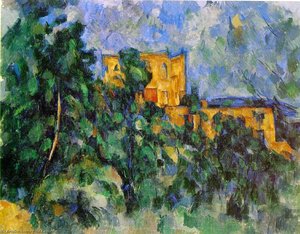
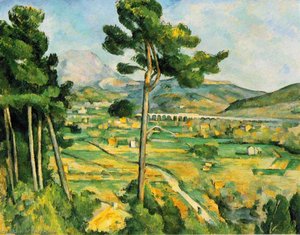
Paul Cézanne's "In the Forest," painted in 1899, isn’t merely a landscape; it’s an immersive experience, a deliberate attempt to capture the essence of nature rather than its literal representation. This pivotal work stands as a cornerstone of Post-Impressionism, a movement that arose as a reaction against the fleeting impressions favored by earlier Impressionists and sought instead to explore the underlying structure and emotional resonance of the natural world. Cézanne’s approach wasn't about replicating what the eye sees; it was about distilling the *feeling* of being within a forest – its stillness, its depth, and its vibrant energy – onto canvas.
The painting itself measures 61 x 81 cm and is executed in oil on canvas. Immediately striking are the bold, almost sculptural forms of the trees dominating the composition. Cézanne employs a technique that anticipates Cubism; he breaks down objects into their fundamental geometric shapes – cylinders, cones, and planes – and rearranges them to create an illusion of depth and volume. The orange leaves, particularly prominent in the foreground, aren’t rendered with delicate brushstrokes but rather as blocks of color, contributing significantly to the painting's dynamic and somewhat unsettling atmosphere. The rocks scattered throughout the scene add further textural complexity, grounding the composition while simultaneously hinting at the vastness of the forest.
Cézanne’s style represents a significant departure from the Impressionist preoccupation with capturing momentary effects of light. While Impressionists sought to depict the *impression* of light and color, Cézanne was interested in exploring the underlying structure of objects and their relationship to space. He famously stated, “I do not paint what I see, but what I feel.” This sentiment encapsulates his core artistic philosophy – he aimed to convey a sense of solidity and permanence, as if the trees themselves were imbued with an inner strength.
The influence of Japanese prints is evident in Cézanne’s flattened perspective and simplified forms. He admired the way Japanese artists rendered objects without relying on traditional linear perspective, creating a sense of depth through color and composition. Furthermore, his exploration of color – particularly the juxtaposition of warm oranges and greens – reflects the work of Paul Gauguin, another key figure in Post-Impressionism, who sought to express emotion through vibrant hues. However, Cézanne’s use of color is far more restrained and deliberate than Gauguin's, serving primarily to define form and create a sense of harmony within the composition.
“In the Forest” can be interpreted as a symbolic meditation on humanity’s relationship with nature. The dense foliage creates a feeling of enclosure, suggesting both protection and isolation. The vibrant colors evoke a sense of vitality and energy, while the muted tones in the background create a backdrop of tranquility. The painting isn't simply a depiction of a forest; it’s an evocation of the profound emotional experience of being immersed within one – a feeling of awe, wonder, and perhaps even a touch of melancholy.
Cézanne’s work profoundly influenced subsequent generations of artists, including Pablo Picasso and Henri Matisse. His emphasis on form, color, and subjective expression paved the way for movements like Cubism and Fauvism. His legacy continues to inspire artists today who seek to capture the essence of nature in a bold and innovative manner. For those seeking to bring this remarkable artwork into their homes, Most-Famous-Paintings offers meticulously crafted oil painting reproductions that faithfully recreate Cézanne’s vision with exceptional detail and vibrancy.
Cézanne’s journey from Impressionism to Post-Impressionism is a fascinating one, marked by a constant experimentation with form and color. His exploration of the “promontory” – a technique of depicting objects as viewed through a gap or opening – exemplifies his desire to break free from traditional perspective and create a more dynamic and expressive representation of space.
To further appreciate Cézanne’s contribution, consider examining works by Claude Monet, whose Impressionistic landscapes provide a valuable contrast to Cézanne's more structured approach. Alternatively, explore Henri Matisse’s Fauvist paintings for an example of how color was used to express emotion and create a sense of immediacy. Understanding these related movements provides a richer context for appreciating the unique qualities of “In the Forest.”
For those interested in delving deeper into Cézanne's life and work, we encourage you to visit Paul Cezanne’s "In the Forest" on Most-Famous-Paintings.com or explore our comprehensive collection of Cézanne reproductions at [Most-Famous-Paintings URL].
Additionally, you can learn more about Post-Impressionism through Post-Impressionism Art Movement on Most-Famous-Paintings.com and gain insights into Symbolist painting at Symbolist Painting.


1839 - 1906 , Frankrijk

Explore the transformative era of Post-Impressionism. Discover how masters like Van Gogh moved beyond light to embrace emotion, structure, and vibrant color, redefining modern art history through expressive brushwork and symbolic depth.


Blijf op de hoogte van het laatste kunstnieuws, exclusieve aanbiedingen en decoratie-ideeën.
Vertel ons over uw project en onze kunstexperts geven u 3 gepersonaliseerde kunstsuggesties.
Wij stellen drie opties speciaal voor u samen – gratis!


 Voorvertoning
 Verstuur
 Delen
Delen
 Details bekijken

 Download
 Vergelijkbare items
 Röntgenonderzoek
 Diavoorstelling
 Lees meer







 De optie voor glas is alleen beschikbaar bij een formaat kleiner dan 110 cm.