x

Met de hand geschilderd in olieverf op canvas in uw gewenste maat en lijst, op bestelling gemaakt door onze kunstenaars. ( Bestel print Koop afbeelding)





























Kies uit onze vooraf ingestelde maten die overeenkomen met de originele verhoudingen van het kunstwerk.

U kunt uw eigen afmetingen invoeren om in een specifieke lijst of ruimte te passen. Als de door u gekozen maat niet overeenkomt met de verhoudingen van het originele beeld, zullen we het kunstwerk bijsnijden of het schilderij uitbreiden met extra handgeschilderde elementen. Een digitale mockup wordt ter goedkeuring naar u verzonden voordat de productie begint.
Houd er rekening mee dat de preview op het scherm niet de werkelijke uitsnede of uitbreiding weergeeft. Alleen de mockup toont de uiteindelijke compositie nauwkeurig.
Hoewel aangepaste afmetingen mogelijk zijn, raden we aan een maat uit de vooraf gedefinieerde lijst te selecteren om de originele verhoudingen te behouden.
Wereldwijde levering () binnen 3 tot 4 weken in plaats van de standaard 5 weken. (17 augustus). Zonder concessies aan de kwaliteit.


Trees
Afmetingen reproductie
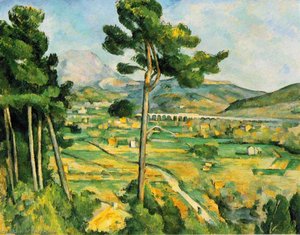
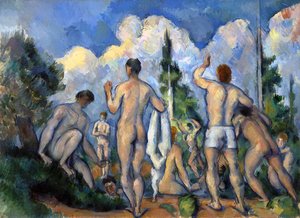
Paul Cézanne's "Trees," painted in 1884, transcends mere depiction; it embodies a revolutionary vision that fundamentally reshaped the landscape of modern art. Initially dismissed by critics as amateurish and lacking artistic merit, this deceptively simple composition—a field strewn with trees against a hazy backdrop of a modest house—became Cézanne’s cornerstone work, establishing his distinctive approach to capturing the essence of nature.
Painted during Cézanne’s formative years in Aix-en-Provence, “Trees” reflects his growing dissatisfaction with Impressionism's preoccupation with capturing atmospheric effects. Influenced by Japanese prints—particularly those depicting landscapes—Cézanne sought to distill nature into its fundamental geometric components, mirroring the aesthetic principles of Japonisme.
His rejection of conventional artistic conventions wasn’t driven by cynicism but by a profound conviction that art should strive for intellectual rigor and emotional resonance. Cézanne believed that artists had a responsibility to represent reality accurately, albeit in a way that transcends mere visual representation—a sentiment echoed in his lifelong dedication to exploring the complexities of perception.
"Trees," like many of Cézanne’s works, operates on multiple levels. The solitary trees symbolize resilience and permanence amidst the transient beauty of the natural world. Their stark forms convey a sense of quiet contemplation and introspection—inviting viewers to contemplate the profound connection between humanity and nature.
More importantly, Cézanne's painting represents a pivotal moment in artistic history: it signaled the decisive break from Impressionism’s optical idealism toward a more conceptual approach. It paved the way for subsequent movements like Cubism and Expressionism, establishing Cézanne as one of the most influential artists of the late 19th century.
Today, “Trees” continues to captivate audiences with its understated elegance and masterful execution. Its enduring appeal lies in its ability to communicate a powerful emotional truth—a celebration of beauty found not in fleeting impressions but in the unwavering solidity of form and color. Reproductions of this iconic artwork offer an opportunity to experience Cézanne’s visionary aesthetic firsthand, bringing his profound understanding of nature into any interior space.


1839 - 1906 , Frankrijk

Explore the profound evolution of Post-Impressionist landscapes. From Van Gogh's emotional brushwork to Cézanne's structural mastery, discover how these visionaries redefined art history through color and form in this expert guide for fine art enthusiasts.


Blijf op de hoogte van het laatste kunstnieuws, exclusieve aanbiedingen en decoratie-ideeën.
Vertel ons over uw project en onze kunstexperts geven u 3 gepersonaliseerde kunstsuggesties.
Wij stellen drie opties speciaal voor u samen – gratis!


 Voorvertoning
 Verstuur
 Delen
Delen
 Details bekijken

 Download
 Vergelijkbare items
 Röntgenonderzoek
 Diavoorstelling

 Lees meer







 De optie voor glas is alleen beschikbaar bij een formaat kleiner dan 110 cm.