x

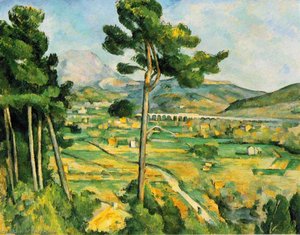
 OlieverfWanddecoratiePost-Impressionism
 188219e eeuw
 65.0 x 50.0 cm
 Musée d'Orsay
Giclée- of canvasafdruk van museumkwaliteit met een snelle productie en flexibele afwerkingsmogelijkheden. ( Bestel handgeschilderde reproductie Koop afbeelding)





























Kies uit onze vooraf ingestelde maten die overeenkomen met de originele verhoudingen van het kunstwerk.

U kunt uw eigen afmetingen opgeven om in een specifieke lijst of ruimte te passen. Als de door u gekozen maat niet overeenkomt met de proporties van het originele kunstwerk, zullen wij de afbeelding bijsnijden of uitbreiden met een gespiegelde of effen rand. Een digitaal mockup wordt ter goedkeuring naar u verzonden voordat de productie begint.
Houd er rekening mee dat de preview op het scherm de werkelijke bijsneding of uitbreiding niet weergeeft. Alleen de mockup toont de uiteindelijke compositie nauwkeurig.
Hoewel aangepaste maten beschikbaar zijn, raden wij aan een afmeting uit de vooraf bepaalde lijst te kiezen om de originele proporties te behouden.
Wereldwijde levering () binnen 2 weken in plaats van de standaard 4/5 weken. (21 augustus)


Zelfportret
Afmetingen reproductie
Paul Cézanne's “Self-Portrait,” painted in 1882 and now residing within the hallowed halls of the Musée d'Orsay in Paris, is far more than a simple depiction of an artist gazing at his audience. It’s a profound meditation on form, color, and the very essence of perception – a cornerstone of Post-Impressionism that continues to resonate deeply with viewers today. This particular work offers a rare glimpse into Cézanne's evolving artistic philosophy, revealing a man grappling with the challenges of representing the world around him in a way that captured both its objective reality and his intensely personal experience.
Cézanne’s technique is immediately striking. He employs a characteristic brushstroke – repetitive, exploratory, almost hesitant – building up layers of color to create fields of texture and depth. Notice how he doesn't meticulously render every detail; instead, he uses broken strokes and subtle shifts in hue to suggest volume and form. The canvas isn’t merely a surface for representation but an active participant in the creation of the image itself. This approach, departing from the smooth surfaces favored by Impressionists, lays the groundwork for Cubism's fragmented forms and paved the way for future generations of artists.
The composition of the “Self-Portrait” is deceptively simple yet remarkably complex. Cézanne positions himself before a window, bathed in diffused light – a detail that subtly influences the entire mood of the painting. The background features two chairs, a red door, and a suggestion of a landscape beyond, creating a sense of depth and spatial ambiguity. This isn’t a realistic portrayal of a room; it's an architectural study, a deliberate attempt to break down objects into their fundamental geometric components. The red door, in particular, acts as a focal point, drawing the eye and anchoring the composition.
Furthermore, consider the symbolic weight of the elements. The hat, worn with a certain nonchalance, hints at Cézanne’s intellectual curiosity and his desire to transcend mere imitation. His beard, meticulously rendered, speaks to his age and experience – a visual reminder of the years he has dedicated to his craft. The direct gaze towards the viewer establishes an immediate connection, inviting us into his world and prompting reflection on the nature of self-representation.
It’s important to acknowledge that Cézanne's artistic vision wasn't immediately embraced by the art establishment. Initially, his work was met with skepticism and even ridicule – a common fate for artists pushing the boundaries of convention. However, figures like Camille Pissarro and Ambroise Vollard recognized his genius early on, championing his unique approach and ultimately orchestrating his first solo exhibition in 1895. This event proved pivotal, shifting public perception and establishing Cézanne’s legacy as a foundational figure in modern art.
The influence of Cézanne is undeniable. Artists like Henri Matisse and Pablo Picasso have repeatedly cited him as “the father of us all,” recognizing his radical departure from traditional representation and his pioneering use of color and form. His work served as a crucial bridge between the fleeting impressions of Impressionism and the geometric explorations of Cubism, fundamentally altering the course of 20th-century art. His emphasis on structure and underlying forms continues to inspire artists today.
At Most-Famous-Paintings, we are passionate about preserving and celebrating the masterpieces of artistic history. Our team of skilled artisans meticulously recreates Paul Cézanne's “Self-Portrait” in exquisite detail, using only the finest oil paints on canvas to capture every nuance of color and texture. Unlike mass-produced prints, our reproductions offer a truly authentic experience – a tangible connection to this iconic work of art.
Whether you’re an avid collector, an interior designer seeking to infuse your space with artistic inspiration, or simply someone captivated by Cézanne's genius, a Most-Famous-Paintings reproduction of “Self-Portrait” is a remarkable addition to any collection. It’s more than just a painting; it’s a window into the soul of a revolutionary artist and a testament to the enduring power of art.
Explore our complete collection of Cézanne reproductions at Most-Famous-Paintings.com, or delve deeper into his life and work via the links below:


1839 - 1906 , Frankrijk

Explore the transformative era of Post-Impressionism. Discover how masters like Van Gogh moved beyond light to embrace emotion, structure, and vibrant color, redefining modern art history through expressive brushwork and symbolic depth.


Blijf op de hoogte van het laatste kunstnieuws, exclusieve aanbiedingen en decoratie-ideeën.
Vertel ons over uw project en onze kunstexperts geven u 3 gepersonaliseerde kunstsuggesties.
Wij stellen drie opties speciaal voor u samen – gratis!


 Voorvertoning
 Verstuur
 Delen
Delen
 Details bekijken

 Download
 Vergelijkbare items
 Röntgenonderzoek
 Diavoorstelling
 Lees meer







 De optie voor glas is alleen beschikbaar bij een formaat kleiner dan 110 cm.