Verkoop uw kunst
Verlanglijstje Winkelwagen Cart
VoorvertoningVoorvertoning Bekijk in ARBekijk in AR Bestel print Bestel printBestel handgeschilderde reproductie Bestel handgeschilderde reproductie VerstuurVerstuur
Details bekijkenDetails bekijken Toevoegen aan favorieten Toevoegen aan favorieten DownloadDownload Vergelijkbare itemsVergelijkbare items RöntgenonderzoekRöntgenonderzoek DiavoorstellingDiavoorstelling

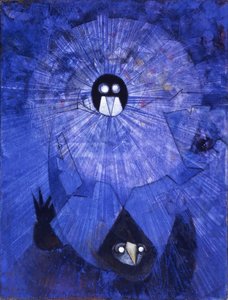
Untitled

  • Creatiedatum1962
  • Afmetingen152.0 x 122.0 cm

Paul Feeley (1910-1966): Explore the geometric abstractions & serene compositions of this Color Field painter. Influenced by ancient art, his work bridges Abstract Expressionism & Post-Painterly Abstraction.

Koop een digitale afbeelding in hoge resolutie met verbeterde kwaliteit, die veel superieur is aan de online voorvertoning.

Elk bestand wordt met uiterste precisie voorbereid door onze interne specialisten, met behulp van geavanceerde tools en deskundige handmatige retouche. Wij garanderen dat elke afbeelding een uitzonderlijke helderheid, nauwkeurige kleurweergave en verfijnde details bezit.

Het uiteindelijke bestand wordt binnen 72 uur per e-mail geleverd, geoptimaliseerd voor direct gebruik in professionele, redactionele en printomgevingen. Dit is dezelfde kwaliteit waarop vooraanstaande designstudio's, uitgevers en galerieën vertrouwen.

Digitale afbeeldingen

Download een bestand met hoge resolutie voor persoonlijke weergave, afdrukken en creatieve projecten. (Bestel print Bestel printBestel handgeschilderde reproductie Bestel handgeschilderde reproductie)

Totaalprijs

$ 24,90

Inbegrepen bij elke bestelling van een digitale afbeelding

Professionele digitale levering, gegarandeerd

Wanneer u kiest voor Most-Famous-Paintings.com, ontvangt u niet alleen een afbeelding – u krijgt een professioneel verbeterd digitaal kunstwerk, met precisie vervaardigd en voorzien van een tevredenheidsgarantie. Dit is alles wat automatisch bij uw bestelling is inbegrepen:

shipping_icon
Snelle levering per e-mail

Uw hoogwaardige digitale afbeeldingsbestand wordt binnen 72 uur na bestelling naar u gemaild – klaar voor direct gebruik.

canvas_icon
AI-verbeterd digitaal bestand

Uw kunstwerk wordt professioneel geoptimaliseerd met behulp van geavanceerde AI-tools en handmatige bewerkingen, waardoor maximale details, helderheid en kleurnauwkeurigheid worden gegarandeerd.

insurance_icon
Gratis levenslange herlevering van digitale afbeeldingen

Je bestand per ongeluk verwijderd of kwijtgeraakt? Geen zorgen – we sturen het u op elk gewenst moment gratis opnieuw toe.

tax_icon
Geen invoerkosten – nooit

Geniet direct van uw kunstwerk zonder invoerrechten, belastingen of verzendkosten – digitale downloads zijn altijd belastingvrij.

color_icon
Garantie op kleurgetrouwheid

Met behulp van professionele hulpmiddelen en kleurbeheer zorgen wij ervoor dat uw digitale afbeelding de originele kleuren zo nauwkeurig mogelijk weergeeft.

return_icon
60 dagen tevredenheidsgarantie

Als u niet tevreden bent met uw digitale afbeelding, passen wij deze aan of storten wij 100% terug binnen 60 dagen – zonder vragen gesteld.

guarantee_icon
100% Geld-terug-garantie

Niet tevreden? Ontvang binnen 60 dagen na ontvangst van uw digitale bestand uw volledige aankoopbedrag terug – zonder vragen te stellen.

discount_icon
Korting bij grote bestellingen

Koop 3 afbeeldingen, bespaar 10% - Koop 5, bespaar 15% - Koop 10+, bespaar 20%. Ideaal voor creatieve projecten, galerieën en bureaus.


Kunstenaarsbiografie

The Early Years and the Dawn of a Visionary

Winslow Homer, born in Boston in 1836, emerged from a world grappling with profound change – the aftermath of the Civil War, burgeoning industrialization, and a shifting American identity. His early life, marked by a childhood spent on his grandparents’ farm in Cambridge, Massachusetts, instilled within him a deep connection to nature and a keen observational eye. Unlike many artists of his time who sought formal training in Europe, Homer initially pursued a career as a commercial printmaker, working for Harper's Weekly during the war years. This experience proved invaluable, exposing him to the realities of conflict and shaping his artistic sensibilities – not through idealized depictions of heroism, but through a grounded portrayal of human suffering and resilience. The stark black-and-white illustrations he produced offered a powerful counterpoint to the romanticized narratives prevalent at the time, foreshadowing his later commitment to capturing authentic emotion and experience. His early work demonstrated an aptitude for capturing light and atmosphere, laying the groundwork for his future mastery of landscape painting.

The Parisian Influence and a New Artistic Language

In 1866, Homer embarked on a transformative journey to Paris, a pivotal moment that fundamentally altered the course of his artistic development. Motivated by a desire to witness the groundbreaking exhibitions showcasing French Impressionist painters, he sought to absorb their innovative techniques and approaches to color and light. While not directly influenced by the core tenets of Impressionism – the fleeting effects of light and atmosphere – Homer found inspiration in their willingness to challenge traditional academic conventions. He spent nearly two years immersed in the Parisian art scene, studying the works of artists like Jean-Baptiste Segelin and observing the vibrant life of the city. Crucially, he developed a fascination with Japanese prints, particularly those depicting landscapes and everyday scenes, which profoundly impacted his composition and use of flattened perspective – a technique that would become a hallmark of his mature style. This period marked a shift from the narrative realism of his earlier work towards a more subjective and evocative approach to representation.

Seaside Scenes and the Exploration of Human Experience

Returning to America in 1868, Homer established himself as a leading figure in the American art world. He quickly gained recognition for his powerful depictions of coastal scenes – Maine’s rocky shores, bustling fishing villages, and the vast expanse of the Atlantic Ocean. However, Homer's paintings were not merely topographical representations; they were deeply imbued with psychological depth and emotional resonance. He skillfully captured the physicality of labor, portraying fishermen battling the elements, women hauling nets, and children playing along the shore – figures whose lives were inextricably linked to the rhythms of the sea. His work during this period explored themes of isolation, resilience, and the enduring connection between humanity and nature. The dramatic lighting, dynamic compositions, and expressive brushwork conveyed a sense of both vulnerability and strength, reflecting the complex relationship between humans and their environment.

Late Works: Intimacy, Color, and a Profound Sense of Place

In his later years, Homer’s artistic focus shifted towards intimate scenes of domestic life and portraits of women – often depicted in moments of quiet contemplation or engaged in everyday activities. He experimented with watercolor techniques, achieving remarkable luminosity and capturing the subtle nuances of light and color. His paintings from the 1880s and 1890s are characterized by a heightened sense of emotional intensity and a profound connection to place. He spent his final years at Prouts Neck, Maine, where he created a series of evocative landscapes that captured the beauty and solitude of the coastal environment. These late works represent a culmination of his artistic journey – a synthesis of observation, memory, and personal experience. Winslow Homer’s legacy rests not only on his technical skill but also on his ability to imbue his paintings with a deep sense of humanity and place, solidifying his position as one of America's greatest landscape painters.

Historical Significance

Winslow Homer’s work holds significant historical importance for several reasons. He was among the first American artists to fully embrace Impressionistic techniques, paving the way for a new generation of American painters. His unflinching portrayal of working-class life offered a stark contrast to the idealized representations prevalent in art at the time, contributing to a more nuanced and realistic depiction of American society. Furthermore, Homer’s exploration of themes such as isolation, resilience, and the relationship between humanity and nature continues to resonate with viewers today, making his work timeless and universally relevant. His influence can be seen in the works of countless artists who followed, cementing his place as a foundational figure in American art history.
paul feeley

paul feeley

1910 - 1966 , United States of America

Belangrijkste feiten

  • Artistic Movement Or Style: Genre Painting, Realism
  • Artists Or Movements Influenced By This Artist:
    • American Impressionism
    • Early 20th-century realism
  • Artists Who Influenced This Artist:
    • Hudson River School
    • Japanese art
  • Date Of Birth: 1836
  • Date Of Death: 1910
  • Full Name: Winslow Homer
  • Nationality: American
  • Notable Artworks:
    • Snapshots of Life
    • The Gulf Stream
    • Smoke from a Fire
    • Maine Coast
  • Place Of Birth: Boston, Massachusetts