


x

 Oil On CanvasWallArtAbstract Expressionism
 1949Modern
 112.0 x 137.0 cm
Giclée- of canvasafdruk van museumkwaliteit met een snelle productie en flexibele afwerkingsmogelijkheden. ( Bestel handgeschilderde reproductie Koop afbeelding)





























Kies uit onze vooraf ingestelde maten die overeenkomen met de originele verhoudingen van het kunstwerk.

U kunt uw eigen afmetingen opgeven om in een specifieke lijst of ruimte te passen. Als de door u gekozen maat niet overeenkomt met de proporties van het originele kunstwerk, zullen wij de afbeelding bijsnijden of uitbreiden met een gespiegelde of effen rand. Een digitaal mockup wordt ter goedkeuring naar u verzonden voordat de productie begint.
Houd er rekening mee dat de preview op het scherm de werkelijke bijsneding of uitbreiding niet weergeeft. Alleen de mockup toont de uiteindelijke compositie nauwkeurig.
Hoewel aangepaste maten beschikbaar zijn, raden wij aan een afmeting uit de vooraf bepaalde lijst te kiezen om de originele proporties te behouden.
Wereldwijde levering () binnen 2 weken in plaats van de standaard 4/5 weken. (21 augustus)


Number 6
Afmetingen reproductie
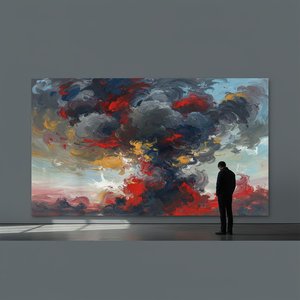
Number 6 stands as a pivotal work within Jackson Pollock's oeuvre and the broader movement of Abstract Expressionism. Emerging in post-World War II America, this style rejected traditional representational art, instead prioritizing spontaneous gesture and emotional expression. Abstract Expressionists sought to convey profound human experiences through non-figurative forms, reflecting a sense of anxiety, liberation, and existential questioning prevalent during that era. Pollock's contribution was particularly revolutionary, moving away from the easel and embracing a radical new technique.
What truly sets Number 6 apart is Pollock’s groundbreaking “drip” or "pouring" technique. Rather than using brushes on an upright canvas, he laid the canvas flat on the floor and dripped, poured, and flung paint from above. This method allowed for a complete immersion in the creative process – Pollock literally moved around the canvas, engaging his entire body in the act of painting. This approach is often referred to as "action painting," emphasizing the physical energy and spontaneity inherent in the creation. The resulting composition isn't planned; it emerges organically from the interaction between paint, gravity, and the artist’s movements. Number 6 exemplifies this perfectly – a complex web of interwoven lines and colors that seem to pulsate with kinetic energy.
While seemingly chaotic at first glance, Number 6 possesses an underlying structure and rhythm. The dense network of lines creates a sense of depth and complexity, drawing the viewer into its intricate details. The colors—ranging from blacks and whites to subtle shades of brown and gray—evoke a mood of introspection and contemplation. Some art historians interpret Pollock’s work as reflecting psychological states – the tangled web representing subconscious thoughts or emotions. Others see it as an exploration of pure form and color, divorced from any representational meaning. Regardless of interpretation, Number 6 evokes a powerful emotional response—a feeling of both exhilaration and unease, mirroring the complexities of the human condition.
Number 6 is more than just a painting; it’s a symbol of artistic innovation and a testament to Pollock's enduring influence. It challenged conventional notions of art-making and paved the way for future generations of artists to explore abstraction and expressive gesture. Its dynamic composition and emotional depth continue to captivate audiences worldwide, making it a highly sought-after artwork and a compelling subject for reproduction.

1912 - 1956 , Verenigde Staten van Amerika

Ontdek de 10 meest invloedrijke werken van Abstract Expressionisme! Leer over Jackson Pollock, Mark Rothko & meer. Museumkwaliteit kunst reproducties voor uw interieur. Bekijk de collectie op Most-Famous-Paintings.com.

Explore the revolutionary art of Jackson Pollock & Abstract Expressionism. Discover his iconic drip paintings, lasting impact, and considerations for collecting this pivotal American artist. Expert insights at Most-Famous-Paintings.
Explore the profound emotional world of Abstract Expressionism with Most-Famous-Paintings. Discover key artists like Pollock & Rothko, learn about collecting, and find museum-quality reproductions to inspire your space.

Explore the profound emotional depth of Abstract Expressionism. From Pollock's dynamic drips to de Kooning's gestural mastery, our expert guide offers art collectors a sophisticated analysis of this transformative movement and its enduring legacy in modern fine art.

Explore the profound emotional depth & formal innovation of Abstract Expressionism. Discover key artists, collecting insights, and investment potential with expert guidance. Learn more now.


Blijf op de hoogte van het laatste kunstnieuws, exclusieve aanbiedingen en decoratie-ideeën.
Vertel ons over uw project en onze kunstexperts geven u 3 gepersonaliseerde kunstsuggesties.
Wij stellen drie opties speciaal voor u samen – gratis!


 Voorvertoning
 Verstuur
 Delen
Delen
 Details bekijken

 Download
 Vergelijkbare items
 Röntgenonderzoek
 Diavoorstelling
 Lees meer







 De optie voor glas is alleen beschikbaar bij een formaat kleiner dan 110 cm.


