x

Giclée- of canvasafdruk van museumkwaliteit met een snelle productie en flexibele afwerkingsmogelijkheden. ( Bestel handgeschilderde reproductie Koop afbeelding)





























Kies uit onze vooraf ingestelde maten die overeenkomen met de originele verhoudingen van het kunstwerk.

U kunt uw eigen afmetingen opgeven om in een specifieke lijst of ruimte te passen. Als de door u gekozen maat niet overeenkomt met de proporties van het originele kunstwerk, zullen wij de afbeelding bijsnijden of uitbreiden met een gespiegelde of effen rand. Een digitaal mockup wordt ter goedkeuring naar u verzonden voordat de productie begint.
Houd er rekening mee dat de preview op het scherm de werkelijke bijsneding of uitbreiding niet weergeeft. Alleen de mockup toont de uiteindelijke compositie nauwkeurig.
Hoewel aangepaste maten beschikbaar zijn, raden wij aan een afmeting uit de vooraf bepaalde lijst te kiezen om de originele proporties te behouden.
Wereldwijde levering () binnen 2 weken in plaats van de standaard 4/5 weken. (18 augustus)


El conquistador
Afmetingen reproductie
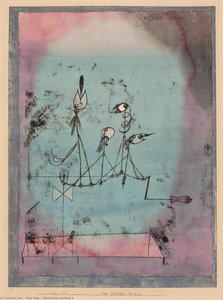
“The Great Bear,” painted in 1938 during Klee’s prolific period at Bauhaus Dessau, stands as a cornerstone of his artistic legacy. More than just a depiction of an animal—a stylized bear dominating the canvas—it embodies Klee's unwavering commitment to exploring the intersection between geometry and organic form, resulting in a visual experience that transcends mere representation.
Klee’s style is undeniably abstract, prioritizing suggestion over literal accuracy. However, it isn’t devoid of structure; rather, he employs meticulous geometric patterns—circles, squares, triangles—to create a dynamic equilibrium. These shapes aren't simply decorative elements; they actively contribute to the overall composition, guiding the viewer’s eye and establishing relationships between disparate visual components. The bear itself is rendered as a series of interlocking circles and angular lines, conveying both solidity and movement simultaneously.
Klee favored watercolor washes as his primary medium, layering translucent pigments to achieve luminous color gradations that imbue the painting with an ethereal quality. Beneath this washy surface lie precise line drawings—often executed in black ink—that delineate key contours and define structural elements. This dual technique—watercolor for color and ink for form—allowed Klee to capture both the vibrancy of his imagination and the meticulous control demanded by his artistic vision.
“The Great Bear” emerged from the Bauhaus Dessau workshop, a revolutionary institution founded in 1925 that championed experimental design principles. Klee’s involvement at Bauhaus reflected the broader ethos of the time—a fervent desire to liberate art from traditional conventions and embrace new approaches to visual expression. The painting served as a testament to Bauhaus's belief in exploring unconventional materials and techniques, pushing boundaries of artistic innovation.
The bear itself carries significant symbolic weight within Klee’s oeuvre and broader European folklore. Traditionally associated with strength, courage, and protection—particularly over winter—the bear represents primal instincts and resilience. In “The Great Bear,” Klee utilizes geometric abstraction to convey these concepts indirectly, suggesting a deeper understanding of the animal's essence beyond its physical appearance.
Despite its intricate geometric patterns, “The Great Bear” exudes an unexpected sense of tranquility. The harmonious interplay of color and form creates a visual rhythm that invites contemplation—a quiet invitation to immerse oneself in the painting’s contemplative atmosphere. Ultimately, Klee's masterpiece speaks to the enduring power of art to evoke emotion and inspire wonder, reminding us that beauty can be found even within the most complex structures.

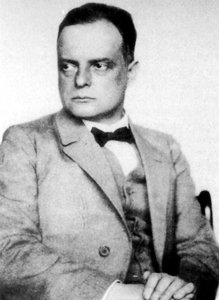
1879 - 1940 , Zwitserland

Explore the profound impact of Minimalism and Geometric Abstraction. From Mondrian to Malevich, discover how stripping art to its essential forms revolutionized modern aesthetics through our expert-led historical guide.


Blijf op de hoogte van het laatste kunstnieuws, exclusieve aanbiedingen en decoratie-ideeën.
Vertel ons over uw project en onze kunstexperts geven u 3 gepersonaliseerde kunstsuggesties.
Wij stellen drie opties speciaal voor u samen – gratis!


 Voorvertoning
 Verstuur
 Delen
Delen
 Details bekijken

 Download
 Vergelijkbare items
 Röntgenonderzoek
 Diavoorstelling

 Lees meer







 De optie voor glas is alleen beschikbaar bij een formaat kleiner dan 110 cm.