


x


Giclée- of canvasafdruk van museumkwaliteit met snelle productie en flexibele afwerkingsopties. ( Switch to hand made Painting Switch to Image)
Kies uit onze vooraf ingestelde maten die overeenkomen met de originele verhoudingen van het kunstwerk.

U kunt uw eigen afmetingen opgeven om in een specifieke lijst of ruimte te passen. Als de door u gekozen maat niet overeenkomt met de proporties van het originele kunstwerk, zullen wij de afbeelding bijsnijden of uitbreiden met een gespiegelde of effen rand. Een digitaal mockup wordt ter goedkeuring naar u verzonden voordat de productie begint.
Houd er rekening mee dat de preview op het scherm de werkelijke bijsneding of uitbreiding niet weergeeft. Alleen de mockup toont de uiteindelijke compositie nauwkeurig.
Hoewel aangepaste maten beschikbaar zijn, raden wij aan een afmeting uit de vooraf bepaalde lijst te kiezen om de originele proporties te behouden.
Wereldwijde levering () binnen 2 weken in plaats van de standaard 4/5 weken. (29 juli)


Untitled
Afmetingen reproductie

Born in the historic German city of Lübeck on August 18, 1935, Peter Klasen emerged as a profound witness to the transformations of the twentieth century. His early life was steeped in an environment sensitive to the arts; he grew up in a family where creative inclinations were nurtured, boasting an uncle who was a pupil of the legendary expressionist Otto Dix and a grandfather who served as a dedicated patron of art. This rich lineage provided the fertile soil from which his complex artistic vision would grow. Between 1956 and 1959, Klasen refined his technical prowess at the avant-garde Berlin University of the Arts, an experience that laid the groundwork for his later explorations into the friction between humanity and the machine.
Following his studies, a scholarship granted him passage to Paris in 1959, a move that would expand his horizons beyond German borders. It was during the 1960s that Klasen established himself as a pivotal figure in the Nouvelle Figuration, or Narrative Figuration, movement. This era marked the beginning of his lifelong interrogation of the modern landscape. He did not merely paint scenes; he constructed visual metaphors that critiqued the rapid standardization of Western society. His work began to capture the signs of our urban existence, utilizing the language of mass media to condemn the creeping uniformity of a consumer-driven world.
As his career progressed into the 1970s, Klasen achieved international renown through his groundbreaking "binary paintings." These works are characterized by a haunting tension, often presenting a stark opposition between fragments of the human body and industrial or commercial objects. Through this technique, he explored the profound anxiety of a contemporary society split between the concept of being and the impulse of having. His canvases became battlegrounds where the sensuality of the human form collided with the cold, often "disgusting" reality of industrial progress.
His mastery of photorealism serves as more than a technical feat; it is a deliberate tool for confrontation. By rendering factories, workshops, and technological advancements with breathtaking precision, he forces the viewer to confront the dehumanizing effects of mass production. In his most evocative works, the human figure often appears fragmented or intertwined with machinery, existing within environments that feel devoid of warmth or organic connection. This meticulous detail serves to highlight the hostility of the modern city, where the individual is frequently reduced to a mere commodity within a larger, impersonal system.
The significance of Peter Klasen’s contribution to modern art lies in his ability to translate the complexities of technological advancement into a visceral visual language. His work transcends simple representation, acting as a sociological critique of the late twentieth century. Whether through his expansive paintings or his striking industrial sculptures—which utilize materials like steel, aluminum, and vibrant orange accents to evoke urban installations—Klasen remains a master of contrast.
His enduring impact can be summarized through several key artistic pillars:
Today, Klasen stands as a pioneer whose work continues to resonate in an era still grappling with the consequences of digital and industrial saturation. He remains an essential voice for anyone seeking to understand the intersection of human identity and the relentless march of progress.

1935 - , Germany

Ontdek de top 25 meesterwerken uit het Metropolitan Museum of Art, New York! Van Van Gogh tot Monet – leer over kunstgeschiedenis en bewonder iconische schilderijen. Vind museumkwaliteit reproducties & interieurinspiratie op Most-Famous-Paintings.com.
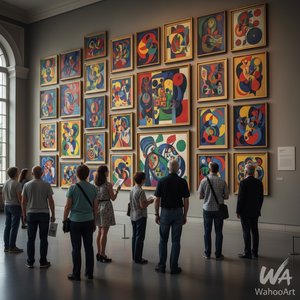
Ontdek de 25 meest iconische werken van Wassily Kandinsky! Duik in zijn abstracte wereld vol kleur, expressionisme & spirituele diepgang. Vind museumkwaliteit reproducties en interieurinspiratie op Most-Famous-Paintings.com.
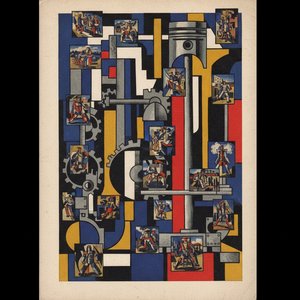
Ontdek de 25 meest iconische werken van Fernand Léger! Duik in zijn kubistische wereld, machine esthetiek & kleurrijke composities. Vind museumkwaliteit kunst reproducties en interieur inspiratie op Most-Famous-Paintings.com.

Ontdek de 10 meest legendarische bronzen beeldhouwwerken die kunstgeschiedenis schreven! Van Rodin tot Michelangelo, leer over hun meesterwerken & technieken. Vind museumkwaliteit reproducties en inspiratie voor uw interieur op Most-Famous-Paintings.com.
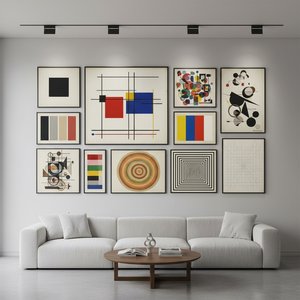
Ontdek de 10 meest invloedrijke meesterwerken van de geometrische abstractie! Van Mondriaan tot Malevich, leer over kunstenaars, technieken & kleuren. Museumkwaliteit reproducties op Most-Famous-Paintings.com – voor een unieke interieurstijl.


Blijf op de hoogte van het laatste kunstnieuws, exclusieve aanbiedingen en decoratie-ideeën.
Vertel ons over uw project en onze kunstexperts geven u 3 gepersonaliseerde kunstsuggesties.
Wij stellen 3 opties speciaal voor u samen – Gratis!


 Preview
 Verstuur
 Delen
Delen
 Details bekijken

 Download
 Vergelijkbare werken
 Röntgenonderzoek
 Diavoorstelling


 Lees meer




































 De optie voor glas is alleen beschikbaar bij een formaat kleiner dan 110 cm.


