x


Giclée- of canvasafdruk van museumkwaliteit met snelle productie en flexibele afwerkingsopties. ( Schakel over naar handgeschilderd kunstwerk Wissel naar afbeelding)





























Kies uit onze vooraf ingestelde maten die overeenkomen met de originele verhoudingen van het kunstwerk.

U kunt uw eigen afmetingen opgeven om in een specifieke lijst of ruimte te passen. Als de door u gekozen maat niet overeenkomt met de proporties van het originele kunstwerk, zullen wij de afbeelding bijsnijden of uitbreiden met een gespiegelde of effen rand. Een digitaal mockup wordt ter goedkeuring naar u verzonden voordat de productie begint.
Houd er rekening mee dat de preview op het scherm de werkelijke bijsneding of uitbreiding niet weergeeft. Alleen de mockup toont de uiteindelijke compositie nauwkeurig.
Hoewel aangepaste maten beschikbaar zijn, raden wij aan een afmeting uit de vooraf bepaalde lijst te kiezen om de originele proporties te behouden.
Wereldwijde levering () binnen 2 weken in plaats van de standaard 4/5 weken. (31 juli)


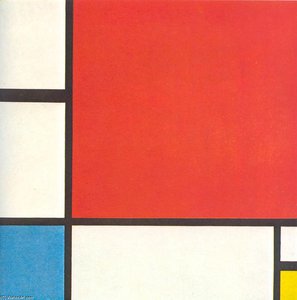
Composition with Grid IX
Afmetingen reproductie
Piet Mondrian’s “Composition with Grid IX,” created in 1919, stands as a cornerstone of Neoplasticism – Mondrian's radical departure from representational art and his unwavering commitment to pure abstraction. This deceptively simple painting isn’t merely about color; it’s an exploration of fundamental visual elements—horizontal lines and vertical lines—arranged in a grid pattern that embodies Mondrian’s belief in universal harmony.
Initially trained as a landscape painter, Mondrian's artistic journey took him beyond the picturesque beauty of nature. Influenced by Impressionism and Pointillism, he experimented with capturing fleeting moments of light and color, yet these styles ultimately failed to capture his deeper desire for artistic expression. The yearning for simplification persisted—a conviction that art should distill its essence into its purest form.
“Composition with Grid IX” marks the definitive arrival of Mondrian’s groundbreaking style, Neoplasticism. Rejecting illusionistic techniques and embracing a rigorously geometric aesthetic, he sought to liberate painting from the constraints of naturalism. Inspired by Zen Buddhism and Russian Constructivism, Mondrian envisioned art as a vehicle for conveying spiritual truth—a belief that visual forms could communicate concepts beyond mere sensory perception.
The palette employed in “Composition with Grid IX” is deliberately restrained, consisting primarily of muted shades of yellow, red, blue, and white. These colors are applied in blocks or rectangles within the grid framework, creating a striking contrast between solid hues and empty spaces. This juxtaposition isn’t accidental; it reflects Mondrian's philosophical preoccupation with opposing forces—the masculine vertical lines representing stability and order, while the feminine horizontal lines symbolize dynamism and expansion.
More than just aesthetically pleasing, “Composition with Grid IX” carries profound symbolic weight. The grid itself represents a universal structure underlying all existence – mirroring the cosmic order envisioned by Mondrian’s intellectual influences. Each color is imbued with spiritual significance; yellow symbolizes enlightenment and optimism, red embodies passion and energy, blue signifies tranquility and contemplation, and white represents purity and transcendence.
The painting's impact extends far beyond the realm of art history. Mondrian’s uncompromising vision influenced countless designers, architects, and artists who sought to create environments that fostered balance and harmony. Today, reproductions of “Composition with Grid IX” continue to inspire collectors and interior decorators alike—serving as a reminder that beauty can be found in simplicity and that true artistic expression lies in embracing fundamental geometric principles.

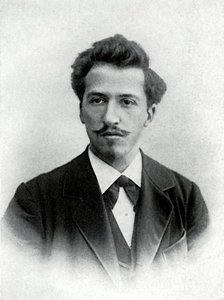
1872 - 1944 , Nederland
Explore the captivating world of geometric abstraction! Discover its origins, key artists like Malevich & Mondrian, and why this movement remains highly valued by art collectors today. Expert insights at Most-Famous-Paintings.
Ontdek de 25 meest iconische werken van Wassily Kandinsky! Duik in zijn abstracte wereld vol kleur, expressionisme & spirituele diepgang. Vind museumkwaliteit reproducties en interieurinspiratie op Most-Famous-Paintings.com.

Explore the evolution of geometric abstraction from Cubism to contemporary art. Discover key artists like Malevich & Mondrian, investment insights, and expert collecting advice at Most-Famous-Paintings.

Explore the philosophical roots & artistic evolution of geometric abstraction with Most-Famous-Paintings. Discover Mondrian, Malevich, De Stijl & more. Expert insights for collectors and art enthusiasts.

Explore the captivating world of geometric abstraction! Discover its origins, key artists like Kandinsky & Mondrian, and why this movement remains highly valued by art collectors today. Expert insights at Most-Famous-Paintings.


Blijf op de hoogte van het laatste kunstnieuws, exclusieve aanbiedingen en decoratie-ideeën.
Vertel ons over uw project en onze kunstexperts geven u 3 gepersonaliseerde kunstsuggesties.
Wij stellen 3 opties speciaal voor u samen – Gratis!


 Voorvertoning
 Verstuur
 Delen
Delen
 Details bekijken

 Download
 Vergelijkbare werken
 Röntgenonderzoek
 Diavoorstelling

 Lees meer







 De optie voor glas is alleen beschikbaar bij een formaat kleiner dan 110 cm.