x

Giclée- of canvasafdruk van museumkwaliteit met een snelle productie en flexibele afwerkingsmogelijkheden. ( Bestel handgeschilderde reproductie Koop afbeelding)





























Kies uit onze vooraf ingestelde maten die overeenkomen met de originele verhoudingen van het kunstwerk.

U kunt uw eigen afmetingen opgeven om in een specifieke lijst of ruimte te passen. Als de door u gekozen maat niet overeenkomt met de proporties van het originele kunstwerk, zullen wij de afbeelding bijsnijden of uitbreiden met een gespiegelde of effen rand. Een digitaal mockup wordt ter goedkeuring naar u verzonden voordat de productie begint.
Houd er rekening mee dat de preview op het scherm de werkelijke bijsneding of uitbreiding niet weergeeft. Alleen de mockup toont de uiteindelijke compositie nauwkeurig.
Hoewel aangepaste maten beschikbaar zijn, raden wij aan een afmeting uit de vooraf bepaalde lijst te kiezen om de originele proporties te behouden.
Wereldwijde levering () binnen 2 weken in plaats van de standaard 4/5 weken. (15 augustus)


Silver Tree
Afmetingen reproductie
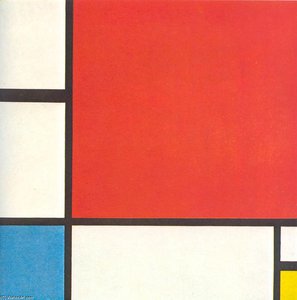
Piet Mondrian's 1912 painting, “Silver Tree,” presents a deceptively simple yet profoundly complex meditation on form, space, and the very nature of reality. This stark black-and-white composition immediately draws the viewer into its core: a solitary tree rendered with an almost unsettling clarity. The image isn’t a depiction of a natural scene in the traditional sense; rather, it's a carefully constructed abstraction, a distillation of essential elements stripped down to their most fundamental geometric components. The absence of leaves amplifies this effect, transforming the tree into a skeletal structure – a visual representation of underlying order and perhaps even spiritual essence.
Understanding “Silver Tree” requires acknowledging Mondrian’s artistic trajectory leading up to this pivotal work. Born in 1872, his early paintings, such as *The Red Mill*, demonstrate a rigorous training in traditional landscape painting, influenced by the Hague School and Dutch Impressionism. However, even within these representational works, a subtle tension existed – a desire to move beyond mere imitation and capture something more profound. His experimentation with Pointillism and Fauvism, styles that prioritized color and expressive brushwork, reveals this ongoing search. These early explorations ultimately paved the way for his later embrace of Neo-Plasticism, a movement he would spearhead alongside Theo van Doesburg. “Silver Tree” can be seen as an embryonic stage of this revolutionary approach – a preliminary investigation into reducing visual experience to its most essential elements.
Mondrian’s technique in "Silver Tree" is characterized by precise lines and controlled application of paint. The stark black and white palette intensifies the geometric qualities of the tree, emphasizing its linear structure. The composition itself is remarkably balanced, with the central trunk acting as a vertical anchor and the radiating branches creating a dynamic yet contained visual field. This deliberate arrangement isn’t accidental; it reflects Mondrian's belief in the underlying mathematical harmony of the universe – a principle he sought to translate into his art. The lack of shading or texture further contributes to the painting’s austerity, reinforcing its focus on pure form and structure.
While seemingly objective, “Silver Tree” is laden with symbolic weight. The tree itself has long been a potent symbol in Western art, representing life, growth, and connection to the earth. However, Mondrian’s abstraction transforms this traditional symbolism, suggesting a more spiritual or metaphysical interpretation. The ‘silver’ hue – though rendered in monochrome – evokes connotations of purity, spirituality, and the divine. The painting's emotional impact is one of quiet contemplation and perhaps even a sense of melancholy. It invites viewers to consider the relationship between the visible world and the unseen realms of thought and feeling. This piece resonates with a deep yearning for order and harmony, reflecting Mondrian’s lifelong pursuit of universal principles through his art.

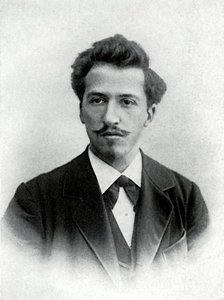
1872 - 1944 , Nederland

Explore the profound artistry of black and white photography. From the chemistry of gelatin silver to the chiaroscuro of the Old Masters, discover how monochrome captures the eternal essence of light, form, and emotion for the discerning art collector.

Explore the profound emotional depth of Color Field painting. Discover the history of mid-century abstraction, from Rothko to Newman, and learn how pure color transforms the viewer's experience through our expert art history guide.


Blijf op de hoogte van het laatste kunstnieuws, exclusieve aanbiedingen en decoratie-ideeën.
Vertel ons over uw project en onze kunstexperts geven u 3 gepersonaliseerde kunstsuggesties.
Wij stellen drie opties speciaal voor u samen – gratis!


 Voorvertoning
 Verstuur
 Delen
Delen
 Details bekijken

 Download
 Vergelijkbare items
 Röntgenonderzoek
 Diavoorstelling

 Lees meer







 De optie voor glas is alleen beschikbaar bij een formaat kleiner dan 110 cm.