


x

 Acryl op canvasWanddecoratieCubism
 1913Vroege Middeleeuwen
 96.0 x 64.0 cm
 Kröller-Müller Museum
Koop een digitale afbeelding in hoge resolutie met verbeterde kwaliteit, die veel superieur is aan de online voorvertoning.
Elk bestand wordt met uiterste precisie voorbereid door onze interne specialisten, met behulp van geavanceerde tools en deskundige handmatige retouche. Wij garanderen dat elke afbeelding een uitzonderlijke helderheid, nauwkeurige kleurweergave en verfijnde details bezit.
Het uiteindelijke bestand wordt binnen 72 uur per e-mail geleverd, geoptimaliseerd voor direct gebruik in professionele, redactionele en printomgevingen. Dit is dezelfde kwaliteit waarop vooraanstaande designstudio's, uitgevers en galerieën vertrouwen.
Download een bestand met hoge resolutie voor persoonlijke weergave, afdrukken en creatieve projecten. ( Bestel print Bestel handgeschilderde reproductie)
Wanneer u kiest voor Most-Famous-Paintings.com, ontvangt u niet alleen een afbeelding – u krijgt een professioneel verbeterd digitaal kunstwerk, met precisie vervaardigd en voorzien van een tevredenheidsgarantie. Dit is alles wat automatisch bij uw bestelling is inbegrepen:

Uw hoogwaardige digitale afbeeldingsbestand wordt binnen 72 uur na bestelling naar u gemaild – klaar voor direct gebruik.

Uw kunstwerk wordt professioneel geoptimaliseerd met behulp van geavanceerde AI-tools en handmatige bewerkingen, waardoor maximale details, helderheid en kleurnauwkeurigheid worden gegarandeerd.

Je bestand per ongeluk verwijderd of kwijtgeraakt? Geen zorgen – we sturen het u op elk gewenst moment gratis opnieuw toe.

Geniet direct van uw kunstwerk zonder invoerrechten, belastingen of verzendkosten – digitale downloads zijn altijd belastingvrij.

Met behulp van professionele hulpmiddelen en kleurbeheer zorgen wij ervoor dat uw digitale afbeelding de originele kleuren zo nauwkeurig mogelijk weergeeft.

Als u niet tevreden bent met uw digitale afbeelding, passen wij deze aan of storten wij 100% terug binnen 60 dagen – zonder vragen gesteld.

Niet tevreden? Ontvang binnen 60 dagen na ontvangst van uw digitale bestand uw volledige aankoopbedrag terug – zonder vragen te stellen.

Koop 3 afbeeldingen, bespaar 10% - Koop 5, bespaar 15% - Koop 10+, bespaar 20%. Ideaal voor creatieve projecten, galerieën en bureaus.
Piet Mondriaan's *Tableau no. 1*, painted in 1913, isn’t merely a composition of rectangles and lines; it’s a pivotal moment in the birth of abstract art, a visual distillation of the artist’s relentless pursuit of pure form and underlying reality. Emerging from his early training as a landscape painter – works like *The Red Mill* demonstrating a meticulous study of nature – Mondrian embarked on a radical transformation, driven by encounters with Cubism and a profound desire to transcend the limitations of representation. This piece embodies that journey, offering a glimpse into the nascent stages of his groundbreaking style.
The painting’s immediate impact is one of controlled dynamism. A dense network of grey, ochre, and muted brown rectangles and squares dominates the canvas, creating an intricate tapestry that seems to both contain and explode outwards. The lines are crisp and decisive, defining each shape with unwavering precision, yet there's a subtle suggestion of curvature within them – a delicate balance between rigidity and fluidity. It’s not a chaotic jumble, but rather a carefully orchestrated structure, reflecting Mondrian’s belief that the universe itself operates according to geometric principles. The underdrawing of a tree, barely discernible beneath the layered paint, hints at his previous life, a ghost of naturalism fading into abstraction.
*Tableau no. 1* firmly establishes Mondrian’s engagement with analytical cubism, a movement characterized by its deconstruction of objects into fragmented planes. Unlike the more sculptural approach of Picasso and Braque, Mondrian reduces his subject to its essential components – lines and shapes – stripping away all extraneous detail. The object isn't presented as it appears; instead, it’s dissected, broken down, and reassembled in a complex, multi-faceted structure. This process is evident in the overlapping planes and the blurring of edges, creating an illusion of depth without relying on traditional perspective. The painting feels like a carefully constructed puzzle, inviting the viewer to actively engage with its spatial relationships.
A significant departure from his earlier work is Mondrian’s restricted palette – primarily shades of grey, ochre, and brown. This deliberate limitation wasn't a rejection of color entirely, but rather a strategic choice to emphasize the underlying structure of the composition. Color becomes less about describing reality and more about defining relationships between forms. The warm tones of ochre provide a subtle grounding, while the cool greys create a sense of balance and restraint. This move towards a monochromatic aesthetic reflects Mondrian’s belief that color could be reduced to its purest essence – a means of conveying spiritual truth rather than merely imitating the visual world.
While *Tableau no. 1* is undeniably abstract, it's not devoid of symbolic meaning. The geometric forms themselves can be interpreted as representing fundamental building blocks – lines for verticality and horizontality, squares and rectangles for stability and order. Mondrian described his artistic ambition as moving “towards ‘the unchanging pure reality behind the changeable forms of nature’”. This painting represents a crucial step in that direction, suggesting an attempt to capture not the appearance of things, but their underlying essence – a timeless, universal truth expressed through simple geometric shapes. The piece invites contemplation on the relationship between form and content, structure and meaning, ultimately offering a glimpse into Mondrian's profound philosophical vision.

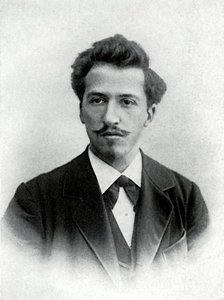
1872 - 1944 , Nederland


Blijf op de hoogte van het laatste kunstnieuws, exclusieve aanbiedingen en decoratie-ideeën.
Vertel ons over uw project en onze kunstexperts geven u 3 gepersonaliseerde kunstsuggesties.
Wij stellen drie opties speciaal voor u samen – gratis!


 Voorvertoning
 Verstuur
 Delen
Delen
 Details bekijken

 Download
 Vergelijkbare items
 Röntgenonderzoek
 Diavoorstelling
 Lees meer


