


x

Met de hand geschilderd in olieverf op canvas in uw gewenste maat en lijst, op bestelling gemaakt door onze kunstenaars. ( Bestel print Koop afbeelding)





























Kies uit onze vooraf ingestelde maten die overeenkomen met de originele verhoudingen van het kunstwerk.

U kunt uw eigen afmetingen invoeren om in een specifieke lijst of ruimte te passen. Als de door u gekozen maat niet overeenkomt met de verhoudingen van het originele beeld, zullen we het kunstwerk bijsnijden of het schilderij uitbreiden met extra handgeschilderde elementen. Een digitale mockup wordt ter goedkeuring naar u verzonden voordat de productie begint.
Houd er rekening mee dat de preview op het scherm niet de werkelijke uitsnede of uitbreiding weergeeft. Alleen de mockup toont de uiteindelijke compositie nauwkeurig.
Hoewel aangepaste afmetingen mogelijk zijn, raden we aan een maat uit de vooraf gedefinieerde lijst te selecteren om de originele verhoudingen te behouden.
Wereldwijde levering () binnen 3 tot 4 weken in plaats van de standaard 5 weken. (21 augustus). Zonder concessies aan de kwaliteit.


The clearing
Afmetingen reproductie
René Magritte's "The Clearing," painted in 1944, isn’t merely a depiction of a field; it’s an invitation to question the very nature of reality. This iconic work, rendered in oil on canvas, exemplifies the artist’s signature surrealist style – a deliberate disruption of familiar landscapes and objects to provoke contemplation about how we perceive the world around us. The painting immediately draws the eye with its seemingly simple composition: a verdant field stretches across the lower half, populated by scattered carrots and a solitary cup, while a single bird soars gracefully from the upper left corner. Yet, beneath this surface tranquility lies a potent sense of unease and mystery, characteristic of Magritte’s enduring legacy.
The historical context surrounding “The Clearing” is crucial to understanding its deeper meaning. Created during World War II, a period marked by uncertainty and profound psychological shifts, the painting reflects a broader cultural anxiety about truth and illusion. Magritte, deeply influenced by philosophers like René Descartes and the principles of logical positivism, was fascinated with the gap between appearance and reality – a concept he relentlessly explored in his art. The work can be seen as an extension of this philosophical inquiry, suggesting that our understanding of the world is often constructed through subjective experience rather than objective observation.
The seemingly mundane elements within “The Clearing” are imbued with symbolic weight. The field itself represents the vastness and unpredictability of life, while the scattered carrots – a common sight in Belgian agriculture – subtly hint at fertility, abundance, and perhaps even mortality. Their placement near the center of the image suggests a grounding force amidst the unsettling atmosphere. The solitary cup, positioned on the ground to the right, is particularly intriguing. It’s an object devoid of immediate purpose, yet it draws the viewer's attention and invites speculation about its significance – could it be a symbol of thirst, loneliness, or simply a reminder of our basic needs?
The bird, positioned high in the left corner, is perhaps the most prominent symbolic element. Its flight upward suggests aspiration, freedom, or even escape from the constraints of the earthly realm. However, its detached position also hints at isolation and detachment – mirroring the viewer’s own experience of observing this surreal scene. The color palette—primarily greens, yellows, and blues—contributes to the painting's dreamlike quality, evoking a sense of both tranquility and disorientation.
Magritte’s technique in “The Clearing” is deceptively simple yet remarkably effective. He employs a meticulous realism – rendering each carrot, leaf, and bird with painstaking detail – to heighten the unsettling effect of the scene. This juxtaposition of precise representation and illogical arrangement creates a powerful tension that forces the viewer to actively engage with the artwork. The use of muted colors and soft brushstrokes further enhances the painting’s atmospheric quality, contributing to its overall sense of mystery.
It's important to note that Magritte wasn’t interested in creating literal representations; he sought to challenge our assumptions about how we perceive reality. As he himself stated, “I do not create what I see, but what I dream.” "The Clearing" embodies this philosophy perfectly – it’s a visual poem designed to provoke thought and invite endless interpretation. It remains a testament to Magritte's genius and his enduring ability to capture the complexities of the human experience through the lens of surrealism.

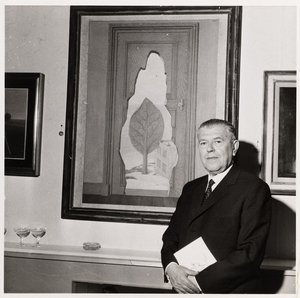
1898 - 1967 , België

Explore the profound mystery of René Magritte’s 'The Treachery of Images.' Dive into an expert analysis of his Surrealist philosophy, the paradox of representation, and how he challenged reality through the interplay of language and visual perception.

Explore the profound depths of Surrealism. From Dalí’s dreamscapes to Magritte’s enigmas, master the history of the subconscious mind through our expert art guide and discover museum-quality oil reproductions of the world's most iconic surrealist masterpieces.

Explore the profound depths of Surrealism with our expert guide. From Dalí's dreamscapes to Breton's manifesto, uncover the history, symbolism, and technical mastery of this revolutionary movement. Perfect for students and collectors seeking deep art-historical insight.


Blijf op de hoogte van het laatste kunstnieuws, exclusieve aanbiedingen en decoratie-ideeën.
Vertel ons over uw project en onze kunstexperts geven u 3 gepersonaliseerde kunstsuggesties.
Wij stellen drie opties speciaal voor u samen – gratis!


 Voorvertoning
 Verstuur
 Delen
Delen
 Details bekijken

 Download
 Vergelijkbare items
 Röntgenonderzoek
 Diavoorstelling

 Lees meer







 De optie voor glas is alleen beschikbaar bij een formaat kleiner dan 110 cm.


