


x

Giclée- of canvasafdruk van museumkwaliteit met een snelle productie en flexibele afwerkingsmogelijkheden. ( Bestel handgeschilderde reproductie Koop afbeelding)





























Kies uit onze vooraf ingestelde maten die overeenkomen met de originele verhoudingen van het kunstwerk.

U kunt uw eigen afmetingen opgeven om in een specifieke lijst of ruimte te passen. Als de door u gekozen maat niet overeenkomt met de proporties van het originele kunstwerk, zullen wij de afbeelding bijsnijden of uitbreiden met een gespiegelde of effen rand. Een digitaal mockup wordt ter goedkeuring naar u verzonden voordat de productie begint.
Houd er rekening mee dat de preview op het scherm de werkelijke bijsneding of uitbreiding niet weergeeft. Alleen de mockup toont de uiteindelijke compositie nauwkeurig.
Hoewel aangepaste maten beschikbaar zijn, raden wij aan een afmeting uit de vooraf bepaalde lijst te kiezen om de originele proporties te behouden.
Wereldwijde levering () binnen 2 weken in plaats van de standaard 4/5 weken. (21 augustus)


The window
Afmetingen reproductie
René Magritte’s “The Window,” completed in 1925, stands as one of the most recognizable images of Surrealism and continues to fascinate viewers with its deceptively simple composition. Painted during a period of intense experimentation within the movement—a reaction against rational thought and championed by André Breton—the artwork transcends mere visual representation, delving into fundamental questions about how we perceive reality.
Symbolism & Interpretation: The window itself serves as a powerful symbol—representing not just an aperture through which light enters but also a barrier separating the figure from the outside world. More subtly, Magritte utilizes geometric shapes—specifically triangles—to create visual tension and disrupt our expectations of spatial harmony. These triangles draw attention to the viewer’s gaze and invite contemplation on the elusive nature of perception.
Emotional Impact: “The Window” evokes a feeling of melancholic solitude and invites viewers to consider what lies beyond the visible surface. Magritte's masterful manipulation of color, form, and composition compels us to confront our own assumptions about reality—leaving behind a lingering impression of mystery and prompting reflection on the limitations of human understanding.
Magritte wasn’t interested in simply depicting what he saw; rather, he sought to challenge viewers’ perceptions of reality. He famously stated, “I want to depict things as they appear to me,” emphasizing the subjective experience at the core of artistic creation.
The triangles incorporated into the composition aren't merely decorative elements; they actively disrupt conventional spatial conventions. Magritte skillfully uses these shapes to create visual tension, mirroring the anxieties inherent in confronting the unknown—a central theme within Surrealist art.

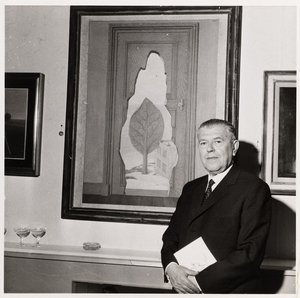
1898 - 1967 , België

Explore the profound mystery of René Magritte’s 'The Treachery of Images.' Dive into an expert analysis of his Surrealist philosophy, the paradox of representation, and how he challenged reality through the interplay of language and visual perception.


Blijf op de hoogte van het laatste kunstnieuws, exclusieve aanbiedingen en decoratie-ideeën.
Vertel ons over uw project en onze kunstexperts geven u 3 gepersonaliseerde kunstsuggesties.
Wij stellen drie opties speciaal voor u samen – gratis!


 Voorvertoning
 Verstuur
 Delen
Delen
 Details bekijken

 Download
 Vergelijkbare items
 Röntgenonderzoek
 Diavoorstelling

 Lees meer







 De optie voor glas is alleen beschikbaar bij een formaat kleiner dan 110 cm.


